Fatalii peppers suit a home garden well. The plants are compact and productive, they do well in pots, and the yellow pods ripen 90 to 100 days after transplanting. That timing works almost everywhere in the U.S., and the planner below works out your dates from your zip code.
Want to know how hot they get and what they taste like? That’s in our fatalii pepper profile. This page is all about growing them.

Last update on 2026-11-01. We earn a commission if you make a purchase, at no additional cost to you.
- Heat
- 125,000–400,000 SHU
- Start seeds indoors
- 8 weeks before your last spring frost
- Germination
- 14–28 daysIn soil around 70–85°F.
- Harden off
- 7–14 days before transplanting
- Transplant
- After last frost, once nights stay at 50°F or warmer
- First harvest
- 90–100 days after transplanting
- Plant height
- 24–48 inches
- Containers
- Does well in a container
Where these figures come from
- Start seeds indoors: Seed Savers Exchange, Fatalii; Sandia Seed Company, Fatalii
- Germination: Seed Savers Exchange, Fatalii; Sandia Seed Company, Fatalii; University of Minnesota Extension, Growing peppers; Nebraska Extension G1879, Garden Peppers; NMSU Chile Pepper Institute, Special Seed Starting Instructions; Utah State University Extension, Peppers in the Garden
- Harden off: UC ANR, Growing Peppers; Penn State Extension (Chester Co. Master Gardeners), Growing Peppers; Nebraska Extension G1879, Garden Peppers
- Transplant: University of Minnesota Extension, Growing peppers; UGA Extension C1005, Home Garden Peppers; NMSU Chile Pepper Institute, Growing Tips
- First harvest: Seed Savers Exchange, Fatalii; Sandia Seed Company, Fatalii
- Plant height: Seed Savers Exchange, Fatalii; Sandia Seed Company, Fatalii; Tomato Growers Supply, Fatalii
- Containers: Seed Savers Exchange, Fatalii; Sandia Seed Company, Fatalii
When to plant fatalii peppers where you live
Fatalii peppers can’t take frost. Plant them out in full sun after your last frost, once nights stay at 55°F or warmer and the soil has reached about 60°F. The planner shows that 55°F date as well as the usual 50°F one.
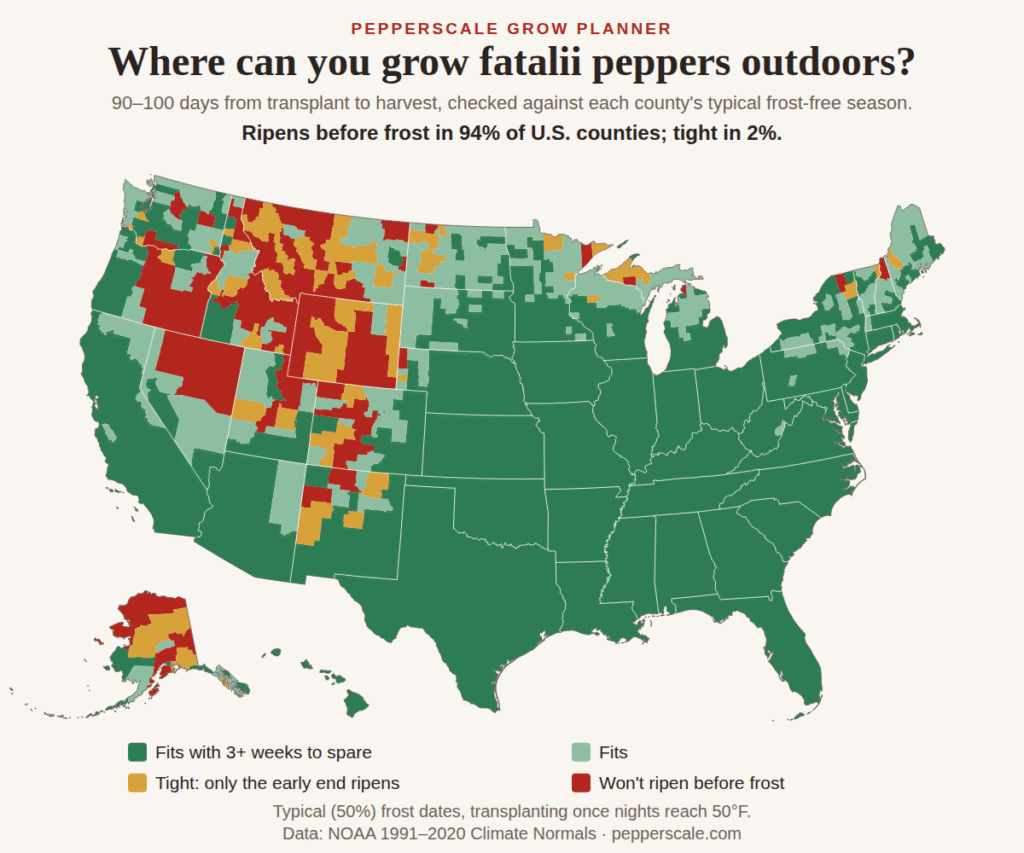
Type in your zip code and you’ll get dates for starting seeds, hardening off, transplanting and your first harvest, all from NOAA frost data for your area, plus a check on whether your season is long enough. For fatalii peppers it nearly always is: they ripen before frost in 94% of U.S. counties, and in another 2%, only the quicker end of their range makes it.
Starting fatalii pepper seeds indoors
Start the seeds about 8 weeks before your last spring frost. They need warmth to sprout, so keep the mix between 80 and 85°F, and a seedling heat mat is the easy way to get there. Even then, fatalii seed can take two to four weeks to come up, so give a slow tray time. Got an older packet? Check how long pepper seeds last before you count on it.
Once they’re up, give them bright light from overhead. The seedlings are ready to go out once they have about six true leaves and your nights have warmed up. A week or two before that, start hardening them off by setting them outside a little longer each day.
Planting fatalii peppers outside
Where should they go? Your sunniest spot, since peppers do best with 8 to 10 hours of sun a day.
Fatalii plants usually stay between 2 and 4 feet tall, so space them 12 to 24 inches apart. There’s more in how much space pepper plants need.
They want well-drained soil with a pH of about 6.0 to 7.0. A soil test tells you where yours stands, and our guide to the best soil pH for peppers covers what to do about it.
Once the plants are in, mulch around them with compost, straw or wood chips to keep the weeds down and hold moisture in, keeping it off the stems. And if you lay black plastic down before planting, it warms the soil, too.
Growing fatalii peppers in containers
Short on garden space? The fatalii is one of the better hot peppers for a pot. A 3-gallon container with drainage holes is big enough, and once the plant is big and setting fruit, expect to water every day. Our guide to growing hot peppers in containers has more.
A pot also lets you keep the plant going. You can bring a potted fatalii inside before frost and grow it again next year. Here’s how to handle growing hot peppers indoors, including bringing an outdoor plant in for the winter.
Watering and feeding fatalii peppers
They need about an inch of water a week. If the rain doesn’t give them that, soak the soil thoroughly. Frequent light watering leads to weak roots, and uneven watering is tied to blossom-end rot. The planner above shows how much rain your area normally gets each month. Our post on watering pepper plants has the details, and here are the signs of overwatering pepper plants.
Go easy on the nitrogen, since too much of it gives you a lot of leaves and fewer peppers. Test your soil before you fertilize, and unless the test says you need phosphorus, use a low- or no-phosphorus fertilizer. Our guide to fertilizing pepper plants walks through what to use and when.
When to pick fatalii peppers
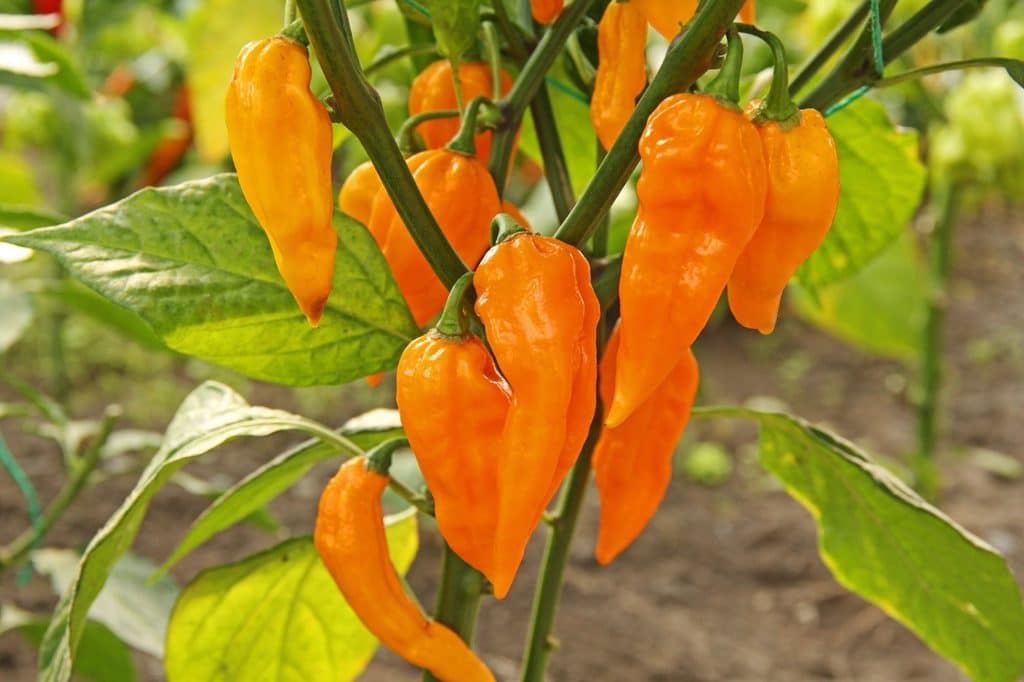
How do you know they’re ready? Fatalii pods ripen from green to yellow, some closer to golden orange, about 90 to 100 days after transplanting. A ripe one is wrinkled, about 3 inches long, and wide at the top, tapering to a point. You can pick them green if you need them early.
Use shears or pruners rather than pulling them off, since pepper branches are brittle. And wear gloves. At 125,000 to 400,000 Scoville heat units, fatalii peppers will sting your skin and your eyes, so keep your hands away from your face until you’ve washed up, and know how to treat chili burn before you start.
If frost is coming and you’ve still got green ones on the plant, pick everything. You can try to ripen peppers (somewhat) off the vine, or if yours is in a pot, just bring the plant inside.
Common fatalii pepper plant problems
- Few new peppers in a heat wave: very little pepper fruit sets once highs reach 90°F. The planner shows when that usually happens where you live.
- Blossom-end rot: a brown rot on the bottom of the fruit, tied to calcium and uneven watering. See calcium deficiency in pepper plants.
- Sunscald: see sunscald on peppers.
- Curling or yellow leaves: see pepper plant leaves curling and pepper plants turning yellow.
- Aphids and spider mites: see aphids on pepper plants and spider mites on pepper plants.
- Plants that won’t grow: start with pepper plants growing slowly.
- A frost on the way: see will frost kill pepper plants?
For the rest, we’ve got a rundown of common pepper plant diseases and problems.
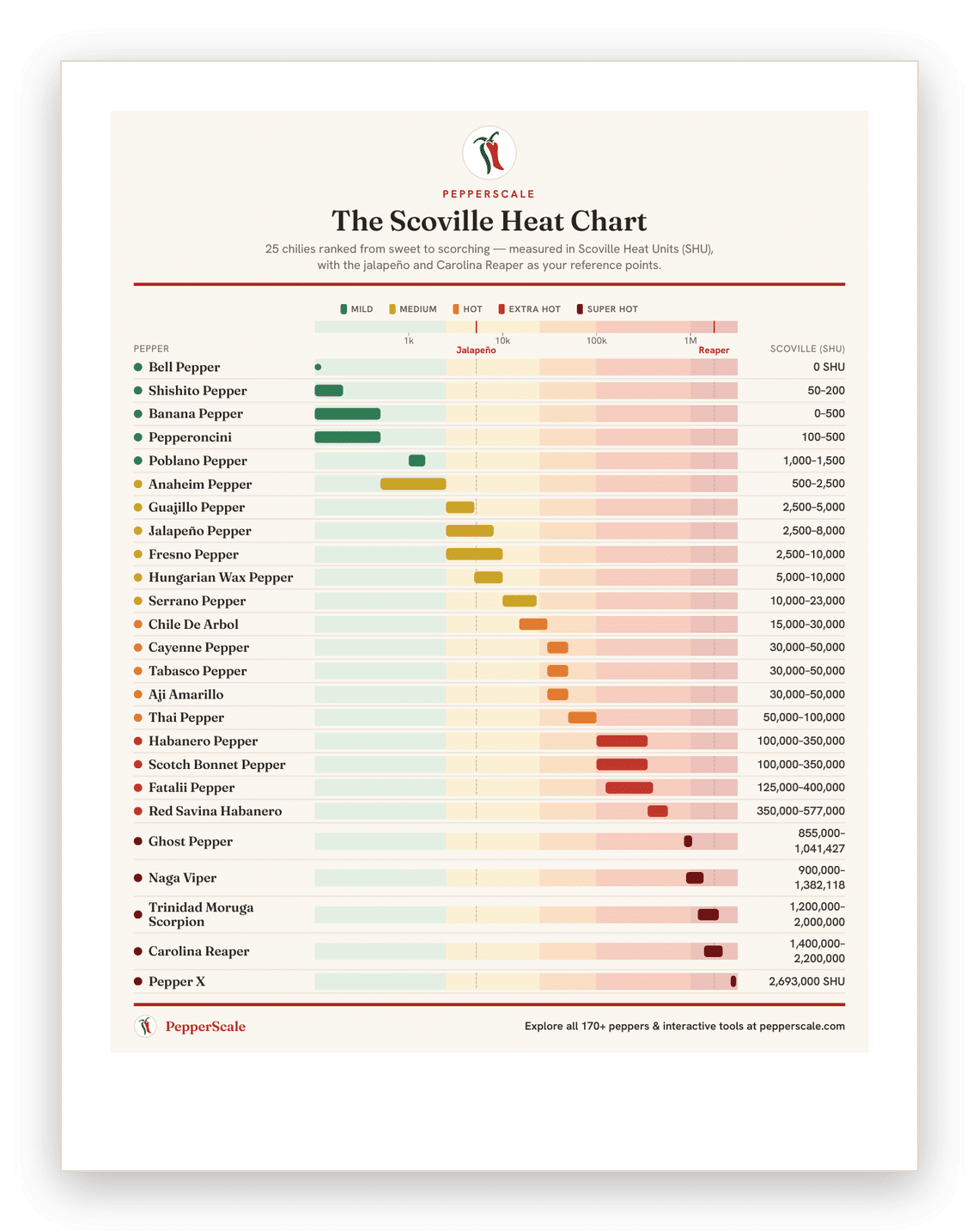
Get the free PepperScale Scoville Heat Chart
A printable, at-a-glance ranking of 25 chilies from sweet to scorching — with the jalapeño and Carolina Reaper as your reference points. Join the newsletter and we’ll send it straight to your inbox.
No spam — just Wicked Wednesday recipes and occasional extra dashes of chili pepper inspiration. Unsubscribe anytime.
Related reading
- The Habanero Planting Guide: The fatalii’s best-known cousin, with a similar long, warm season.
- Yellow Peppers: The fatalii and other chilies that ripen yellow, from mild to scorching.
- Pepper Companion Plants: What to plant next to your peppers, and what to keep away from them.