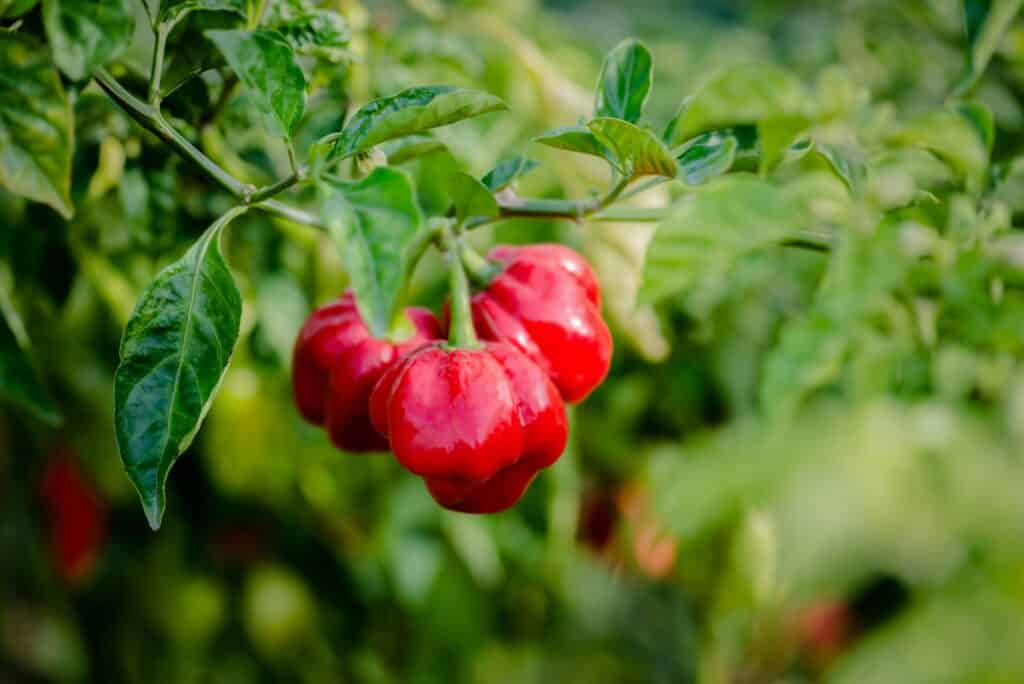
The scotch bonnet is the Caribbean’s signature chili: a squat, wrinkled, extra-hot pod that carries as much sweetness as it does fire. It’s the pepper behind jerk seasoning, behind most of the island hot sauces worth buying, and behind a heat that arrives a beat late and then stays a while. The name comes from the shape, which resembles a Scotsman’s tam o’ shanter. Nothing else about it is remotely Scottish.
What separates it from its close cousin the habanero isn’t the heat. Both run 100,000 to 350,000 Scoville heat units. It’s what the heat is wrapped in. The scotch bonnet sits in our Fruity & Tropical family and sits near the top of it, with fruitiness at the ceiling and sweetness right behind. Here’s how hot it actually is, what it tastes like, and how to cook with a pepper this strong without flattening everything else in the pot.

Last update on 2026-10-02. We earn a commission if you make a purchase, at no additional cost to you.
- Species
- C. chinense
- Origin
- Caribbean
- Uses
- Culinary
- Closest swap
- Habanero
How hot is a scotch bonnet, really?
The scotch bonnet runs 100,000 to 350,000 Scoville heat units, which lands it squarely in the extra-hot tier. Measured against the jalapeño, our reference chili, that’s roughly 12 to 140 times hotter. Against the cayenne on your spice rack, 2 to 12 times. Against a habanero it’s a wash, since the two share the same Scoville range, which is a large part of why they get treated as interchangeable.
It is not the top of the scale, though, and that matters more than it sounds. Ghost peppers sit roughly 3 to 10 times hotter still, and Carolina Reapers 4 to 22 times. The scotch bonnet occupies a specific and useful spot: about the hottest chili that still gets used as an ingredient rather than a dare. Hot enough to demand a light hand, not so hot that flavor stops mattering.
The practical translation: if a recipe calls for a jalapeño and you’re reaching for a scotch bonnet instead, cut the quantity hard. A fraction of one pod, seeded, is usually the right starting point, and you can always add more. Worth knowing before you start, too, that much of the capsaicin concentrates in the white pith rather than the flesh or the seeds themselves, so how much of that you leave in changes the result as much as how many pods you use.
What a scotch bonnet actually tastes like
Lead with the flavor, because it’s the reason to bother. The scotch bonnet lands in our Fruity & Tropical family, and its numbers are lopsided even inside that group: fruitiness at the top of the scale, sweetness just under it, a modest earthy undertone beneath both, and a faint floral edge. That combination is the whole reason for using this pepper instead of simply adding more cayenne.
In the mouth it reads as sweet tropical fruit over a tomato-like base, with apple and cherry the notes people reach for most often. Those are apt. The sweetness is real sweetness rather than an absence of bitterness, and it holds up through cooking far better than the bright green notes of a jalapeño or serrano do, which is why the pepper works as well in a long-simmered stew as it does raw in a salsa.
The habanero comparison deserves a full look, since the two get swapped constantly. They share a species, a heat range, and a fruity core. Where they part is the finish: the habanero carries a smoky edge the scotch bonnet doesn’t, and the scotch bonnet carries an earthy undertone and more overt sweetness. Side by side in a raw sauce the difference is clear to a discerning pepper palate. Cooked into a pot of curry, most people would not call it.
Ripeness moves things as well. Scotch bonnets start green and mature through orange to red, and a green pod is noticeably less sweet and more vegetal, closer to heat without the payoff. The fully colored pod is the one you want for hot sauce and jerk.
How to pair a scotch bonnet
Let’s consider pairing using the congruence, contrast, and synergy system.
Congruence means matching the pepper’s dominant voice and letting the two amplify each other. Here that voice is fruit and sweetness, so mango and pineapple are the obvious partners, and they’re obvious for good reason: both bring tropical sweetness plus acid, which reads as one continuous flavor alongside the pepper rather than two competing ones. Tomato does the same job on a savory register, which is why so many Caribbean pepper sauces are tomato-based. On the aromatic side, allspice, ginger, garlic and thyme are the classic jerk supporting cast, adding warmth and depth without arguing with the fruit.
Contrast means giving the heat somewhere to land to temper the heat and let the pepper’s natural flavor shine. Fat is the most reliable option, since capsaicin is fat-soluble and gets distributed rather than concentrated in one bite. Coconut milk, pork, and chicken thigh all do this, which is why jerk pork and coconut curries carry a scotch bonnet so comfortably. Starch does a gentler version of the same thing, which is what rice and peas, roti, and fried plantain are quietly doing on the plate. And bell pepper is the workhorse nobody credits: it lets you cut the amount of scotch bonnet in a sauce while keeping the pepper body and the color intact.
One synergy (a pairing that works without congruence or contrast) worth naming separately: acid. Lime and vinegar don’t cool heat the way fat does, but they sharpen the fruit notes and keep a sweet, hot sauce from turning cloying. Nearly every scotch bonnet sauce worth the shelf space has one or the other in it.

Cooking with scotch bonnets
Jerk is the signature use and the clearest demonstration of what this pepper does: sweetness and fire folded into an earthy, allspice-heavy rub, with no single element winning. Beyond jerk, the scotch bonnet is the backbone of Caribbean pepper sauces, a standard addition to stews and curries, and increasingly the chili of choice for fruit-forward hot sauces where the pepper’s own sweetness is the point.
The most useful technique with a chili this strong is also the simplest: drop a whole pod into the pot, let it simmer, and fish it out before serving. You get the fruit and the aroma with a fraction of the heat, and you can pull it early if the dish is running away from you. Puncturing the pod releases more heat; leaving it intact releases less. That single choice gives you a dial most recipes don’t tell you about.
Handle them with gloves. The capsaicin oils sit heaviest in the white membrane, and once a pod is cut open a casual touch is enough to move them onto your skin and then onto everything else you touch. Goggles are not overkill either, mostly to stop you rubbing your eyes mid-prep. Know how you’ll deal with it before it happens: read our post on treating chili burn and the one on chili burn in the eye area. Water is not your friend here. Keep milk within reach.
Scotch bonnet colors, varieties, and other names
The common scotch bonnet ripens green to red through several orange and yellow stages, but the pepper travels under a lot of names and turns up in a lot of shapes. You may see it sold as the Bonny pepper, the Bahama Mama, the Jamaican Hot, the Bahamian, or the Martinique pepper. Flavor and heat shift with region and soil the way they do with any chili, so expect real variation pod to pod. A few of the most common named varieties:
- Scotch Bonnet Chocolate (Brown): A rich brown at maturity, with a hint of smokiness and earthiness alongside the usual fruit, and typically a bit hotter than the standard pod.
- Scotch Bonnet Yellow (Mustard): Bright yellow to mustard-colored, a touch sweeter and a touch milder, which makes it the friendliest of the bunch for a fresh sauce.
- Tobago Scotch Bonnet: Slightly elongated rather than squat, in multiple colors, carrying the same heat but with the sweetness dialed back a little.
Shape alone isn’t a reliable identifier, in other words. Elongated pods turn up alongside the classic squat ones often enough that the safest read is color plus source, not silhouette.
The best scotch bonnet substitute
The habanero, and it isn’t close. Same species, same heat range, same fruity core. You’ll give up some sweetness and pick up a little smoke, but in anything cooked the swap is close to invisible, and habaneros are the easier of the two to find in most North American supermarkets. If neither is on hand, our scotch bonnet substitutes guide covers the fallbacks, including what to do when you have to source the heat and the sweetness from two different places.
Our favorite scotch bonnet recipes
- Scotch Bonnet Orange Hot Sauce: Orange and scotch bonnet is the pairing that makes the case for this pepper in one taste. Sweet, sharp, and hot in that order.
- Jamaican Jerk Chicken: The Jamaican staple, and the dish this chili was effectively built for. Earthy, fiery, and sweet all at once.
- Raspberry Scotch Bonnet Hot Sauce: Berry instead of tropical fruit, and it works. Good over grilled chicken, and good over ice cream.
- Brazilian Coconut Chicken Curry: Coconut milk is the ideal cushion for a pepper this hot, and the fruit notes survive the simmer intact.
The bottom line
The scotch bonnet is what you reach for when you want heat that tastes like something. It sits at the practical ceiling of culinary chilies: hot enough that a whole pod will run a pot on its own, sweet and fruity enough that a fraction of one adds a flavor no amount of cayenne will get you. Start with less than you think you need, taste as you go, and let the fruit do the work.
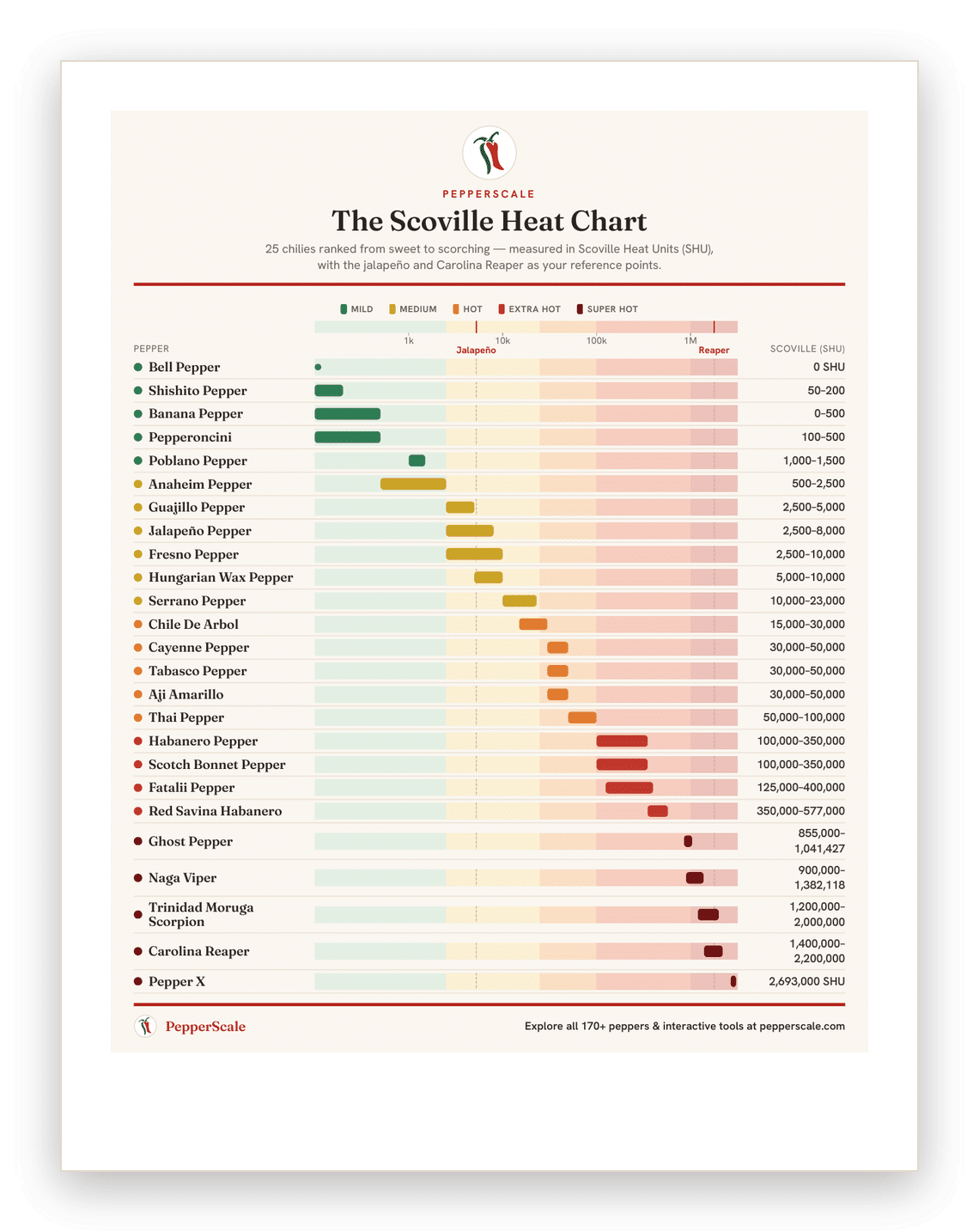
Get the free PepperScale Scoville Heat Chart
A printable, at-a-glance ranking of 25 chilies from sweet to scorching — with the jalapeño and Carolina Reaper as your reference points. Join the newsletter and we’ll send it straight to your inbox.
No spam — just Wicked Wednesday recipes and occasional extra dashes of chili pepper inspiration. Unsubscribe anytime.
Related reading
- The Hot Pepper List: Explore 170-plus chilies, searchable by name, flavor, heat, and origin.
- Scotch Bonnet Vs. Habanero: The full head-to-head on the two peppers people mix up most.
- Swicy Is Everywhere: Sweet heat went mainstream. Here’s what it’s actually doing on shelves.