Your recipe calls for hot paprika, and the spice aisle only has the sweet kind. That sweet paprika is half of the best substitute: mix in a little cayenne and you get paprika’s color and earthy sweetness with the heat to match. Hot paprika can be either hot Hungarian paprika or hot Spanish paprika, which is often smoked, and you may not have an easy time finding either in the average American grocery store. Whatever you use needs their most important qualities: their moderate heat (compared to sweet paprika) and earthy sweetness.

Last update on 2026-11-13. We earn a commission if you make a purchase, at no additional cost to you.

Your best bet: Sweet paprika plus cayenne powder
Standard Spanish or Hungarian paprika can provide much of the flavor and color that you want from hot paprika. What it won’t do is give you the heat. Enter cayenne pepper into the blend.
Cayenne is known for its moderately fiery kick and color but does not have much going for it in terms of flavor. When you combine it with paprika, each pepper powder compensates for what the other does not have. Cayenne powder brings the heat, at 30,000 to 50,000 Scoville heat units against regular paprika’s 100 to 500. Sweet paprika adds flavor and dilutes the cayenne to keep the blend from being too hot.
How hot should the blend be? Hot paprika itself varies a lot. America’s Test Kitchen describes it as anywhere from slightly spicy to punishingly assertive. So start with mostly paprika, about three parts paprika to one part cayenne, and taste. You can play with the ratio to get something closer to your hot paprika, up to a fifty-fifty blend if you want it fiery.
A decent second choice: Cayenne powder
If you do not have paprika, you can use cayenne powder alone. By itself, cayenne is not as flavorful as hot paprika, but it usually has a higher concentration of capsaicin, and more capsaicin gives it more heat. If the fieriness of hot paprika is what interests you and not the rest of its flavor profile, you can replace it with a smaller amount of cayenne powder. Cayenne looks like most hot paprikas and will provide you with a similar red color.
If you want to get something closer to the sweetness of paprika, you can try adding a sweetener like sugar or honey. You will have to be very careful when you try to sweeten the dish, as you can easily wind up going overboard. Similarly, it would be best if you approached cayenne pepper with caution because of how hot it can be compared to hot paprika.
In a pinch: Gochugaru
Gochugaru refers to Korean red pepper flakes. These flakes are a bright red like paprika, and unlike other pepper flakes, such as the crushed red pepper flakes used in Italian cooking, gochugaru does not contain seeds. The lack of seeds means that you can grind gochugaru in your spice grinder or food processor to get a fine red powder that looks similar to hot paprika and that has a moderate heat level. There will be no white flecks from the seeds.
How hot is it? Gochugaru’s heat varies from brand to brand, roughly 1,500 to 10,000 SHU, and it tastes a little fruity with a touch of smoke. We compare it with those Italian flakes in Gochugaru Vs. Crushed Red Pepper.
You should be able to find gochugaru in most stores that specialize in Asian ingredients. You may be able to find gochugaru powder in some places, which would eliminate the need to grind the flakes yourself.
Other alternatives
Sambal oelek is a chili pepper paste, meaning it has an entirely different consistency when compared to hot paprika. It is not a good substitute for hot paprika in some applications but can work in the ones where its moisture will not be an issue. It will give you heat and a red color. Most jars are made with vinegar and salt, too, so go easy on both elsewhere in the dish.
What if your recipe wants hot smoked paprika?
Hot Spanish paprika often comes from La Vera, where the peppers get smoked over oak as they dry, so it carries smoke as well as heat. Traditional Hungarian paprika is dried without smoke. If smoke is part of what your recipe wants, use smoked sweet paprika as the base for the cayenne blend above.
Out of smoked paprika too? Chipotle powder is ground from smoke-dried jalapeños, which puts smoke and heat in one jar, at about 2,500 to 8,000 SHU. Expect an earthier, less sweet flavor than paprika, so it works best in dishes with plenty going on. And if your recipe’s hot Spanish paprika is the unsmoked kind, a Hungarian hot paprika can stand in for it without much change.
One to skip: crushed red pepper flakes
What about crushed red pepper? It has the heat, at around 15,000 to 30,000 SHU, but it’s a poor stand-in for hot paprika. The flakes are coarse and full of seeds, so you get red bits and pale seeds where you wanted an even red color, and they stay gritty in a sauce or rub. If it’s all you have, grind it fine and use a small amount.
Match the substitute to the dish
- Hungarian dishes like goulash and paprikash: Sweet paprika plus cayenne. Traditional Hungarian paprika is unsmoked, so stick with regular sweet paprika here.
- Spanish dishes that call for smoked hot paprika: Smoked sweet paprika plus cayenne, or chipotle powder.
- Dry rubs and spice blends: Cayenne alone works in small amounts, since the other spices in the mix make up for the flavor it lacks.
- Stews, soups and braises: Sambal oelek, stirred in with the liquid, where its moisture blends right in.
- A finishing dusting on eggs or dips: Ground gochugaru, for the color with gentle heat.
How much should you use?
- Sweet paprika plus cayenne: Use the same total amount the recipe calls for, about three parts paprika to one part cayenne to start.
- Cayenne alone: Start with about a quarter of the hot paprika the recipe wants, then add more to taste.
- Gochugaru, ground: Start with the same amount. If yours is on the hot side, cut it back.
- Chipotle powder: Start with half the amount, since it brings a lot of its own flavor.
- Sambal oelek: Start with about the same amount, stirred into the liquid, and taste before adding more.
Treat these as starting points. Hot paprikas vary, so taste as you go. Adding heat is a lot easier than taking it out.
Pulling it all together
Sweet paprika with a little cayenne is the closest you’ll get to hot paprika from an ordinary spice rack, and smoked sweet paprika does the same job when the recipe wants smoke. Cayenne alone covers the heat when that’s all you’re after. Gochugaru and sambal oelek are worth using when they’re already in your kitchen. Which should you pick? Ask what the hot paprika was doing in the dish, heat, color, smoke or all three, and match that.
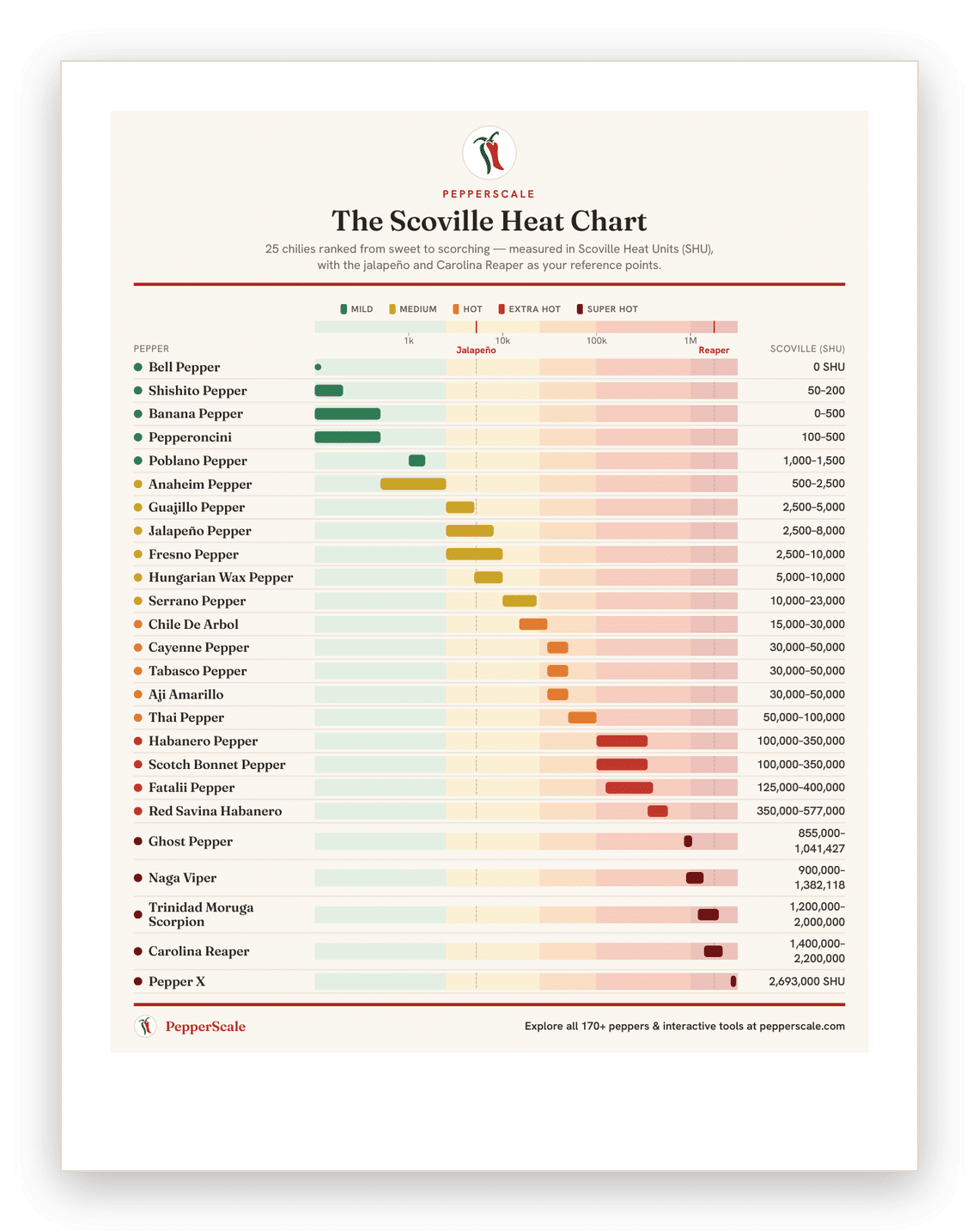
Get the free PepperScale Scoville Heat Chart
A printable, at-a-glance ranking of 25 chilies from sweet to scorching — with the jalapeño and Carolina Reaper as your reference points. Join the newsletter and we’ll send it straight to your inbox.
No spam — just Wicked Wednesday recipes and occasional extra dashes of chili pepper inspiration. Unsubscribe anytime.
Related reading
- Hungarian Vs. Spanish Paprika: How are they similar? Different?
- Cooking With Paprika: Learn the dos and don’ts of using this spice in the kitchen.
- Smoked Paprika Potato Chips: One of our favorite homemade snacks, featuring smokiness and a mild heat.