Peppers have a reputation as one of the friendliest foods for anyone counting carbs, and for once the reputation holds up. A cup of chopped green bell pepper has about 7 grams of carbohydrate, and a single jalapeño has less than 1 gram. Even sweet red bells, the highest of the fresh peppers, come in around 10 grams a cup, about a quarter of what you’d get from a cup of cooked pasta. The picture changes once peppers are dried, though, and not every claim you’ll read about peppers and carbs is true.
A quick note before the numbers: we know chili peppers well, but we’re not doctors. If you’re counting carbs to manage diabetes or for another health reason, talk with your doctor or a registered dietitian about how peppers fit into your plan. They know your health, and we know peppers.

How many carbs are in peppers?
Not many, at least while they’re fresh. Here’s what USDA’s lab-tested Foundation Foods data shows, per 100 grams and per a typical serving. Net carbs are total carbohydrate minus fiber, the number most low-carb and keto plans count.
| Fresh pepper | Total carbs per 100 g | Fiber per 100 g | Net carbs per 100 g | Serving | Total carbs per serving | Net carbs per serving |
|---|---|---|---|---|---|---|
| Green bell pepper | 4.8 g | 0.9 g | 3.9 g | 1 cup chopped (149 g) | 7.1 g | 5.8 g |
| Red bell pepper | 6.7 g | 1.2 g | 5.5 g | 1 cup chopped (149 g) | 9.9 g | 8.1 g |
| Yellow bell pepper | 6.6 g | 1.1 g | 5.5 g | 1 cup chopped (149 g) | 9.8 g | 8.2 g |
| Orange bell pepper | 6.7 g | 1.0 g | 5.7 g | 1 cup chopped (149 g) | 10.0 g | 8.5 g |
| Jalapeño, seeded | 5.1 g | 1.7 g | 3.4 g | 1 pepper (14 g) | 0.7 g | 0.5 g |
| Serrano, seeded | 6.1 g | 2.5 g | 3.6 g | 1 pepper (6 g) | 0.4 g | 0.2 g |
| Banana or Hungarian wax, seeded | 5.0 g | 1.8 g | 3.2 g | 1 medium (46 g) | 2.3 g | 1.5 g |
For scale, the Daily Value for total carbohydrate on a food label is 275 grams, so a cup of chopped red bell pepper is less than 4% of it.
One thing to know if you’ve seen other numbers: USDA’s older SR Legacy figures, which most nutrition sites still quote, give bell peppers more fiber and so fewer net carbs. By those older figures, a cup of chopped red bell pepper has about 6 grams of net carbs, against about 8 in the lab-tested data. The total carbs hardly change. It’s the fiber that moved, and the red bell’s old fiber figure was an estimate based on another form of the food, not a measurement.
Which peppers have the most carbs?
Some peppers do contain more carbohydrates than others, even though they’re all low-carb foods. By weight, ripe red, yellow and orange bell peppers come out highest in USDA’s lab data, at about 6.6 to 6.7 grams per 100 grams. Green bells come in lowest at 4.8. Jalapeños, serranos, banana peppers and poblanos all fall at about 5 to 6 grams.
Serving size matters more than any of that, though. You might eat a full cup of bell pepper in a salad, but you’ll rarely eat more than one or two jalapeños at a time. One jalapeño has about 0.7 grams of carbs, and one serrano has about 0.4.
What about habaneros? You’ll sometimes read that they’re unusually high in sugar. But USDA doesn’t publish carbohydrate figures for habaneros, so we’ve left them out rather than guess. The same goes for scotch bonnets and the superhots.
What kind of carbs are in peppers?
Mostly fiber and simple sugars. In the hot peppers USDA tested, sugars make up 70% to 90% of the net carbs, and nearly all of that is glucose and fructose. USDA found no sucrose, or table sugar, in the jalapeños, serranos, poblanos or banana peppers it tested. It’s still a small amount, too: a jalapeño’s 0.7 grams of carbohydrate includes less than half a gram of sugar.
Most carb counters subtract the fiber. Doctors at UCLA Health note that fiber doesn’t significantly affect blood sugar, which is the thinking behind net carbs. Just know that net carbs aren’t part of the Nutrition Facts label. If you see the term on a package, it’s the maker’s own math.
Do red peppers have more carbs than green ones?
Yes. Most red bell peppers are green bells that were left on the plant to ripen, and they change in more ways than color. In USDA’s data, a red bell has about 4.2 grams of sugar per 100 grams to a green bell’s 2.4. The lab-tested totals show the same gap: 6.7 grams of carbohydrate for red and 4.8 for green, or about 10 grams versus 7 in a cup.
Yellow and orange bells come in right alongside red ones, at 6.6 and 6.7 grams. So if you’re watching every gram, green is the bell to buy.
Do dried peppers have more carbs?
Per gram, far more, because drying removes the water and leaves the carbohydrate behind. A hundred grams of freeze-dried red bell pepper has about 69 grams of carbs, against 6 to 7 grams in fresh. Dried chilies and ground spices are similar.
| Pepper | Total carbs per 100 g | Fiber per 100 g | Net carbs per 100 g | Serving | Total carbs per serving | Net carbs per serving |
|---|---|---|---|---|---|---|
| Ancho (dried poblano) | 51.4 g | 21.6 g | 29.8 g | 1 pepper (17 g) | 8.7 g | 5.1 g |
| Pasilla, dried | 51.1 g | 26.8 g | 24.3 g | 1 pepper (7 g) | 3.6 g | 1.7 g |
| Red bell pepper, freeze-dried | 68.7 g | 21.3 g | 47.4 g | 1/4 cup (1.6 g) | 1.1 g | 0.8 g |
| Chili powder | 49.7 g | 34.8 g | 14.9 g | 1 teaspoon (2.7 g) | 1.3 g | 0.4 g |
| Paprika | 54.0 g | 34.9 g | 19.1 g | 1 teaspoon (2.3 g) | 1.2 g | 0.4 g |
| Cayenne, ground | 56.6 g | 27.2 g | 29.4 g | 1 teaspoon (1.8 g) | 1.0 g | 0.5 g |
| Jalapeños, canned | 4.7 g | 2.6 g | 2.1 g | 1 cup sliced (104 g) | 4.9 g | 2.2 g |
| Green chilies, canned | 5.1 g | 1.3 g | 3.8 g | 1/2 cup (68 g) | 3.5 g | 2.6 g |
| Pimento, canned | 5.1 g | 1.9 g | 3.2 g | 1 tablespoon (12 g) | 0.6 g | 0.4 g |
Nobody eats dried chilies by the 100 grams, though. One ancho has about 9 grams of carbs, or about 5 net. A teaspoon of chili powder has just over 1 gram, and less than half a gram net, since most of it is fiber. Canned jalapeños and green chilies stay about where fresh ones are, at around 5 grams per 100 grams.
How do peppers compare to high-carb foods?
Chili peppers, even the ones with a relatively high carbohydrate content, have a much lower carbohydrate count than most high-carb foods. Here’s a cup of chopped bell pepper next to a few of them, all from USDA’s SR Legacy data.
| Food | Serving | Total carbs | Fiber | Net carbs |
|---|---|---|---|---|
| White rice, cooked | 1 cup (158 g) | 44.6 g | 0.6 g | 43.9 g |
| Spaghetti, cooked | 1 cup (124 g) | 38.3 g | 2.2 g | 36.1 g |
| Sweet corn, raw | 1 cup (145 g) | 27.1 g | 2.9 g | 24.2 g |
| Banana | 1 medium (118 g) | 26.9 g | 3.1 g | 23.8 g |
| Potato, raw, diced | 1 cup (150 g) | 26.2 g | 3.1 g | 23.1 g |
| Apple, with skin, chopped | 1 cup (125 g) | 17.2 g | 3.0 g | 14.2 g |
| Onion, chopped | 1 cup (160 g) | 14.9 g | 2.7 g | 12.2 g |
| White bread | 1 slice (29 g) | 14.3 g | 0.8 g | 13.5 g |
| Red bell pepper, chopped | 1 cup (149 g) | 9.0 g | 3.1 g | 5.9 g |
| Tomato, chopped | 1 cup (180 g) | 7.0 g | 2.2 g | 4.8 g |
| Green bell pepper, chopped | 1 cup (149 g) | 6.9 g | 2.5 g | 4.4 g |
| Broccoli, chopped | 1 cup (91 g) | 6.0 g | 2.4 g | 3.7 g |
A cup of cooked rice has about five times the carbs of a cup of chopped red bell pepper, and a medium banana has about three times as much. Peppers rank alongside tomatoes and broccoli, and that makes them an easy way to add bulk and color to a low-carb plate.
Are peppers keto-friendly?
Yes, in the amounts most people eat them. Keto diets usually keep carbohydrate to somewhere under 20 to 50 grams a day, according to Harvard Health, so every gram counts. A cup of chopped green bell pepper has about 6 grams of net carbs by the lab-tested numbers, and a jalapeño has half a gram. Red, yellow and orange bells add a couple of grams per cup.
Where carbs add up is in what comes with the peppers. Rice in stuffed peppers, sweet chili sauce and some hot sauces bring carbs the peppers don’t. Our look at hot sauce and your health compares the sugar in eight popular bottles.
Are peppers a good choice if you have diabetes?
The American Diabetes Association lists peppers among the non-starchy vegetables, the group it suggests filling half your plate with. It counts a serving, 1 cup raw or 1/2 cup cooked, as about 5 grams of carbohydrate or less, compared with about 15 grams for a serving of starchy vegetables.
By USDA’s numbers, a cup of chopped green bell pepper has about 7 grams of total carbohydrate and a red one about 10. So bell peppers run a little over that rule of thumb, but well under starchy vegetables. Hot peppers, eaten one or two at a time, barely register. If you count carbs to manage your blood sugar, your doctor or dietitian can help you fit them into your plan.
Carbs in peppers: fact or fiction?
Here’s where the common claims about carbs in peppers stand.
- “Peppers are a low-carb food.” Fact, as long as they’re fresh. Most have about 5 to 7 grams of carbohydrate per 100 grams.
- “All peppers have about the same carbs.” Mostly fact for fresh peppers. Dried ones are another story, at 50 grams or more per 100 grams.
- “Red bell peppers have more sugar than green ones.” Fact. USDA puts red bells at about 4.2 grams of sugar per 100 grams and green at 2.4.
- “Habaneros are high in sugar.” Unproven, because USDA doesn’t publish carb or sugar figures for habaneros.
- “Most of the carbs in peppers are fiber.” Fiction for fresh peppers, where fiber is about a fifth to two-fifths of the total. It’s closer to true for chili powder and paprika, which are about two-thirds fiber.
- “A sprinkle of chili powder will knock you out of ketosis.” Fiction. A teaspoon has about 1.3 grams of carbohydrate, and less than half a gram net.
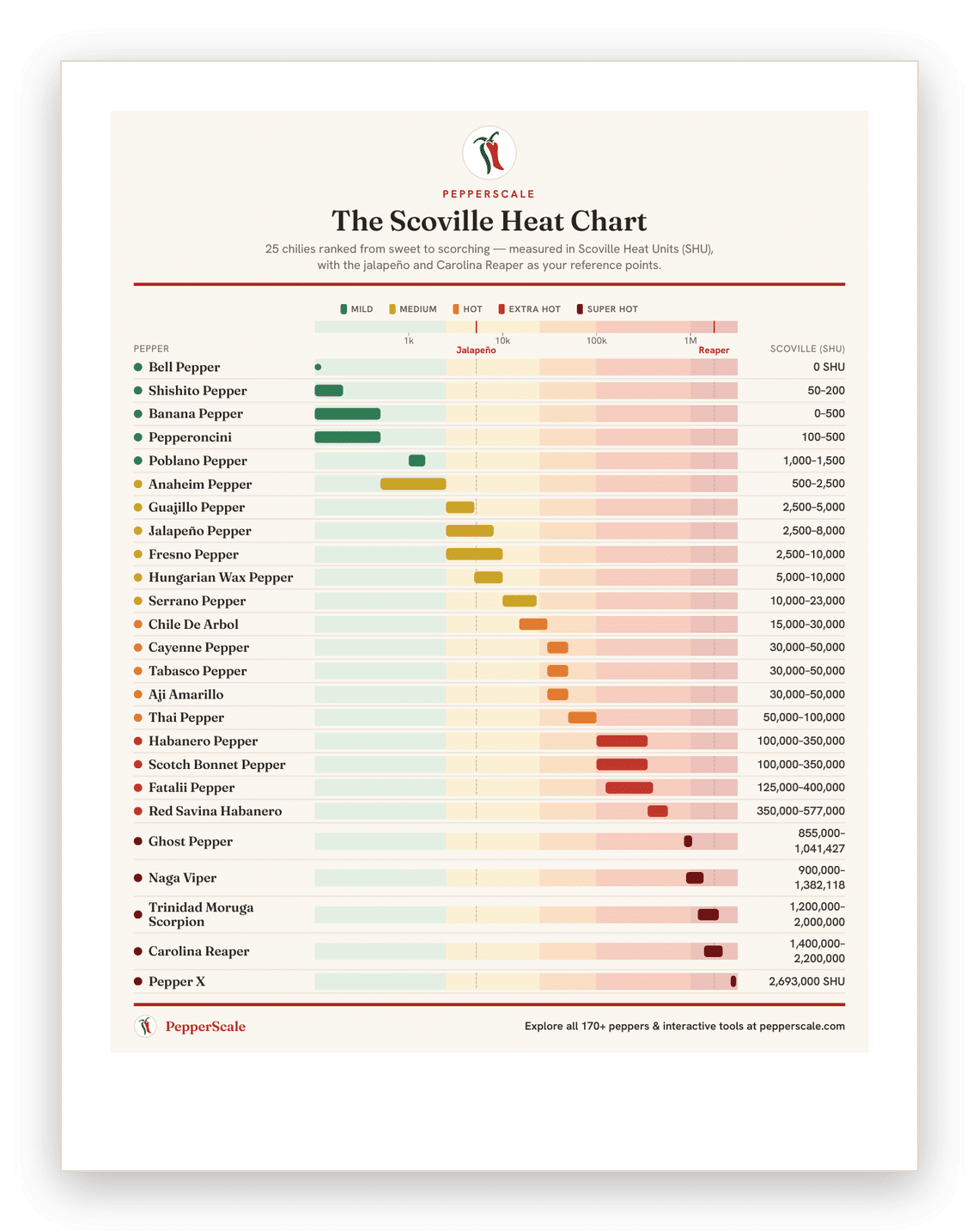
Get the free PepperScale Scoville Heat Chart
A printable, at-a-glance ranking of 25 chilies from sweet to scorching — with the jalapeño and Carolina Reaper as your reference points. Join the newsletter and we’ll send it straight to your inbox.
No spam — just Wicked Wednesday recipes and occasional extra dashes of chili pepper inspiration. Unsubscribe anytime.
Related reading
- Fiber In Peppers: The Fact And Fiction: The other half of the carb count, pepper by pepper.
- Vitamins In Peppers: What peppers bring besides carbs, from vitamin C to vitamin K.
- Jalapeño Nutrition: How Healthy Are They?: A closer look at the most popular hot pepper.