Peppers are good sources of some important vitamins, and vitamin C is the big one. While the vitamin levels differ depending on pepper type, fresh peppers all contain plenty of vitamin C, and most of them give you more of it than the same weight of oranges. Vitamin A is a different story: ripe red peppers and dried chilies are good sources, but green peppers have very little. Various B vitamins are present in lower (but still significant) concentrations. The B vitamins present include niacin, riboflavin, and pyridoxine. Peppers also contain decent levels of vitamin K, a vitamin most commonly associated with green leafy vegetables like kale and turnip greens.
One quick note before the numbers: we know chili peppers inside and out, but we’re not doctors or dietitians. If you’re working on a diet for a health reason, talk to your doctor about what belongs on your plate.
Which vitamins are in peppers?
Here’s how common peppers stack up, per 100 grams. That’s about two-thirds of a cup of chopped bell pepper, or about seven jalapeños.
| Pepper (raw unless noted) | Vitamin C | Vitamin A | Vitamin B6 | Vitamin K |
|---|---|---|---|---|
| Green chili, hot | 242.5 mg (269%) | 59 µg (7%) | 0.28 mg (17%) | 14 µg (12%) |
| Red chili, hot | 144 mg (160%) | 48 µg (5%) | 0.51 mg (30%) | 14 µg (12%) |
| Red bell pepper | 128 mg (142%) | 157 µg (17%) | 0.29 mg (17%) | 4.9 µg (4%) |
| Jalapeño | 118.6 mg (132%) | 54 µg (6%) | 0.42 mg (25%) | 18.4 µg (15%) |
| Banana pepper | 82.7 mg (92%) | 17 µg (2%) | 0.36 mg (21%) | under 10 µg (8%) |
| Green bell pepper | 80.4 mg (89%) | 18 µg (2%) | 0.22 mg (13%) | 7.4 µg (6%) |
| Serrano | 44.9 mg (50%) | 47 µg (5%) | 0.51 mg (30%) | 11.8 µg (10%) |
| Ancho (dried poblano) | 1.8 mg (2%) | 1,024 µg (114%) | 3.5 mg (208%) | not listed |
| Orange, for comparison | 53.2 mg (59%) | 11 µg (1%) | n/a | n/a |
The green hot chili comes out on top for vitamin C, with nearly three times the Daily Value in 100 grams. B6 is the B vitamin peppers do best, and 100 g of serranos covers about 30% of it. And the ancho’s in a different league for vitamin A and B6, though you’d rarely eat 100 grams of dried chilies at once.
Are there certain varieties of peppers higher in vitamins than others?
The vitamin content in peppers does vary significantly across pepper varieties. The vitamin A in 100 g of raw serrano peppers is 47 µg compared to 18 µg in green bell peppers. Similarly, 100 g of jalapeños contains about 119 mg of vitamin C while the same amount of banana peppers has about 82 mg. Raw red bell peppers are the best vitamin C source of the three with 127 mg per 100 g serving. Peppers are generally not great sources of niacin, with serranos delivering about 1.5 mg per 100 g, around a tenth of what you need in a day.
How do peppers compare to other healthy foods when it comes to vitamin content?
Peppers typically contain more vitamin A than oranges and some varieties also contain more vitamin C. Green bell peppers contain only 18 µg of vitamin A per 100 g, which is still more than the 11 µg that you get from an equivalent serving of oranges. Ripe bells, which are a good source of vitamin A, contain far less of it than the same amount of spinach. A 100 g serving of red bell peppers has 157 µg of vitamin A; the same amount of spinach provides 469 µg.
Oranges are one of the best-known sources of vitamin C and while the 53 mg that you get from 100 g of oranges is slightly more than you would get from an equivalent serving of serranos, it is a lot less than the 82 mg you would get from 100 g of banana peppers.
A 100 g serving of broccoli contains 102 µg of vitamin K, which is many times more than you would get from banana peppers since they contain less than 10 µg per 100 g.
Do ripe peppers contain more vitamins than unripe ones?
Ripe bell peppers contain considerably more of the major vitamins than unripe ones. This is especially so when it comes to vitamins A and C. Green bell peppers contain 18 µg of vitamin A while ripe red ones contain 157 µg. Similarly, green bells contain about 80 mg of vitamin C; when ripe they have 127 mg.
Hot chilies don’t follow the same pattern, though. USDA’s numbers give raw green hot chilies 242.5 mg of vitamin C per 100 g. Red ones have 144 mg, so if vitamin C’s what you’re after, the green chili wins. They’re close on vitamin A, with 59 µg in the green and 48 µg in the red.
Does drying affect the vitamin content of peppers?
Drying does affect the vitamin content of dried fruits and vegetables including peppers. Dehydration removes most of the weight of the pepper but concentrates the nutrients that aren’t destroyed by the drying process. It destroys most of the vitamin C in peppers. Some of the B vitamins will get lost but a dried pepper will still have many times more of them when compared to equal weights of a fresh one. Dried poblano peppers are called anchos, and a 100 g serving has about 1,020 µg of vitamin A.
One ancho weighs about 17 grams and carries about 174 µg of vitamin A, roughly a fifth of the Daily Value. It’s also where the vitamin C loss shows: the same 100 g of anchos has under 2 mg of it.
Does cooking destroy the vitamins in peppers?
It depends on how you cook them, and vitamin C’s the one to watch. A 2024 review of cooking research on red peppers found vitamin C was the most vulnerable of the compounds studied. Boiling cut it by anywhere from 6% to 93% depending on how long, steaming lowered it too, and roasting took out 8% to 80%.
Stir-frying did the least damage, and microwaving without water made no significant difference to vitamin C. So when vitamin C matters, eat them raw, or cook them fast with little or no water. That way you’ll keep more of it.
Where to learn more
For the vitamin C story in more detail, including how much a cup of each pepper gives you, it’s all in our look at vitamin C in peppers. If you’re wondering whether all that vitamin C helps with a cold, we dug into the research in spicy food for colds. And for the compound that makes peppers hot, and which of its health claims hold up, see our capsaicin guide.
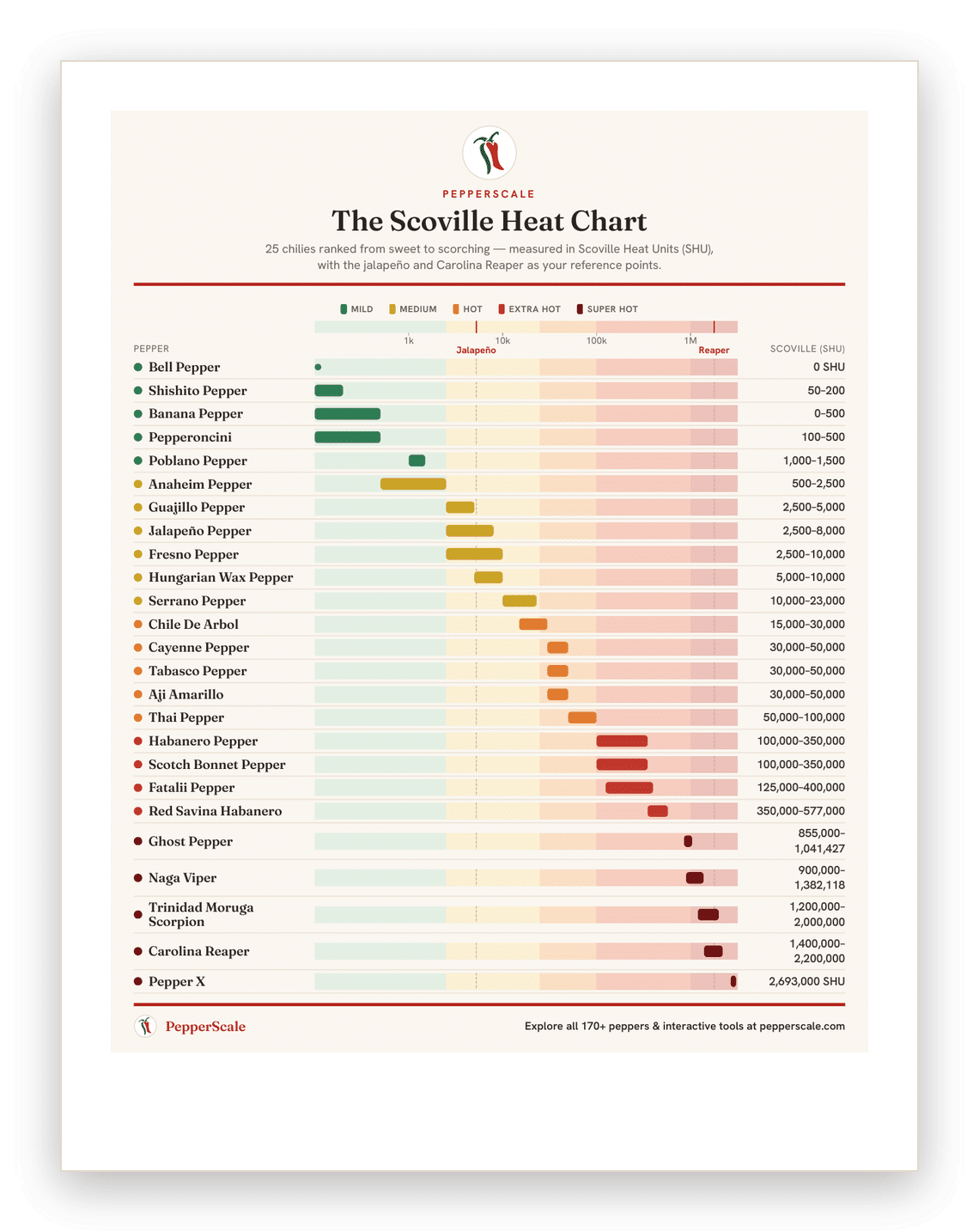
Get the free PepperScale Scoville Heat Chart
A printable, at-a-glance ranking of 25 chilies from sweet to scorching — with the jalapeño and Carolina Reaper as your reference points. Join the newsletter and we’ll send it straight to your inbox.
No spam — just Wicked Wednesday recipes and occasional extra dashes of chili pepper inspiration. Unsubscribe anytime.
Related reading
- The Hot Pepper List: More than 150 chilies you can sort by heat, flavor and how you’d use them.
- Fruit Or Vegetable? What Is A Chili Pepper?: Why a chili is botanically a berry, where chilies came from and the five species behind them.
- Why Are Bell Peppers Different Colors?: Green is usually just an unripe red, and here’s how color changes the flavor.