It may surprise some, but green chili powder is real and just as tasty as any of the red chili powders commonly available. But the rub (no pun intended): Green chili powder is a whole heck of a lot harder to find. You can buy it online (affiliate link), but if you have extra green chilies sitting around, like Anaheim peppers or jalapeños, you can make it yourself with just a little time and a lot of sun (or a dehydrator).
🌶️ Quick recipe snapshot
| Flavor profile | Grassy and bright, and lighter on sweetness than a red powder made from the same pepper. Concentrated version of whatever pepper went in. |
| Primary heat source | Whichever green chili you pick. The method stays the same either way. |
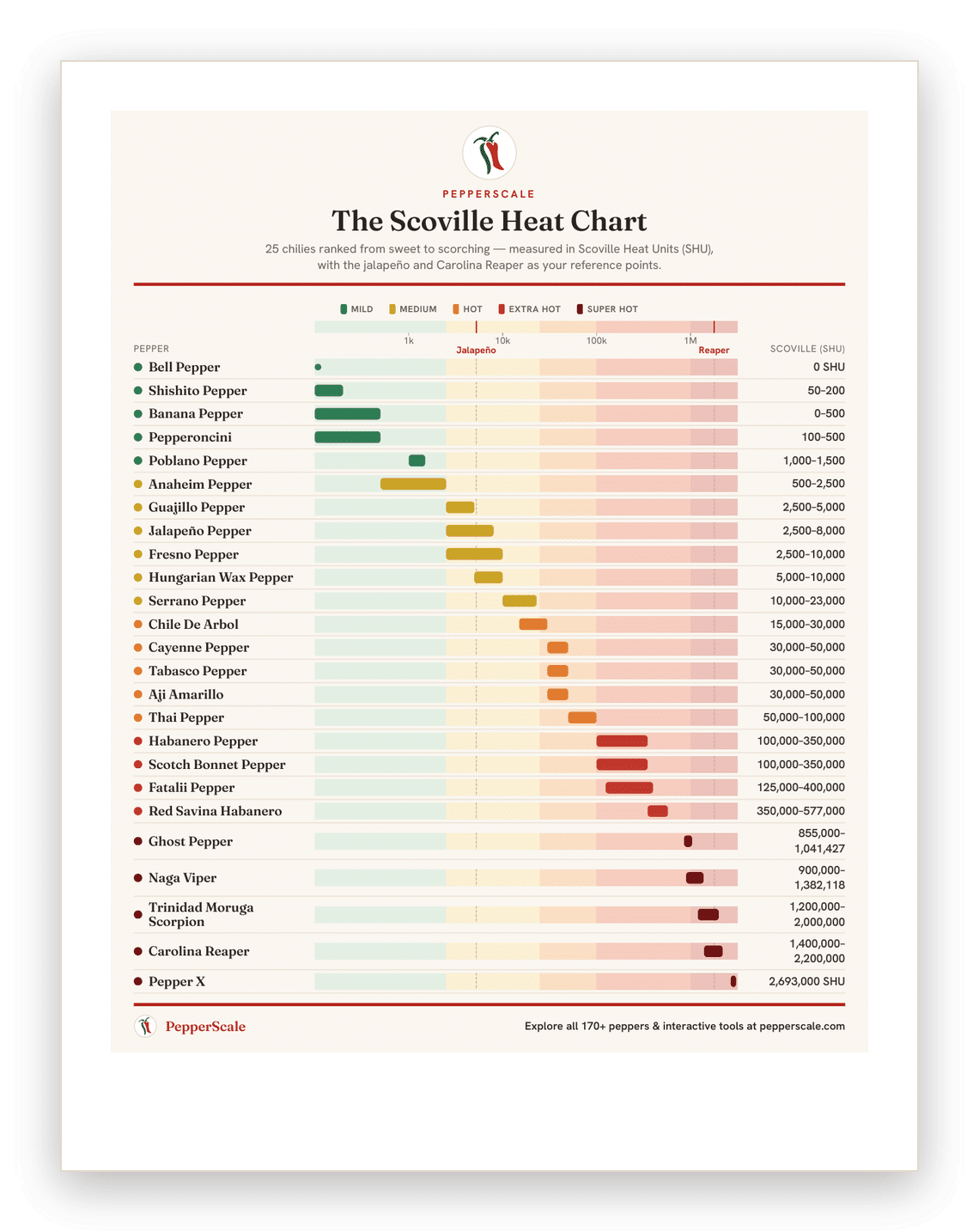
| Heat level | Yours to set. Anaheim runs 500 to 2,500 SHU, jalapeño 2,500 to 8,000, serrano 10,000 to 23,000. |
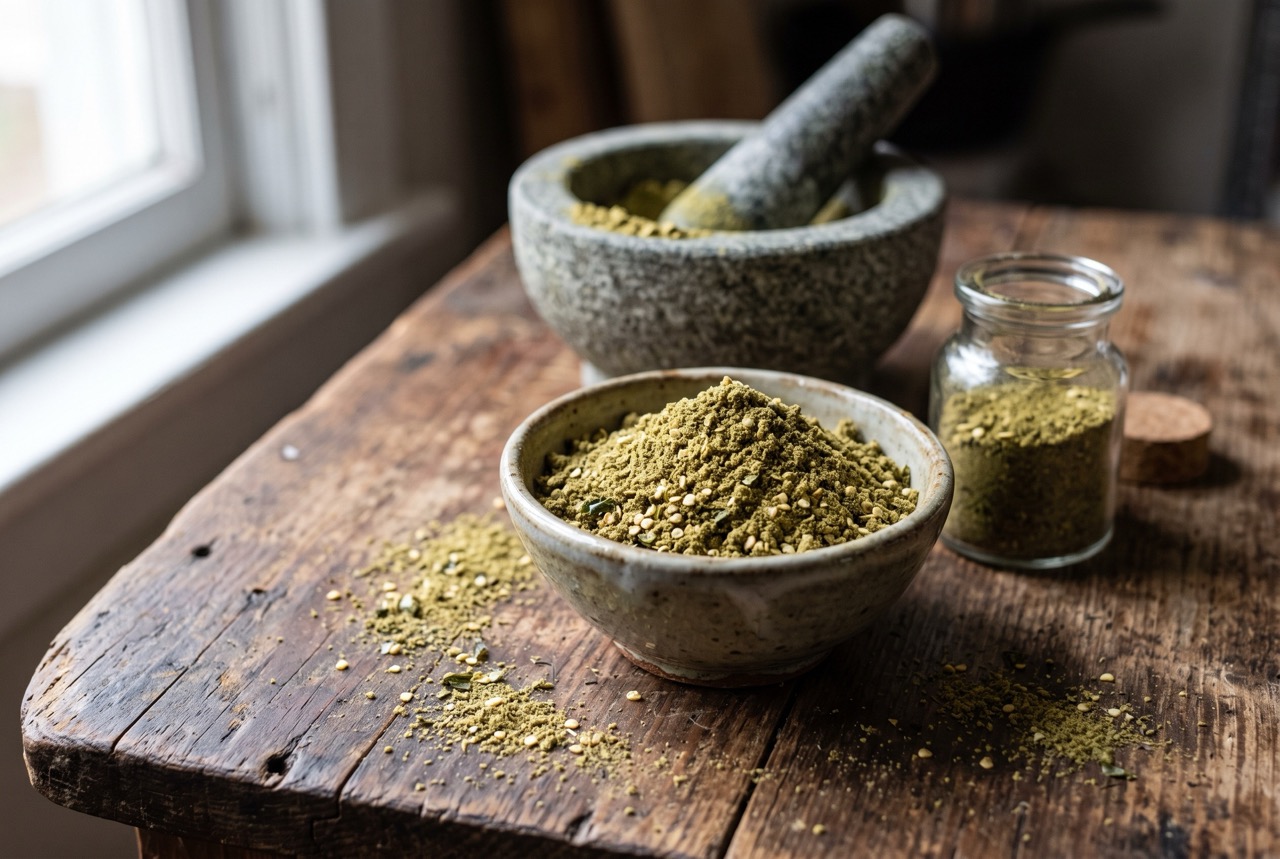
| Texture | Fine and dusty from a spice grinder, coarser and flakier from a mortar and pestle. |
| Best uses | Salsa verde and other green sauces, pork, chicken, and anywhere a red powder would muddy the color. |
| Customization ideas | Blend two peppers to set heat and flavor separately, or stop grinding early and keep it as a finishing flake. |
| Before you start | Peppers, a grinder, and either a dehydrator or several days of strong sun. Five minutes of prep, and then you wait. |
Flavor notes
Use it anywhere you’d use a red powder that is 100% chili pepper, like cayenne powder, ancho powder or chipotle powder, and what changes is the color and the flavor.
Green chilies are unripe, so a green Anaheim is just an Anaheim picked early, and left on the plant it would have turned red. Ripening builds sugar, and our own look at sugar in peppers puts a ripe red bell at 4.2 grams per 100 grams against 2.4 for a green one. So green powder comes out less earthy and less bold, and more of what you taste is the pepper itself rather than a smoking step behind it.
That also means your choice of pepper decides almost everything, because drying just concentrates what was already in the pod. Buy cayenne powder from three brands and you get roughly the same thing three times. Green chili powder depends entirely on what you had.
The recipe has you halve the pods and leave the seeds in, and that part is worth following. The seeds are attached to the placenta, and the placenta holds about 89% of the capsaicin in a chili. Scrape them out and most of the heat goes with them. Our guide to pepper anatomy breaks down the rest of the pod.
Adaptation ideas
The notes on the card cover heat. Wall thickness matters too, and it decides how long you’ll be standing around. A Hatch or an Anaheim is a roasting pepper with substantial walls and a lot of water in them. A serrano is thin and dries fast. Both work, but if you’re drying in the sun instead of a machine, thin walls help.
- Going mild? Anaheim and Padron both run 500 to 2,500 SHU, and both bring a little sweetness with them.
- Going hot? Serrano runs 10,000 to 23,000 SHU, roughly three times a jalapeño at the midpoints, and it’s thin enough to dry quickly.
- Blend two. Use a mild pepper for the body and a hot one for the kick. That way you set the flavor and the heat separately.
- Bells are a different product. They dry down into a sweet green powder with plenty of color and very little burn.
- Stop grinding early. A short turn in the mortar leaves you flakes instead of dust, which suits finishing better than mixing.
Drying notes
The two routes in the recipe are further apart in practice than they look. A dehydrator at 125°F is predictable and done overnight. Sun drying is free, and it depends entirely on your weather.
When the air is hot and dry, sun drying works well. In humid air, thick pods can mold where they touch each other before the insides ever dry out. Keep them cut side up, spaced with a gap around every pod, and bring them in if the dew is heavy. Give yourself longer than the three to four days the recipe quotes.
Once a pod snaps instead of bending, it’s done. Grind before that and you’ll get clumps and a shorter shelf life. Our guide to drying chili peppers covers the oven and hanging methods too.
Serving ideas
This is the powder for anything you want to stay green. It also suits mild food, where a bolder red powder would take over.
- Salsa verde and other green sauces. A spoonful adds heat without shifting the color the way a red powder would.
- On pork and chicken. Milder meats take it well, so a rub of the powder with cumin, oregano and garlic seasons them without covering them.
- Sprinkled on a salad. Straight over the leaves at the table, for a spice bump that stays out of the dressing.
- A finishing dust. Over sour cream, guacamole or a fried egg, where you’d spot red powder immediately.
- Compound butter. Mashed into softened butter with lime zest, then melted over corn or white fish.
Storage notes
Airtight, dark and cool. The color is the first thing you’ll notice changing. It fades toward olive and then a dull khaki, and light and warmth both speed that up, so keep it out of a clear jar on a sunny shelf. Go by the smell before you judge it by the color.
If you dried more than you’ll get through soon, keep part of the batch as whole pods and grind as you go. Ground spice has far more surface exposed to air than a whole pod does, so it fades faster. Our guides to storing dried peppers and how long dried peppers last both go further.
Like this recipe? You’ll love these too:
- Homemade Sriracha Powder: Another way to turn a pile of fresh peppers into something shelf stable.
- Spicy Homemade Chili Powder: The red counterpart, built as a seasoning blend from several ingredients.
- Jalapeño Salsa Verde: Somewhere obvious to put a spoonful of this.

A globe-spanning collection of 100 bold, fiery recipes — soups, fiery mains, curries, handhelds, snacks, sauces, even brunch — drawn from over a decade of PepperScale favorites.
Wicked Wednesday subscribers save 15% — join free.
Homemade Green Chili Powder
Ingredients
- 10 to 20 fresh green chilies Anaheim peppers, jalapeño peppers, etc…
Instructions
- Cut the stem and/or cap off of the chili peppers, then slice the peppers in half lengthwise (keep seeds in), then:
Option 1: Dehydrate using a dehydrator (faster, 8 to 10 hours)
- Place pepper halves in dehydrator and follow your machine’s instructions. It typically takes 8 to 10 hours at 125 degrees Fahrenheit.
- Remove the dried chili peppers from the dehydrator, then grind them using either a spice grinder or mortar and pestle.
- Store the green chili powder in an airtight container.
Option 2: Dehydrate by the sun (slower, 3 to 4 days)
- Place the chili peppers on a plate or baking dish, then set the dish in a location with direct sunlight.
- Once the chilies are dried (3 to 4 days), grind the chilies using a spice grinder or mortar and pestle.
- Store the green chili powder in an airtight container.
Notes
– Padron peppers: Mild heat, slightly nutty
– Hatch peppers: Mild to medium heat and earthy
– Jalapeño peppers: Medium heat, bright and grassy
– Serrano peppers: Medium heat (hotter than jalapeño), bright and grassy
I have a freeze dryer. Could these be freeze dried and then ground into a powder?
Does it clump or get hard over time?
Made with assorted peppers from the store and it turned out great! Absolutely CANNOT wait for the Hatch chilis to come into season this summer because I will roast & then dehydrate them to create a wonderful powder. Thanks for this recipe