Biquinho peppers are a rare thing: a truly mild Capsicum chinense, the same species as some of the hottest peppers in the world. At just 500 to 1,000 Scoville heat units, these little Brazilian chilies bring the fruity flavor that species is known for, with barely any burn at all.
Their name means “little beak” in Portuguese, and it fits. Each pod is about an inch long, rounded at the top and pinched to a distinct point. In Brazil, you’ll find them fresh or pickled, and in the U.S., the pickled ones are the easiest way to try them.


Last update on 2026-11-23. We earn a commission if you make a purchase, at no additional cost to you.

- Species
- C. chinense
- Origin
- Brazil
- Uses
- Culinary
How hot is a biquinho pepper, really?
They aren’t hot at all, really. Biquinho peppers barely tick the scale at 500 to 1,000 Scoville heat units (SHU). That may not seem surprising given the delicate look of these chilies, but it is given the species they come from. Habanero peppers are Capsicum chinense, ranging from 100,000 to 350,000 SHU. And so is the Carolina Reaper, with its 1.8 million SHU median heat. The biquinho is a total mild outlier in comparison. In this way, it’s a lot like the Trinidad Perfume (0 to 500 SHU).
Even among everyday chilies, the biquinho pepper is mild. Against our jalapeño reference point (2,500 to 8,000 SHU), the biquinho is two and a half to 16 times milder, and comparing medians (750 vs. 5,250 SHU), the jalapeño comes out about seven times hotter. It’s milder than a poblano (1,000 to 1,500 SHU), too. Perhaps the best way to think about it is that it sits somewhere between a banana pepper (0 to 500 SHU) and the poblano.
Some measurements come in even lower. Brazil’s agricultural research agency, Embrapa, puts biquinho at 80 to 500 SHU, and the heat can shift with climate and soil. In other words, most people can enjoy a handful of biquinho peppers with no issues at all.
What a biquinho pepper actually tastes like
This is what makes the biquinho special at the mild end of the scale. It has the fruity flavor you usually only get from chinense peppers much higher up the scale. That puts it in our Fruity & Tropical group. Fruitiness leads. Then come sweetness and a floral note, with a little tang behind them and a citrusy twist.
Several seed sellers, and Clemson Extension, also pick up a mild smoky note. Biquinhos are juicy, too, so they sort of pop in your mouth when you bite into one. When pickled, you get that sweetness and fruit along with a tangy brine, which is how most people outside Brazil first taste them.
How to pair biquinho peppers
Want partners that match it? Like other fruity peppers, the biquinho pairs best with the real fruit it echoes. Mango, pineapple and peach all share its tropical side, and lime or orange brings out its citrusy edge. Try fresh or pickled biquinhos in a fruit salsa. They blend right in.
For contrast, lean on salt, fat and creamy textures. Creamy cheeses like goat cheese or fresh mozzarella, salty feta and olives, and cured meats like prosciutto or salami all set off the pepper’s sweetness. That’s why pickled biquinhos are such a good fit on a charcuterie board.
And the heat? It’s so low you don’t need anything to tame it. Use them where you want sweetness and a little tang more than burn: on pizza, in a pasta salad or alongside grilled chicken or pork. Want more ideas? Look it up in our flavor pairing tool.

Cooking with biquinho peppers
There aren’t a lot of chilies you can call “snack ready”, but the biquinho is one. Particularly when pickled, it’s perfect for pouring a handful onto a plate and eating them as you would any snack. In Brazil, they’re often pickled with vinegar, garlic and herbs, sometimes with a splash of cachaça, and served as a bar snack.
These chilies, both fresh and pickled, are also delicious chopped for salsas, salads, sandwiches and pizza. The sweet zip of biquinhos is fun in pastas or atop meats, and they’re particularly good at adding some zesty flavor alongside chicken or pork. Embrapa lists rice, fish and grilled vegetables among their uses, too, as well as jellies and sauces.
More biquinho pepper cooking tips:
- Use them whole. They’re small enough that you can toss them into a dish whole, stem pulled, with no chopping.
- Add them late. The fruity aroma is the best part, so stir fresh biquinhos into cooked dishes near the end rather than simmering them for hours.
- Save the brine. The sweet-tangy liquid from a jar of pickled biquinhos works in salad dressings and marinades.
Biquinho colors and look-alikes
Red biquinho peppers mature from green to red, the typical ripening pattern for most chilies. You can also find yellow biquinhos, and Clemson Extension mentions a white type as well. Clemson’s Extension agent says she hasn’t noticed a difference in flavor across the colors.
The plant is also an excellent option for ornamental landscaping. No, it isn’t as colorful as some other ornamental peppers. But the shape alone makes it fun to feature in your landscaping. And you can grab a few for a quick snack.
What about Sweety Drops? That’s the name pickled biquinho often goes by in the U.S., and Clemson lists Sweety Drop as a common name. But the jarred Sweety Drops we checked are labeled only as peppers from Peru, so it’s hard to say which pepper is in a given jar. Don’t confuse either one with the Inca Red Drop, another small teardrop pepper from Peru. That one’s a different species and far hotter, at 10,000 to 30,000 SHU.
Where do biquinho peppers come from?
Biquinhos come from Brazil, where they’re also called pimenta de bico, chupetinho or chupetinha. They’re believed to have first been grown in the state of Minas Gerais. According to Embrapa, they were first sold commercially in the Triângulo Mineiro region of that state in the early 2000s, and today you’ll find them, fresh or pickled, throughout Brazil.
Where can you buy biquinho peppers?
Fresh biquinho peppers are hard to come by in the United States, but you can pick up jarred pickled peppers sold as Sweety Drops at some well-stocked supermarkets and specialty stores. If you have a green thumb, you can buy biquinho pepper seeds from many gardening stores and online.
Growing biquinho peppers
Growing your own may be the most reliable way to get fresh biquinhos. The plants stay around 2 feet tall, do well in containers and start bearing ripe peppers roughly 72 to 90 days after transplanting. Read our biquinho pepper planting guide for the full how-to, and plug your zip code into the Pepper Grow Planner for planting dates where you live.
The best biquinho pepper substitute
For fresh biquinhos, the closest swap is the Trinidad Perfume, another mild, fruity chinense pepper with a little less heat. Aji dulce (0 to 1,000 SHU) works too, with a sweeter, slightly smoky flavor. For the pickled kind, reach for Peppadews. They’re bigger and a touch hotter (1,100 to 1,200 SHU), but they bring the same sweet-tangy bite.
The bottom line
The biquinho is a tiny Brazilian pepper with the fruity flavor of a habanero and almost none of the heat. Eat them pickled straight from the jar, toss them into salads and pizzas, or grow a plant or two and pick them fresh. Either way, they’re easy to love.
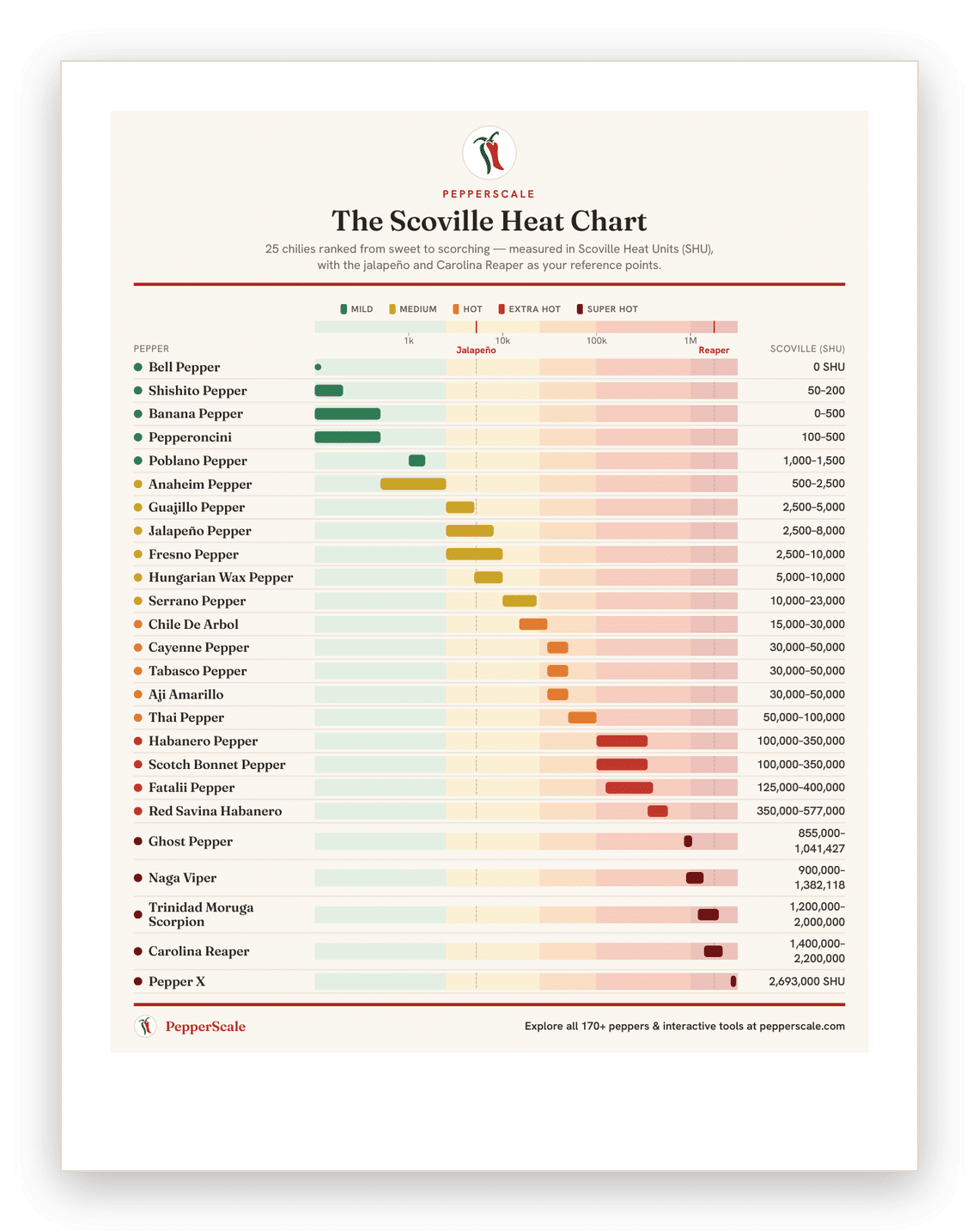
Get the free PepperScale Scoville Heat Chart
A printable, at-a-glance ranking of 25 chilies from sweet to scorching — with the jalapeño and Carolina Reaper as your reference points. Join the newsletter and we’ll send it straight to your inbox.
No spam — just Wicked Wednesday recipes and occasional extra dashes of chili pepper inspiration. Unsubscribe anytime.
Related reading
- The Hot Pepper List: Find the biquinho among 170-plus chilies, sorted from sweet to superhot.
- Small Peppers: Seventeen little chilies, from the mildest snackers to the tiny superhots.
- Yellow Peppers: The yellow biquinho has plenty of company, from sweet to scorching.
I grew them for the first time this year and I love them! More “spicy” than hot.