The cayenne is the jack of all trades of the chili world, and growing your own gives you the makings of homemade powder, flakes and hot sauce. The plants stay compact, around 18 to 24 inches tall, and their slim pods reach 5 to 6 inches long before turning from green to bright red. Your first harvest comes roughly 70 to 75 days after transplanting.
Want the heat numbers and kitchen uses? They’re in our cayenne pepper profile, so this guide can stick to the plant.

Last update on 2026-11-17. We earn a commission if you make a purchase, at no additional cost to you.

- Heat
- 30,000–50,000 SHU
- Start seeds indoors
- 8–12 weeks before your last spring frost
- Germination
- 7–14 daysIn soil around 70–85°F.
- Harden off
- 7–14 days before transplanting
- Transplant
- After last frost, once nights stay at 50°F or warmer
- First harvest
- 75 days after transplanting
- Plant height
- 18–24 inches
- Containers
- Does well in a container
Where these figures come from
- Start seeds indoors: Baker Creek, Cayenne Long Thin; Park Seed, Long Red Slim
- Germination: Baker Creek, Cayenne Long Thin; Pinetree Garden Seeds, Cayenne-Long; University of Minnesota Extension, Growing peppers; Nebraska Extension G1879, Garden Peppers; NMSU Chile Pepper Institute, Special Seed Starting Instructions; Utah State University Extension, Peppers in the Garden
- Harden off: UC ANR, Growing Peppers; Penn State Extension (Chester Co. Master Gardeners), Growing Peppers; Nebraska Extension G1879, Garden Peppers
- Transplant: University of Minnesota Extension, Growing peppers; UGA Extension C1005, Home Garden Peppers; NMSU Chile Pepper Institute, Growing Tips
- First harvest: Burpee, Long Red Slim; Park Seed, Long Red Slim
- Plant height: Park Seed, Long Red Slim; Burpee, Long Red Slim; Baker Creek, Cayenne Long Thin
- Containers: Baker Creek, Cayenne Long Thin
When to plant cayenne peppers where you live
Young cayenne plants can’t survive frost, and cool nights stall them. So hold off on planting out until your last frost is behind you, nighttime lows are staying at 50°F or higher (55°F is safer) and the ground has warmed to roughly 60°F. You’ll see both night thresholds marked in the planner.
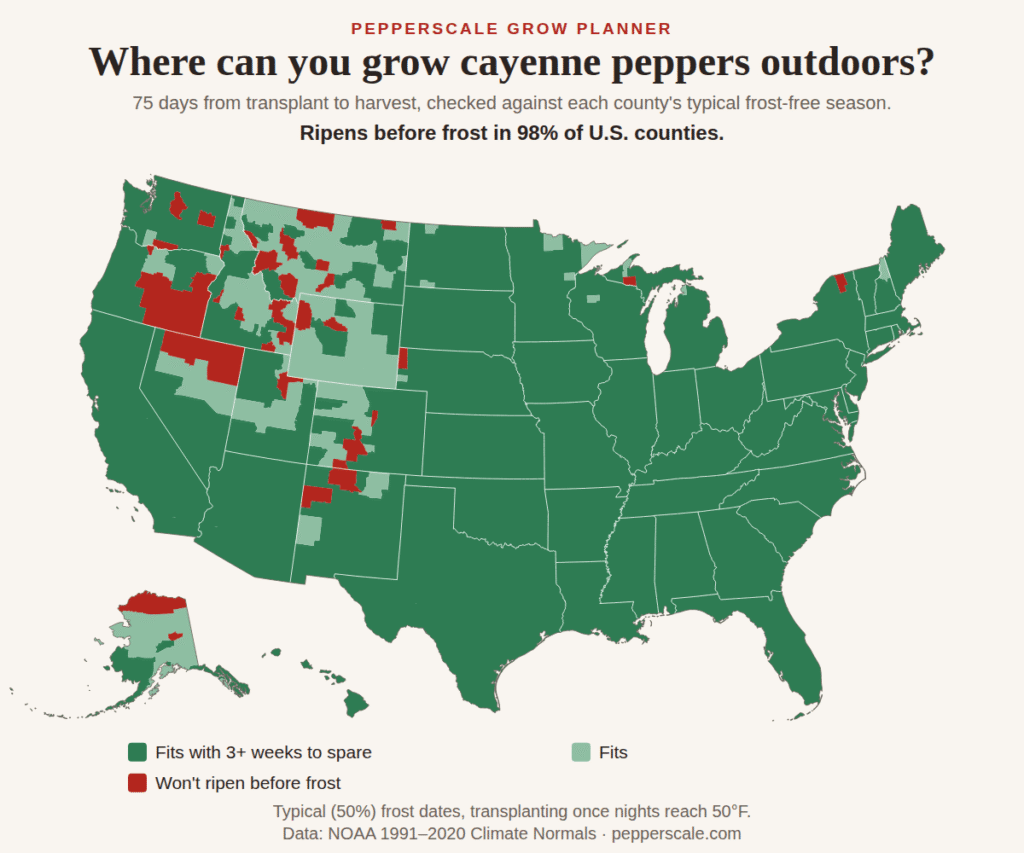
Type in your zip code to get dates drawn from your local NOAA frost records, from sowing and hardening off to planting out and the first pick. Then it’ll check your season against 75 days to maturity. Cayennes clear that bar across 98% of the country’s counties, so for most gardeners the question is when to plant, not whether.
Starting cayenne pepper seeds indoors
Get seeds going inside 8 to 12 weeks ahead of your area’s average last frost. Press them a quarter inch into seed-starting mix and keep it warm. A heat mat that holds the soil at 75 to 85°F is ideal. Even then, it’ll take one to two weeks for the first sprouts to show. Using seed from a few seasons back? Find out how long pepper seeds stay viable.
Once they’re up, the seedlings need strong light, so set a grow light just above the leaves and raise it as they grow. Before they go outside, toughen them up over a week or two, starting with short spells in the shade and adding time and sun each day. If any start to flower before planting day, pinch those first blooms off.
Planting cayenne peppers outside
Choose a spot in full sun. Cayennes do best with 8 hours or more of direct light a day.
Set plants 18 to 24 inches apart. They’ll grow upright to about 2 feet, so a row of them fits nicely along a narrow bed or the edge of a vegetable garden. Laying out a bigger planting? Our pepper spacing chart has the numbers.
Good drainage matters more than rich soil here, so work compost into heavy ground before you plant. Cayennes do well in a pH range of 6.0 to 7.0, from slightly acidic to neutral. If a soil test says yours is outside that, see how to adjust soil pH for peppers.
Once the soil has warmed, a layer of straw or shredded leaves helps hold in moisture and keeps weeds down. Short growing season? Stretch black plastic across the bed early to warm the soil sooner.
Growing cayenne peppers in containers
Thanks to their compact size, cayennes are among the easier peppers to grow in a pot. A 2-gallon container is the minimum, and a bigger one won’t dry out as fast in summer heat. Make sure it has drainage holes, and feel the soil daily once the weather turns hot. Our container pepper guide covers potting mixes and more.
When fall comes, bring a potted cayenne inside ahead of frost, and it can keep growing through winter. Here’s how to handle hot peppers indoors.
Watering and feeding cayenne peppers
Water deeply, then let the top inch or two of soil dry before you water again. In the ground, that usually adds up to about an inch a week, counting rain, and your planner results show how much rain typically falls each month. Try to keep it consistent, since swinging between parched and soggy is linked to blossom-end rot. More on watering peppers and on the signs of overwatering.
Cut back on nitrogen once the plants start flowering, because heavy nitrogen tends to give you leaves instead of pods. For what to feed and when, see our guide to fertilizing peppers.
When to pick cayenne peppers
You’ll get your first full-size pods about 70 to 75 days after transplanting. Cayennes are usable green once they reach full size. But for powder, flakes and the classic flavor, wait until they turn fully red. Most will be 5 to 6 inches long and about half an inch thick.
Snip the pods free with scissors or pruners rather than pulling, since pepper branches break easily. At 30,000 to 50,000 Scoville heat units, cayennes are hot enough that gloves are a good idea, because the capsaicin on your fingers can end up in your eyes. If it does, here’s how to stop chili burn.
Cayennes dry well, which is a big part of their appeal. Let the ripe red pods start drying on the plant late in the season, or pick them and finish them indoors. Our guide to drying chili peppers covers the methods, and once they’re brittle, you can grind them into powder or crush them into homemade red pepper flakes.
Frost on the way? Pick everything first. Full-size green pods are still worth using, and ones that have started to color may finish indoors, so read up on ripening peppers off the vine.
Common cayenne pepper plant problems
- Blossoms dropping during a hot spell: peppers stop setting much fruit when days climb to around 90°F. Check your planner dates to see when the hottest weeks usually arrive.
- Clusters of small insects on new growth: those are aphids, and a hard spray of water knocks many of them off. If you see fine webbing instead, look for spider mites.
- Leathery, dark patches on the bottom of the pods: blossom-end rot, usually from uneven watering. Here’s more on calcium and blossom-end rot.
- White or tan spots on the sunny side of the pods: sunscald.
- Curling or yellowing leaves: we cover both, in curled pepper leaves and pepper plants going yellow.
- Plants that stall: here are the usual reasons for slow-growing pepper plants.
- Frost before the harvest is in: see how pepper plants handle frost.
For anything else, our rundown of pepper diseases and problems is the next place to look.
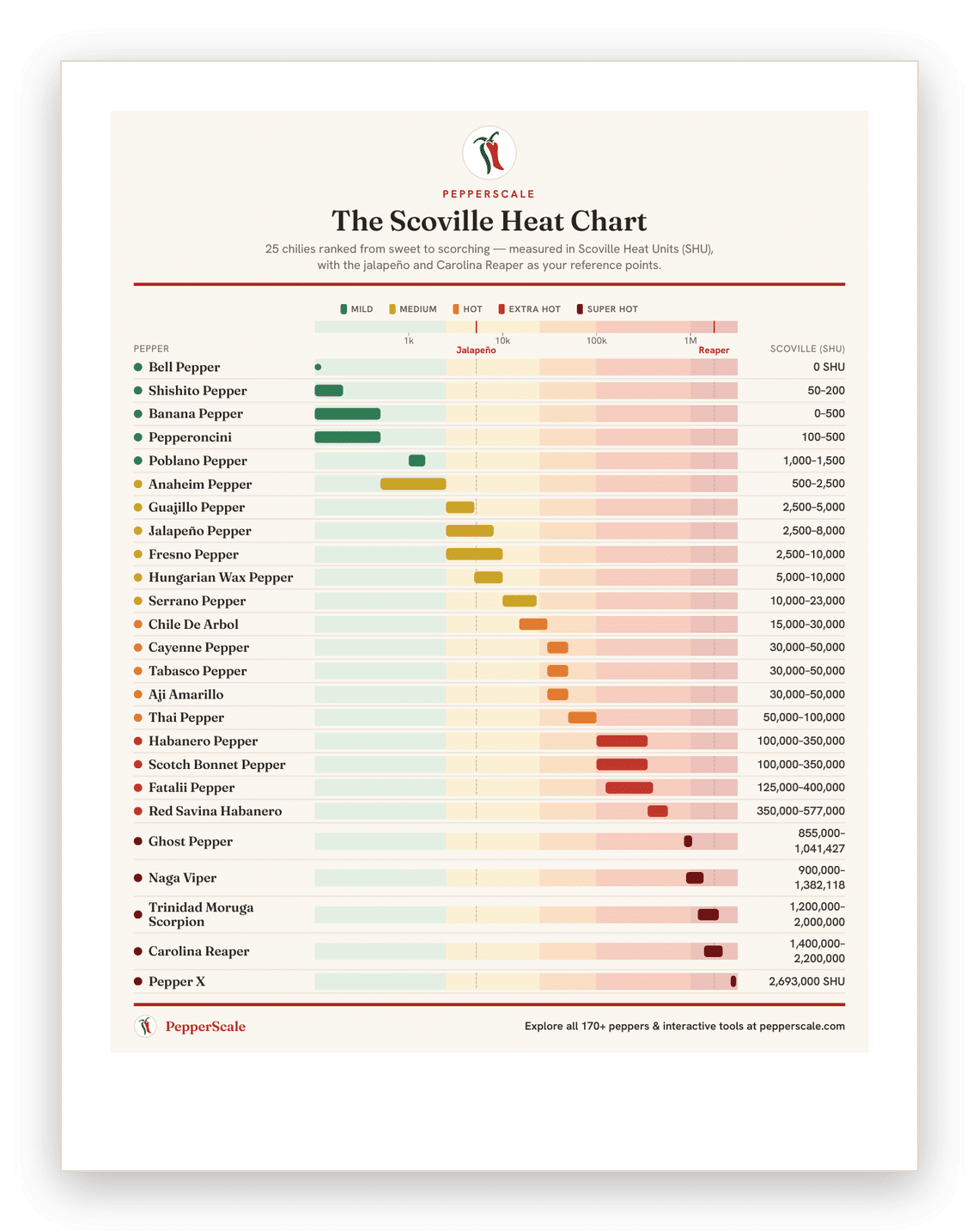
Get the free PepperScale Scoville Heat Chart
A printable, at-a-glance ranking of 25 chilies from sweet to scorching — with the jalapeño and Carolina Reaper as your reference points. Join the newsletter and we’ll send it straight to your inbox.
No spam — just Wicked Wednesday recipes and occasional extra dashes of chili pepper inspiration. Unsubscribe anytime.
Related reading
- The Serrano Pepper Planting Guide: A milder chili for fresh salsas, with its own planting schedule.
- How To Store Dried Peppers: Keep this year’s dried cayennes in good shape until next season.
- Pepper Companion Plants: What to grow next to your cayennes, and what to plant somewhere else.