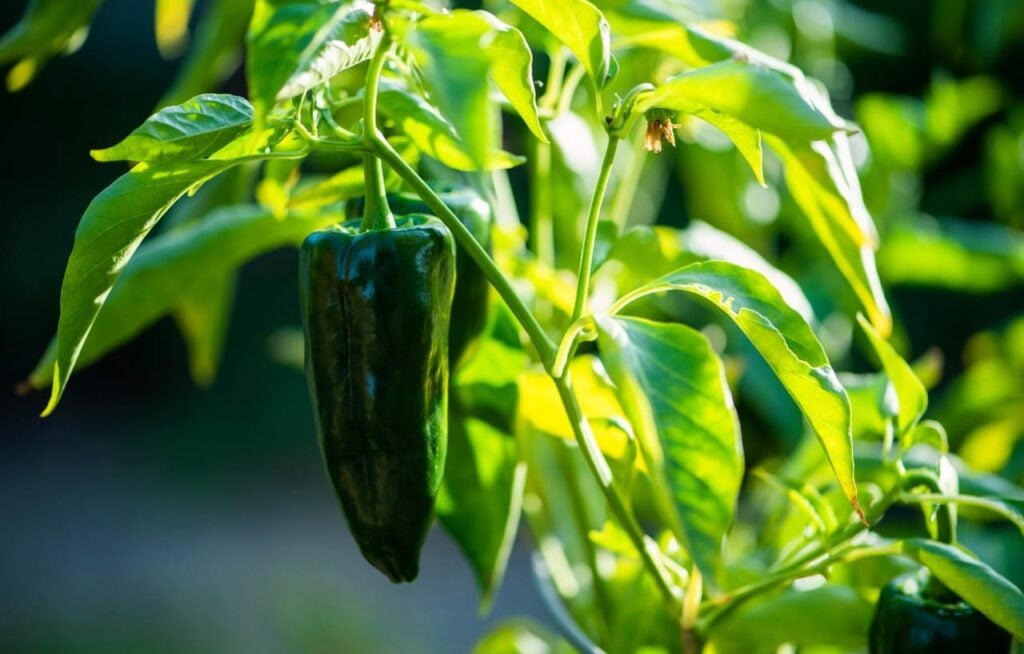
Poblanos are the peppers for roasting and stuffing, and homegrown ones let you pick them at exactly the stage you want. The plants grow about 2 to 3 feet tall, with broad, heart-shaped pods that start out dark green. Pick them green roughly 65 to 75 days from transplant, or give them a few more weeks to turn red, the stage that gets dried into anchos.
Heat levels, flavor and recipes are all in our poblano pepper profile. This guide covers the plant, from seed to the last pick of the season.

Last update on 2026-11-15. We earn a commission if you make a purchase, at no additional cost to you.
- Heat
- 1,000–1,500 SHU
- Start seeds indoors
- 8–12 weeks before your last spring frost
- Germination
- 7–25 daysIn soil around 70–85°F.
- Harden off
- 7–14 days before transplanting
- Transplant
- After last frost, once nights stay at 50°F or warmer
- First harvest
- 65–75 days after transplanting, for green fruitRed fruit takes about 20 days more.
- Plant height
- 24–36 inches
- Containers
- Does well in a container
Where these figures come from
- Start seeds indoors: Baker Creek, Poblano; Pinetree Garden Seeds, Ancho (general pepper instructions)
- Germination: Sandia Seed Company, Poblano; Baker Creek, Poblano; Territorial Seed, Ancho Poblano; University of Minnesota Extension, Growing peppers; Nebraska Extension G1879, Garden Peppers; NMSU Chile Pepper Institute, Special Seed Starting Instructions; Utah State University Extension, Peppers in the Garden
- Harden off: UC ANR, Growing Peppers; Penn State Extension (Chester Co. Master Gardeners), Growing Peppers; Nebraska Extension G1879, Garden Peppers
- Transplant: University of Minnesota Extension, Growing peppers; UGA Extension C1005, Home Garden Peppers; NMSU Chile Pepper Institute, Growing Tips
- First harvest: Territorial Seed, Ancho Poblano; Sandia Seed Company, Poblano; Burpee, Poblano (Ancho)
- Plant height: Burpee, Poblano (Ancho); Baker Creek, Poblano; Sandia Seed Company, Poblano
- Containers: Baker Creek, Poblano; Sandia Seed Company, Poblano
When to plant poblano peppers where you live
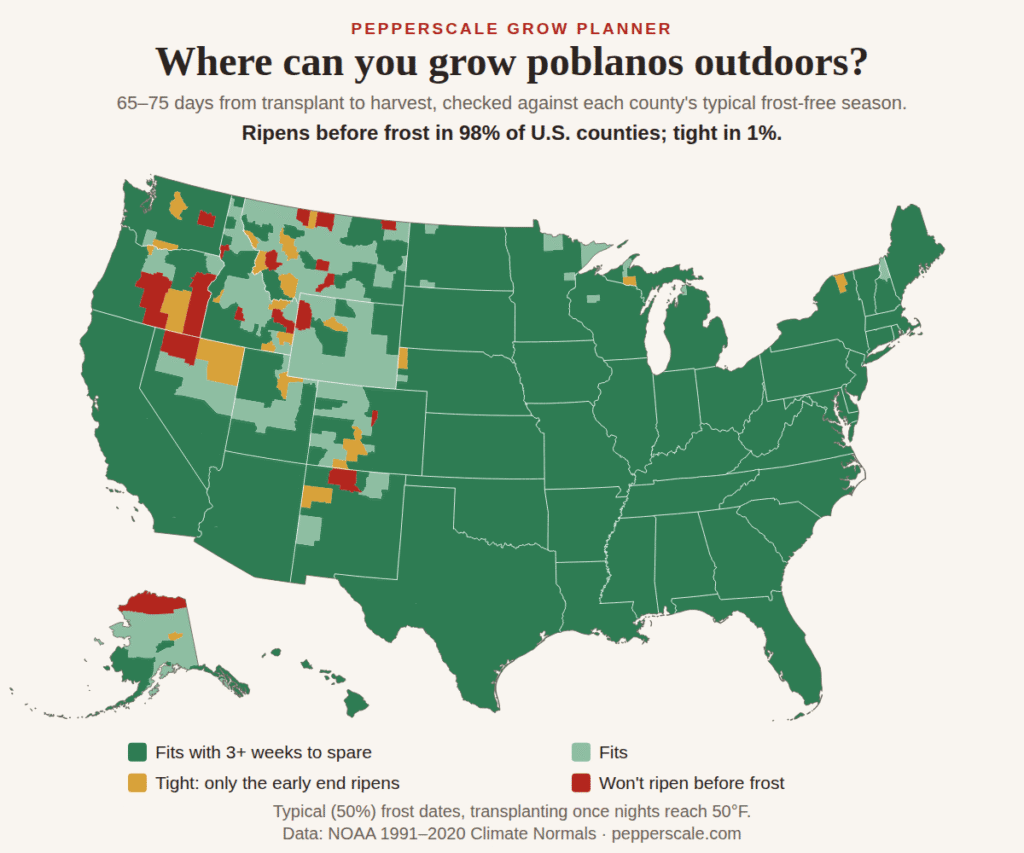
Young poblanos die in a frost, and cold ground holds them back. Plant out only after the final frost of spring. The nights should be reliably at or above 50°F (55°F if you want a cushion), and the soil should be close to 60°F. The planner shows you when both night temperatures usually arrive.
Enter your zip code to get a schedule built on your local NOAA frost records: sowing, hardening off, planting out and a rough harvest date. It also weighs 65 to 75 days against your frost-free season. Across the U.S., poblanos have time to ripen in 98% of counties, while another 1% can only count on the faster plants.
Starting poblano pepper seeds indoors
Give them a long head start, sowing two to three months (8 to 12 weeks) before that final spring frost. Press the seed a quarter inch deep into seed-starting mix and keep it warm, since a heat mat at 75 to 85°F speeds things up. And even so, poblanos can be slow: anywhere from about a week to more than three before the seedlings break through. Not sure your seed is still good? Read how long pepper seeds keep.
Hang a grow light just over the seedlings so they don’t stretch, and move it up as they grow. Then, 7 to 14 days ahead of planting out, start hardening them off: an hour or two outdoors in filtered light at first, adding more sun each day.
Planting poblano peppers outside
Plant them where they’ll get full sun, ideally 8 hours a day or more.
Space poblanos 14 to 24 inches apart, closer for a compact bed and wider where summers are long and plants get big. Those thick-walled pods add up to a heavy load, so a sturdy stake or tomato cage set at planting time keeps branches from bending or snapping later. For layouts and row spacing, check pepper spacing basics.
Loose, well-drained soil with plenty of organic matter suits them best, and a pH of 6.0 to 7.0 is the target. Test your soil before you plant, and if the number is off, here’s how to correct soil pH. If you can, choose a bed that hasn’t grown tomatoes, potatoes, eggplant or other peppers for a couple of years.
Once the ground has warmed, mulch around the plants to keep moisture in and weeds out. Got a short season? Black plastic spread over the bed for a while beforehand helps the soil heat up.
Growing poblano peppers in containers
Poblanos do well in containers, too. A 5-gallon pot or larger, with drainage holes, gives a big, pod-heavy plant room for its roots and enough weight to keep it from tipping over. How often should you water? In summer heat, check pots every day, since they dry out fast. See our guide to growing peppers in pots for potting mixes.
A potted plant can also move indoors ahead of frost and carry on through winter. Here’s how to grow peppers indoors.
Watering and feeding poblano peppers
Plan on roughly 1 inch of water weekly from rain and the hose combined, soaking the soil deeply rather than giving it a daily sprinkle. Water in the morning at the base of the plant so the leaves are dry by evening. Your planner results list typical monthly rainfall where you live. Steady moisture matters, too, because erratic watering is linked to blossom-end rot. See our pepper watering guide and signs you’re overwatering.
Go easy on nitrogen once flowers appear, since too much tends to produce a leafy plant with fewer pods. But a soil test tells you what your bed needs, and our fertilizer guide walks through the timing.
When to pick poblano peppers
Most poblanos are picked green, once they’re full size: about 4 to 5 inches long, glossy and firm. That usually takes 65 to 75 days from the day you set them out. Any you leave on the plant go red a few weeks later, with a little more sweetness and heat.
Red poblanos are the ones that get dried into anchos. Let them ripen fully on the plant before you pick them for drying, then follow our steps for drying chilies at home.
Snip the pods free with pruners rather than tugging, because the branches break easily under all that weight. Poblanos are mild, but cutting into them still releases capsaicin, so scrub up before touching your eyes. Just in case, here’s how to soothe chili burn.
If frost is forecast, harvest every full-size pod. Green ones can go straight to the roasting pan, and partly colored ones may finish ripening indoors with our tips for ripening peppers after picking.
Common poblano pepper plant problems
- Few pods during a hot spell: plants set little fruit when afternoons hit around 90°F, and your planner shows when the hottest stretch of summer usually starts.
- Insects clustered on new leaves: likely aphids, which a strong spray from the hose can dislodge. Fine webbing points to spider mites instead.
- Big green caterpillars stripping the leaves: hornworms, which also feed on tomatoes. Pick them off by hand.
- A sunken, dark spot at the tip of a pod: blossom-end rot. Steadier watering helps, and there’s more in our blossom-end rot guide.
- Faded, papery patches on exposed pods: sunscald on peppers.
- Leaves curling or yellowing: start with curling pepper leaves or yellow pepper leaves.
- Plants that won’t size up: see what stunts pepper plants.
- Cold nights arriving early: here’s what cold does to pepper plants.
Seeing something else? Work through our list of common pepper plant problems.
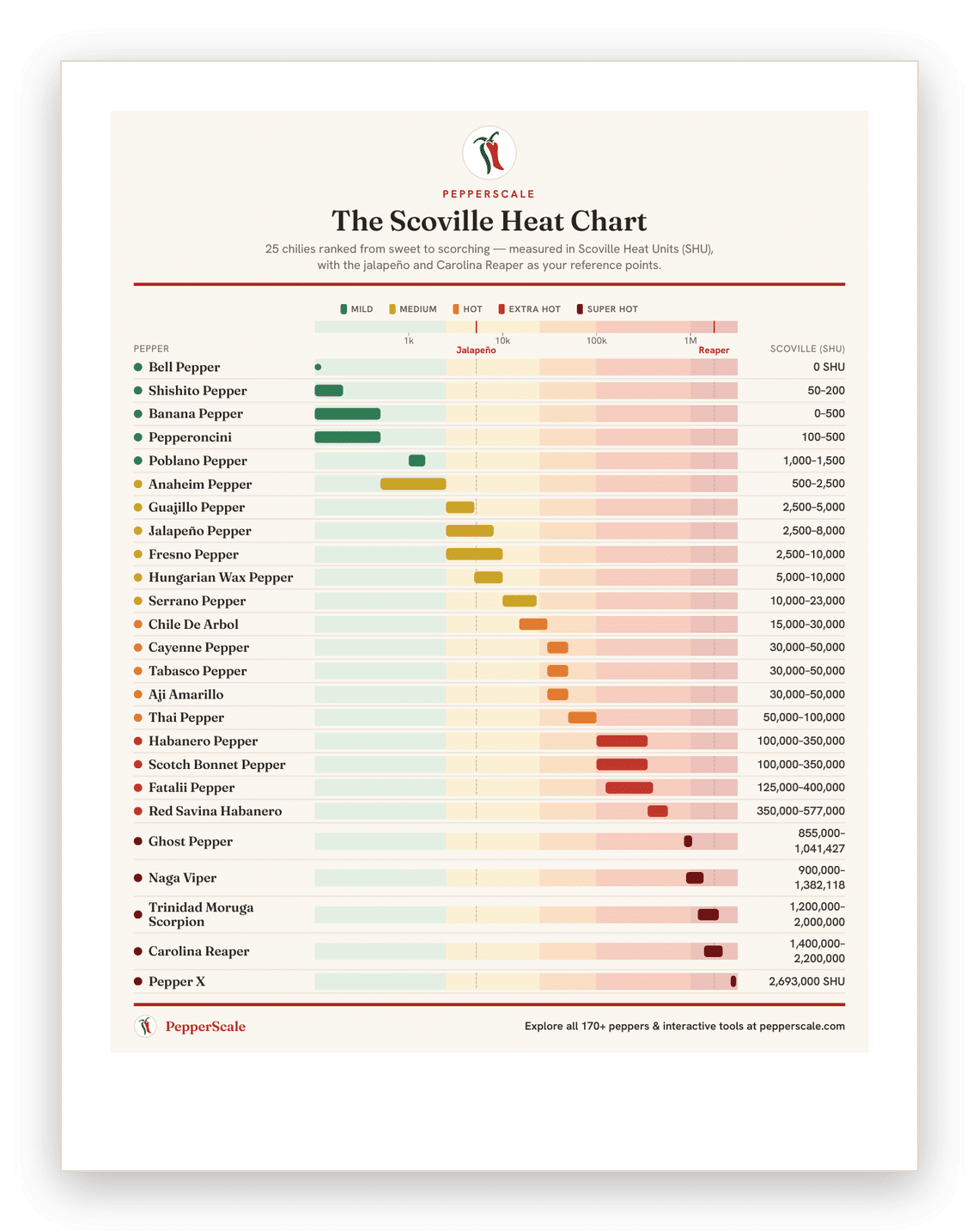
Get the free PepperScale Scoville Heat Chart
A printable, at-a-glance ranking of 25 chilies from sweet to scorching — with the jalapeño and Carolina Reaper as your reference points. Join the newsletter and we’ll send it straight to your inbox.
No spam — just Wicked Wednesday recipes and occasional extra dashes of chili pepper inspiration. Unsubscribe anytime.
Related reading
- The Anaheim Pepper Planting Guide: Another mild roasting chili, on a similar growing schedule.
- How To Store Dried Peppers: Where your homemade anchos should live once they’re dried.
- Pepper Companion Plants: Good and bad neighbors for a bed of poblanos.
I planted two starts in the spring labeled “poblano peppers”. They are now ready for harvest but they don’t look like poblanos at all. They are only around 2-inches long and the stem attaches to a rounded top, unlike the poblanos that the stem attaches to an inward-curved top.
Is there a “dwarf” plant? Any idea what I have…because I’m now not sure what to do with them?
can you eat the leaves of poblano pepper?