
Eating Pepper Seeds: The Fact And Fiction
Pepper seeds aren’t toxic and they aren’t where the heat lives — that’s the pale membrane they’re attached to. Here’s what the seeds actually do, when to take them out, and how.
Pepper seeds aren’t toxic and they aren’t where the heat lives — that’s the pale membrane they’re attached to. Here’s what the seeds actually do, when to take them out, and how.

Fresh fruits and vegetables are among the most perishable food items, so do peppers need to be refrigerated to keep them at their peak? The quick answer: No, they don’t, within reason. Let’s break down why that is and what impact refrigeration does have on …

Dried chilies are a terrific way to save space in the kitchen and to enjoy chili pepper heat all-year round. To use them for most recipes, you’re going to need to rehydrate them prior to use, but what’s the best way to do this? Rehydrating just means adding water, is …

Do you love hot sauce but hate when it separates? It’s one of the most frustrating things about the condiment, especially with homemade hot sauces. But what causes hot sauce to separate in the first place? And more importantly, how can you prevent it from …

Jalapeño peppers are the most popular chilies on the planet. Its very eatable low-medium heat and bright, grassy flavor make the chili very versatile in the kitchen. But, unless you’re a gardener with a penchant for spicy food, you may not know that there are …

Saving pepper seeds is straightforward in principle — leave a pepper on the tree until it gets very ripe. Once it ripens, you cut it open and store the seeds until you are ready to plant again. Simple, right? The truth is that, while it’s …

It’s not only your mouth that can catch fire with spicy chilies. Your hands, your eyes, really anywhere you have skin, can suffer from chili burn. But hands, of course, are the most common, and they can transfer the pain elsewhere if not remedied quickly. …

We all have a heavy hand from time to time. But being heavy-handed with chili powder can quickly turn a dish from delicious to a devilish disaster. So if you’ve used too much chili powder, what can you do to save that meal from the …

Cayenne pepper typically rates between 30,000 and 50,000 Scoville heat units (and sometimes hotter). To put that into perspective, jalapeño peppers range from 2,500 and 8,000 SHU. In short, a little cayenne pepper can go a long way. It also means that it is easy to use …

The claim that spicy foods can increase your metabolism is not a new one. A little online research will show numerous sources making claims that spicy foods increase metabolism enough that they can actually help you to lose weight. Is this true? Does spicy affect …
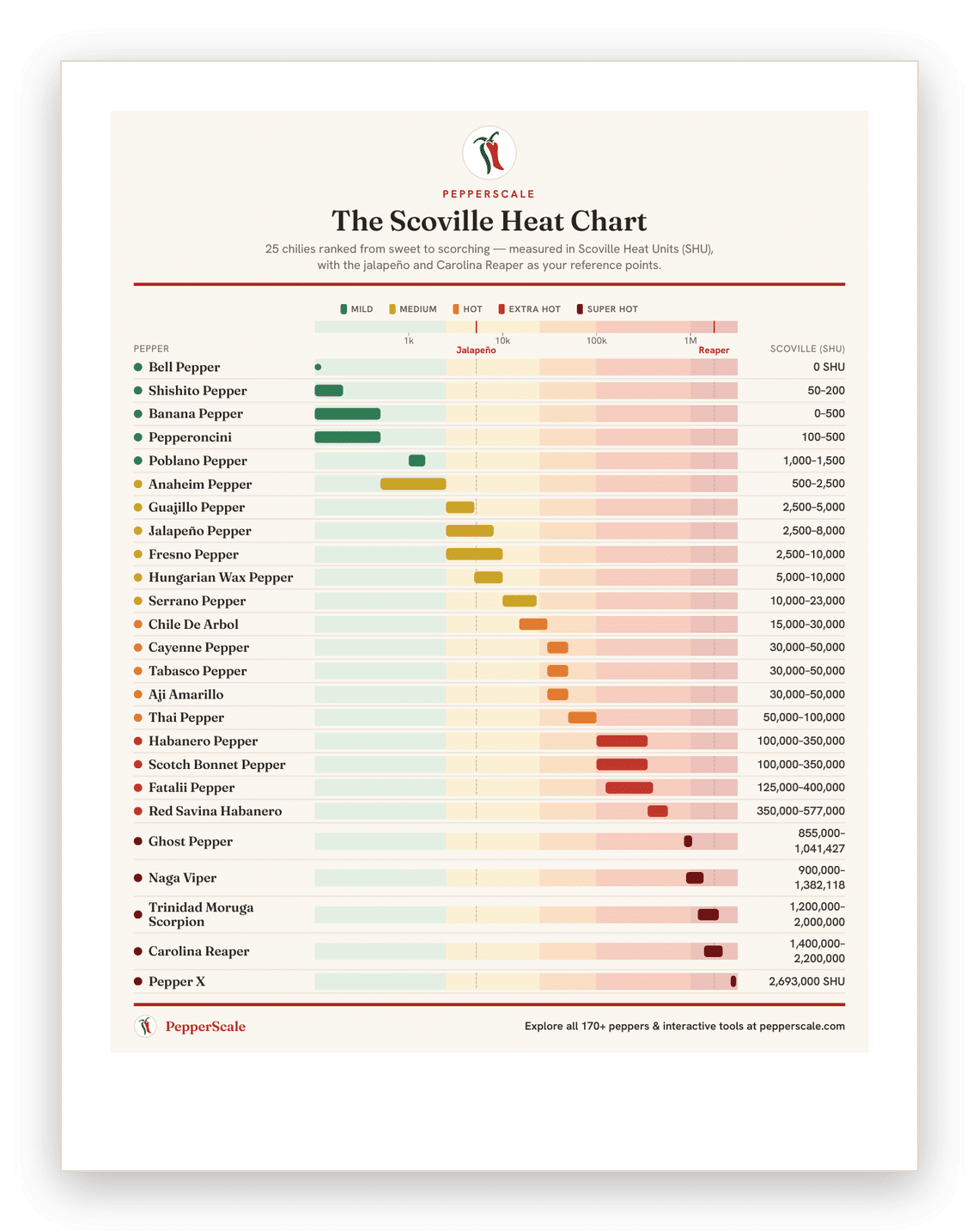 Free printable
Get the free PepperScale Scoville Heat Chart
25 chilies ranked from sweet to scorching — free and printable. Join the newsletter and we’ll send it to your inbox.
Subscribers get 15% off any PepperScale ebook — code in welcome email.
No spam — just Wicked Wednesday recipes and occasional extra dashes of chili pepper inspiration. Unsubscribe anytime.