Fresh Peruvian White habaneros are hard to find in stores, so growing them is the most dependable way to get a supply. Plants reach 2 to 3 feet, do well in pots, and start giving ripe pods roughly 90 to 99 days after they go outside. Most of the work is giving these slow-starting habaneros enough warmth early on.
Looking for the heat, flavor and cooking side? It’s all in our Peruvian White habanero profile. This guide sticks to getting them from seed to harvest.

Last update on 2026-11-25. We earn a commission if you make a purchase, at no additional cost to you.

When to plant Peruvian White habaneros where you live
Habaneros sulk in the cold, and the Peruvian White is no exception. Wait for three things before transplanting: the last frost date behind you, nights steadily above 50°F (55°F is safer still), and soil near 60°F a few inches down.
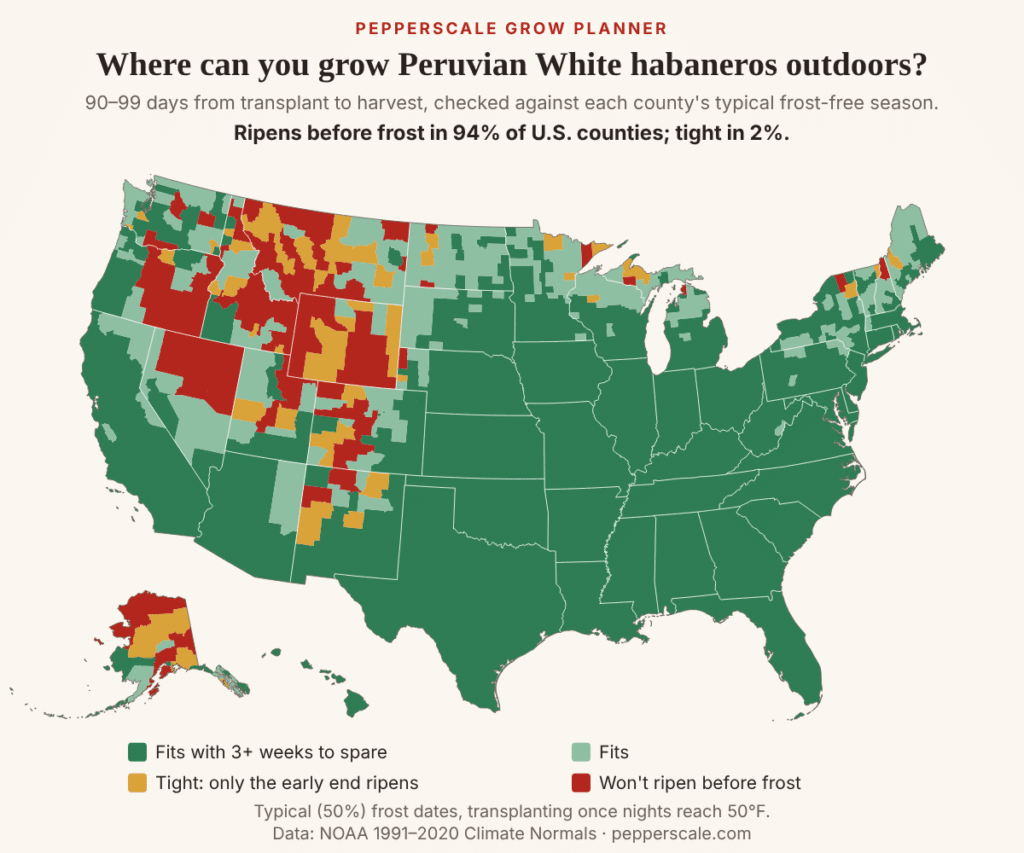
With your zip code, the planner below finds the closest NOAA station’s frost dates and builds a schedule for seed starting, hardening off, transplanting and harvest. It also tests whether 90 to 99 days fits between your frosts. In most places it does: the map puts this pepper ripening before frost in 94% of U.S. counties, with the timing tight in another 2%.
Starting Peruvian White habanero seeds indoors
Sow 6 to 10 weeks ahead of your expected last frost, a quarter inch deep in damp seed-starting mix. Habanero seed is slow, so be patient, since germination can take two to five weeks even with a heat mat holding the mix at 70 to 85°F. Not sure your seeds are still good? Check how long pepper seeds keep.
When the sprouts appear, put a grow light a few inches above them so they don’t get leggy and stretch toward the window. Then spend a week or two hardening them off, with short, shaded sessions outdoors at first, building up to all-day sun.
Planting Peruvian White habaneros outside
Pick a spot in full sun and space the plants 18 to 24 inches apart, since they grow 2 to 3 feet tall and about that wide. Mixing them with other peppers in one bed? Our spacing chart for peppers has the numbers.
They like well-drained soil enriched with compost, ideally between pH 6.0 and 7.0. If you’ve never tested your soil, now’s a good time, and our pepper soil pH guide walks through adjusting it.
Spread a layer of straw or shredded leaves around the plants once the soil has warmed. It keeps the moisture even and the weeds down. But keep it a little away from the stems.
Growing Peruvian White habaneros in containers
Pots suit this pepper well, since the compact plants fit nicely on a patio. Pick a container with drainage holes, and expect to water more often than you would in a bed, because pots dry out faster. Our guide to growing peppers in pots covers sizes and mixes.
A pot also makes it easy to beat the frost. Bring the plant inside in fall, and see our guide to growing peppers indoors for keeping it healthy under lights.
Watering and feeding Peruvian White habaneros
Give the soil a deep soak, then wait until the top inch is dry before watering again. In the ground, that’s often around an inch of water a week, rain included. And pots on a hot patio may need it daily. Even watering helps, since swings from dry to soggy are linked to blossom-end rot. See our posts on how to water peppers and overwatering for more.
Easy does it with fertilizer, because lots of nitrogen grows a big green bush with few pods, the opposite of what you want from a pepper plant. Our pepper feeding guide explains what to use and when.
When to pick Peruvian White habaneros
Look for the first ripe pods about 90 to 99 days after transplanting, starting green and ripening through pale yellow to creamy white, which is your cue to pick. Since each plant can set dozens of pods, check it every few days once they start coloring.
Snip the pods off with scissors or pruners so you don’t tear the branches. And wear gloves while you harvest, because this is full habanero heat.
Frost on the way? Pick whatever’s left, or move potted plants indoors. Pods that are still green can sometimes finish on the counter, so try these tips for ripening peppers after picking.
Common Peruvian White habanero plant problems
- Flowers dropping without setting fruit: common once daytime highs pass about 90°F. The planner can tell you when those hot stretches typically start in your area.
- Mottled or mosaic leaves: often a virus. Tobacco mosaic can spread from hands that have handled tobacco, so wash first. WSU Extension’s HortSense has pictures.
- Soft, dark patches at the pod tips: blossom-end rot, usually from uneven watering.
- Papery, faded patches on sun-facing pods: that’s sunscald.
- Leaves that curl or yellow: work through the causes in pepper leaf curl and yellow pepper leaves.
- Small insects on stems and leaf undersides: usually aphids. If you see fine webbing, look for spider mites.
- Plants stuck at the same size: habaneros start slow, but if growth stalls, see slow-growing pepper plants.
- A frost warning before harvest: read whether frost will kill your peppers.
Still stumped? Browse our pepper problems guide.
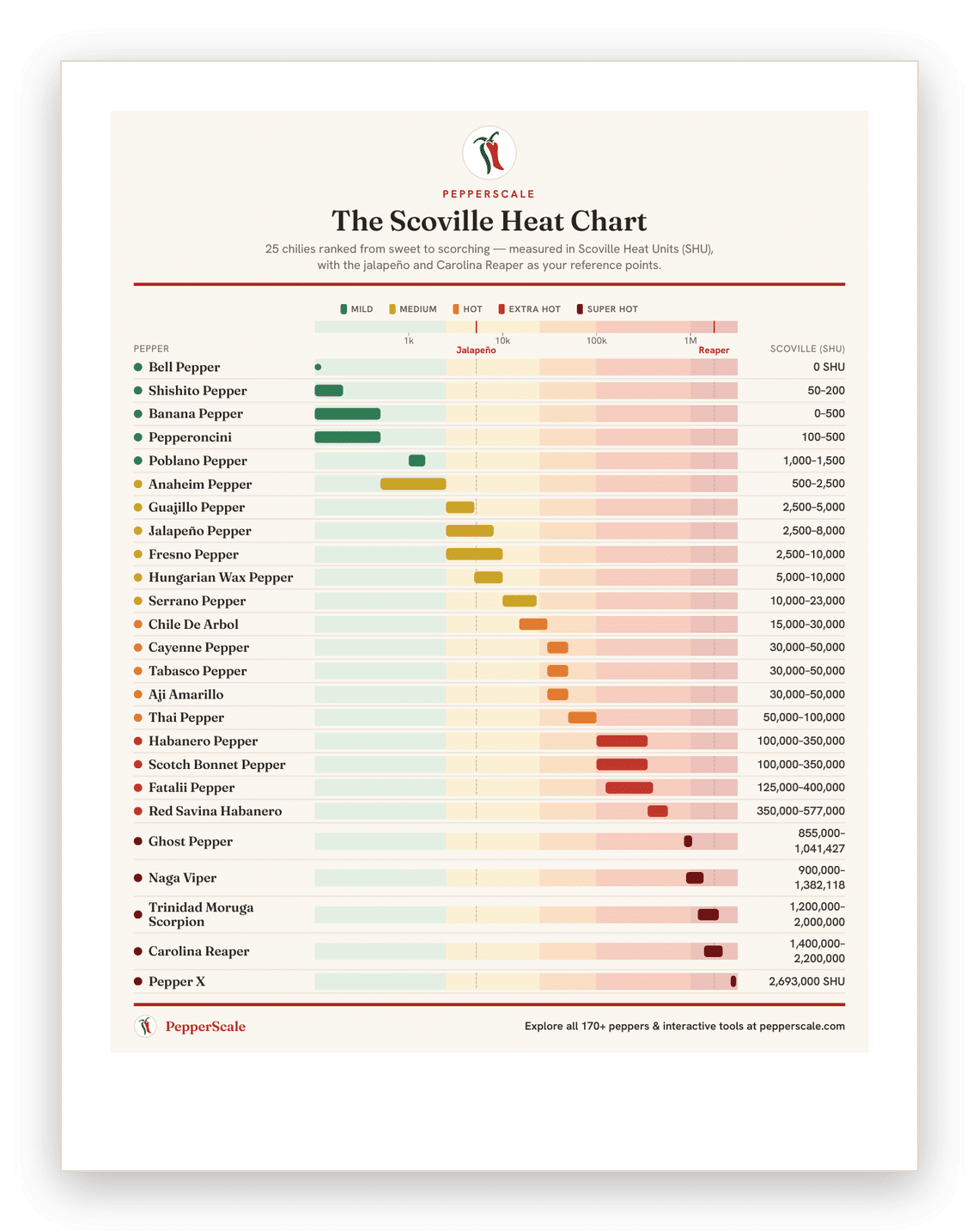
Get the free PepperScale Scoville Heat Chart
A printable, at-a-glance ranking of 25 chilies from sweet to scorching — with the jalapeño and Carolina Reaper as your reference points. Join the newsletter and we’ll send it straight to your inbox.
No spam — just Wicked Wednesday recipes and occasional extra dashes of chili pepper inspiration. Unsubscribe anytime.
Related reading
- The Habanero Planting Guide: The classic orange habanero, on a similar timeline.
- The Fatalii Pepper Planting Guide: Another chinense with a citrusy kick, ripening to bright yellow.
- Pepper Companion Plants: Good neighbors for your habaneros, and a few to avoid.