Chamoy is a Mexican condiment that tastes sweet, sour, salty and a little spicy all at once, usually sold as a thick reddish-brown sauce made from dried fruit, chilies, lime and salt. It’s what gets drizzled over mango, squeezed onto a bag of chips, and swiped around the rim of a michelada glass. Here’s where it came from, what’s actually in it, how hot it is, and what to do with a bottle.


Last update on 2026-10-12. We earn a commission if you make a purchase, at no additional cost to you.
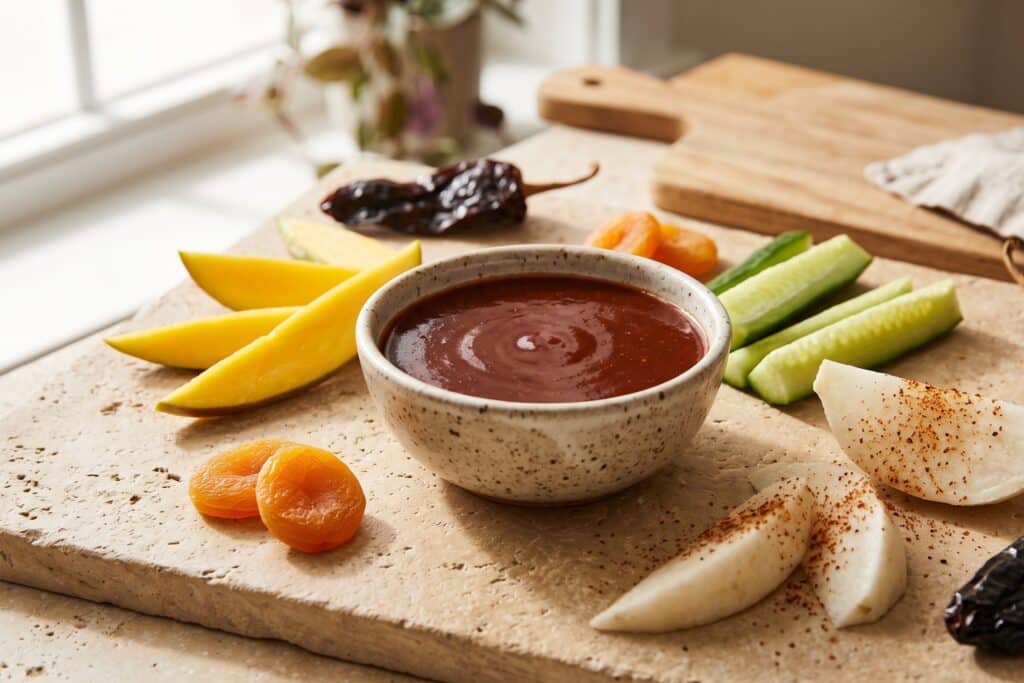
What is chamoy?
Chamoy is fruit, chili, salt and acid, balanced so no one of them wins. Apricot, plum, mango or tamarind gives it the body and the sweetness, chili powder brings warmth and color, and salt and lime pull the whole thing sharp. That sour-salty edge is what separates it from the sweet fruit sauces it looks like. Poured over ripe fruit, it does the same job a squeeze of lime does, just with more going on.
The bottled red sauce is what most people mean by chamoy, and it’s what this post treats as the default. But the name covers a small family of products, and you’ll meet all of them:
- Chamoy sauce: the pourable version, thin enough to squeeze and thick enough to cling. This is the bottle in the Mexican aisle.
- Chamoy paste: the same flavors reduced further, sold in jars for dipping or for rimming a glass.
- Chamoy powder: a dry seasoning you shake over fruit, closer in habit to a chili-lime salt.
- Chamoy candy and chamoy pickles: gummies, dried fruit, and whole pickles coated or soaked in the stuff.
- Saladitos: salted dried apricots or plums, which are the older, drier ancestor of all of it.
Where does chamoy come from?
Chamoy started as a salted dried fruit rather than a sauce, and the trail leads back to China. The ancestor is see mui, also written suan mei or li hing mui, salted and dried Prunus mume, the same fruit the Japanese preserve as umeboshi and usually called a plum though it’s botanically closer to an apricot. Food historian Rachel Laudan makes the case on the strength of the name alone: see mui is pronounced roughly “see moy,” which is a very short walk to “chamoy.” She traces the same fruit to Hawaii, where Chinese plantation workers brought it in the 19th century and it became crack seed.
How it reached Mexico is where sources genuinely disagree, and it’s worth saying so rather than picking the tidiest story.
One account runs through the Philippines and the Manila galleons that crossed between Manila and Acapulco from 1565 to 1815, arriving as the Philippine champoy. Another runs through Japan: Teikichi Iwadare, a Japanese immigrant born in 1902 who settled in Mexico City after the Second World War, founded a company called Proteína Soya in 1950 and made umeboshi from apricots, which he sold under the name chamoy. That version comes from an account written by his own family, so treat it as a family history rather than settled scholarship. A third simply notes that Asian goods and people had been moving through Mexican ports for centuries and that no single introduction is needed to explain it.
What isn’t in dispute is what happened next. From the 1970s onward, Mexican confectioners reinvented chamoy as the sweet-sour-spicy red liquid we know now, with Dulces Miguelito the name most often credited. That’s the version that spread nationally, and the version that ended up on fruit carts.
What is chamoy made of?
Four things, in varying proportions. Dried fruit for body and sweetness, most often apricot, plum, mango or tamarind. Chili for warmth and the red color, usually as a ground powder rather than whole pods, though a homemade batch is a good excuse to use chile de árbol and get some real bite. Salt, in more quantity than you’d guess, which is what makes chamoy taste savory instead of like jam. And acid, from lime juice, vinegar, citric acid, or all three.
Commercial bottles usually add sugar and sometimes hibiscus or food coloring for the deep red. Tajín’s chamoy, to take one widely sold example, lists mild chile peppers, lime and sea salt with a hint of apricot. Read a few labels side by side and you’ll see how much the fruit varies from brand to brand while the salt-acid-chili frame stays put.
Is chamoy spicy?
Mildly, and less than the color suggests. Most bottled chamoy sits at the gentle end of the scale, closer to a tangy warmth than a burn, because the chili is ground fine, used sparingly, and buried under sugar, salt and lime. Tajín labels its own chamoy as mildly spicy, and that’s a fair description of the category. Brands do vary, and some carry a real kick, so it’s worth tasting before you pour.
The bigger sensation isn’t heat at all. Chamoy hits sour and salty first and hard, and that pucker is what people are reacting to when they say it’s intense. If you want to know where the chilies themselves land, our guide to Scoville heat units covers how chili heat gets measured in the first place.
How is chamoy different from Tajín?
They get confused constantly, and the short answer is texture. Tajín is a dry seasoning, chili powder with lime and salt, shaken on like a spice. Chamoy is wet, a fruit-based sauce you pour or drizzle. The flavor overlaps a lot, since both are built on chili, lime and salt, but chamoy adds fruit and sweetness that Tajín doesn’t have.
In practice they’re partners more than rivals. A proper mango cup gets chamoy poured over it and Tajín dusted on top, and a michelada rim often gets both. Tajín also sells a chamoy sauce of its own, which is the fastest way to muddle the two in your head.
How to use chamoy
Fruit first. Chamoy over mango, pineapple, watermelon, jicama or cucumber is the classic, and a fruit cup with chamoy and a shake of chili-lime seasoning is one of the great street snacks. From there:
- Mangonadas and chamoyadas: mango sorbet or frozen mango layered with chamoy and a tamarind straw.
- Michelada and cocktail rims: chamoy paste around the glass with chili-lime salt pressed into it.
- Raspados and paletas: shaved ice and fruit pops drizzled the same way.
- Chips and snacks: squeezed straight into the bag.
- Candy: poured over gummies, or used to make chamoy pickles.
- Savory cooking: brushed onto grilled chicken, shrimp or pork in the last minutes, where the sugar caramelizes and the acid cuts the fat.
Can you make chamoy at home?
Yes, and it’s a better sauce than most bottles because you control the sugar and the salt. Dried apricots and dried hibiscus simmer with chilies until everything softens, then it gets blended, strained and finished with lime off the heat. It takes about forty minutes, most of that hands-off. Our homemade chamoy recipe walks through the whole thing, including how to push it hotter, sweeter or more sour depending on what you’re putting it on.
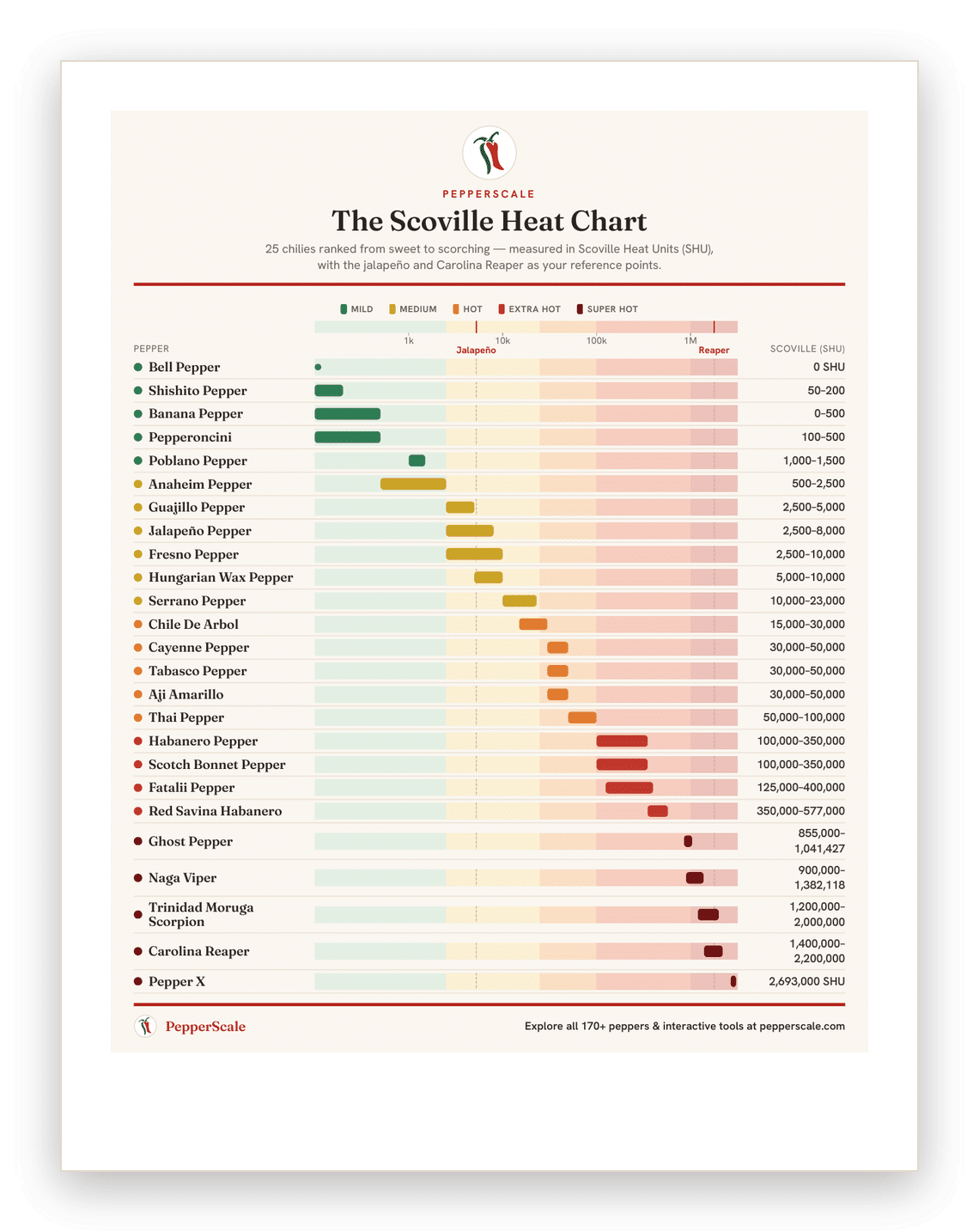
Get the free PepperScale Scoville Heat Chart
A printable, at-a-glance ranking of 25 chilies from sweet to scorching — with the jalapeño and Carolina Reaper as your reference points. Join the newsletter and we’ll send it straight to your inbox.
No spam — just Wicked Wednesday recipes and occasional extra dashes of chili pepper inspiration. Unsubscribe anytime.
Related Reading
- What Is Tajín Seasoning?: The chili-lime salt that shares a shelf with chamoy and gets mistaken for it constantly.
- Mango With Chili Powder: The snack chamoy was practically invented for, and the simplest place to start.
- The Hot Pepper List: Browse chilies by heat level and flavor to find your next favorite.