Almost everyone arrives at chili crisp the same way. You buy a jar because enough people told you to, you spoon it over a fried egg, you stir it through noodles, and then the jar sits in the fridge door doing nothing for a month while you try to remember what else it was supposed to be good for.
The answer is quite a lot, and most of it isn’t obvious from looking at the jar. Below is what to actually do with it, sorted by whether you’re cooking with it, turning it into something else, or just putting it on top of dinner.


Last update on 2026-09-21. We earn a commission if you make a purchase, at no additional cost to you.
What chili crisp brings to a dish
Three things at once, which is the reason it goes so far. There’s chili heat, usually mild to medium rather than punishing. There’s savory depth from fried garlic, shallots, and in many jars fermented soybeans. And there’s crunch, which is the part no other condiment on your shelf offers and the whole reason the word “crisp” is in the name. You’ll see the same thing sold as “chili crunch,” which isn’t a different product.
Many Sichuan-style jars add a fourth thing: the citrusy, buzzing tingle of Sichuan peppercorn. It reads as heat to a lot of people, but it isn’t heat, and it’s a large part of why those jars taste more alive than the plain ones.
The shape matters as much as the flavor. Chili crisp is oil with solids suspended in it, in roughly equal measure, and those two halves behave like different ingredients. That’s worth knowing before you start cooking with it, and it gets its own section at the end.
Cook with it
One rule covers this whole section: add it late. The solids in the jar have already been fried, and stirring them into a hot, wet pan early costs you the crunch you paid for. Treat it as a finishing ingredient and it stays interesting; treat it as a cooking oil and you end up with a slightly spicy sauce and a lot of soft bits.
Finish a stir-fry or fried rice with it
Cook the dish as you normally would, kill the heat, then fold in a spoonful or two at the end. It seasons and garnishes in the same motion, which is why it’s such an easy substitute for the two or three things you’d otherwise reach for. Our sriracha fried rice isn’t a chili crisp recipe, but it adapts cleanly: leave out the sriracha, and spoon chili crisp over each bowl instead.
Dress noodles with it, hot or cold
Chili crisp is closer to a sauce than a garnish here, especially with a splash of the noodle water and something acidic to loosen it. It works on hot noodles and on cold ones, and cold is the version people underrate, because the crunch survives properly. Our spicy ramen noodles take it well as a finish, though you’ll want to pull back on the sriracha to make room for it.
Serve it with dumplings
The most natural fit on this list, since dumplings dipped in spicy oil is where a lot of people meet the stuff in the first place. Thin a spoonful with soy sauce and black vinegar and you have a dipping sauce in fifteen seconds. Our Sichuan pork dumplings in red chili oil sauce are built around a chili oil sauce already, so chili crisp drops into that recipe more or less directly and brings crunch the original doesn’t have.
Toss roasted vegetables in it after they come out
Broccoli, cauliflower, carrots, squash, potatoes, green beans. Roast them plain, then toss them in chili crisp on the sheet pan while they’re still hot enough to take on the oil. Doing it at the end rather than the start is what keeps the solids crisp against the soft vegetable, which is most of the appeal.
Glaze meat or fish in the last minute
Brush it onto salmon, chicken thighs, pork, or tofu right at the end of roasting or grilling. Any earlier and the solids scorch before the protein is done. A minute under the broiler after brushing is usually enough to set it.
Turn it into another condiment
This is the category most jars never get used for, and it’s the one that empties them fastest. Chili crisp is already oil plus seasoning plus texture, so it folds into other things without much help.
Stir it into mayo
The single highest-return move here. A spoonful of chili crisp into a few tablespoons of mayonnaise gives you a spread for sandwiches, burgers, fries, and fish, and it keeps the crunch in a way that a hot sauce version never does. Our gochujang aioli is the same idea with a different chili, so use it as the method and swap the paste for chili crisp.
Whisk it into a dressing
Use the oil in place of some of the neutral oil in a vinaigrette, then add a spoonful of the solids back at the end so they don’t get lost in the emulsion. Rice vinegar, soy, and a little honey or sugar make the obvious base. This is the fastest way to make a plain cabbage or cucumber salad worth eating.
Fold it into softened butter
Compound butter, but savory and spicy rather than herby. Let butter come to room temperature, mash in a couple of spoonfuls, and roll it in parchment. It melts over steak, corn, baked potatoes, or a piece of grilled bread, and it lasts in the fridge as long as the butter would.
Build a dipping sauce around it
Soy sauce, black vinegar, a little sugar, and chili crisp is the standard, and it takes about as long to make as it does to read. Thin it further with water for a dressing, or leave it thick for dumplings and cold noodles.
Use it as a marinade base
The oil carries flavor into meat well, and the solids that cling to the surface crisp up under high heat. Cut it with soy sauce and something acidic, marinate for an hour or two, then cook hot. Watch the pan more closely than you normally would, since the solids will take on color before the meat does.
Just put it on top
Everything above changes the chili crisp into something else. This is the category where you open the jar, spoon some out, and eat, which is the reason most jars get bought in the first place. All of these are one step:
- Eggs of any kind: Fried, jammy, scrambled, or an omelette. The reference use, and still the best one.
- Plain rice: A bowl of rice and a spoonful of chili crisp is a legitimate meal, and it’s the clearest way to taste what’s actually in your jar.
- Avocado toast: The oil and the salt do what a drizzle of olive oil and flaky salt were doing, with more going on.
- Pizza: In place of chili flakes, especially on anything with a lot of cheese.
- Cold cucumber salad: Sliced cucumbers, salt, vinegar, chili crisp, and not much else. Our Korean cucumber salad is a close cousin, and it adapts if you swap chili crisp in for the gochujang and pepper flakes it calls for.
- Grilled cheese and quesadillas: Spread it on the inside before it goes in the pan.
- Soups and broths: Spooned on at the table rather than stirred into the pot, so the crunch is still there when it reaches you.
- Popcorn: Drizzle the oil, then scatter the solids and salt. Our jalapeño cheddar popcorn shows the general approach, though chili crisp needs no cheese to carry it.
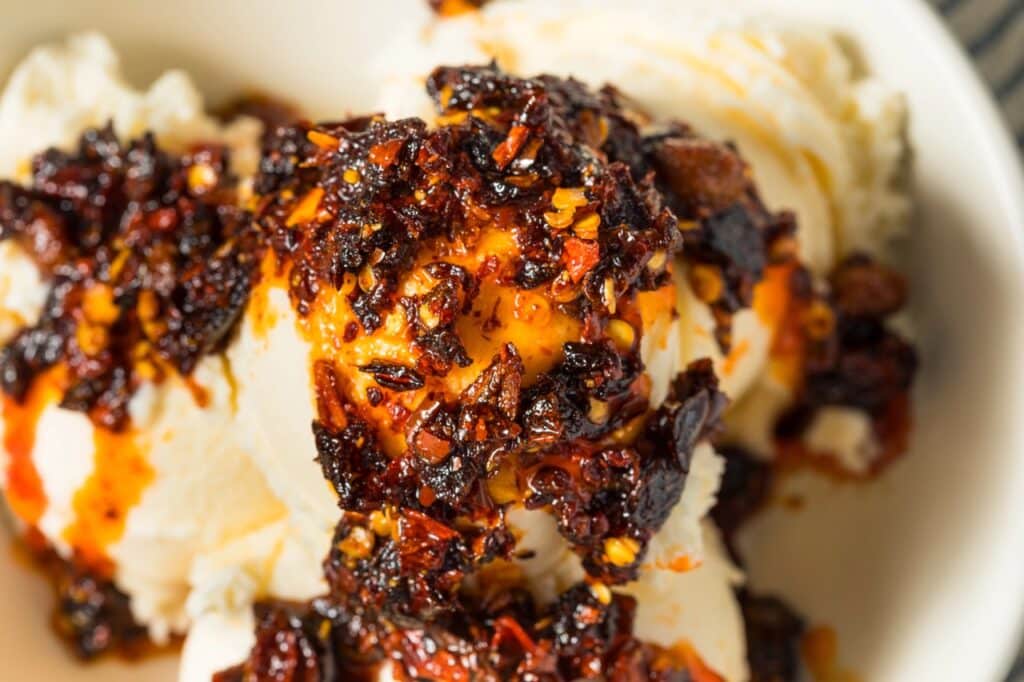
- Vanilla ice cream: Sounds like a dare and isn’t. Salt, fat, and heat against something cold and sweet works better than it has any right to.
The oil and the solids are two ingredients
The most useful thing to understand about a jar of chili crisp is that you don’t have to use it as one thing. Let it sit and the solids settle, and from that point you’re holding two ingredients in one jar.
Spoon off the oil when you want flavor without texture: in a dressing, a marinade, a stir-fry, or brushed onto something before it goes under heat. The oil alone does a fair impression of a plain chili oil, and if you’re weighing the two, we put them side by side.
Dig for the solids when texture is the point: over eggs, rice, noodles, soup, or anything soft that needs something to bite against. This is the half you’re actually paying extra for, so it’s worth using deliberately rather than letting it sit at the bottom of the jar under an inch of oil.
A note on keeping it. Store-bought jars vary, so follow what the label says about refrigerating after opening. Homemade is less flexible: our homemade chili crisp contains fresh garlic and aromatics cooked in oil, which means it belongs in the fridge rather than the counter, holds its flavor for about a month, and should only ever meet a clean, dry spoon.
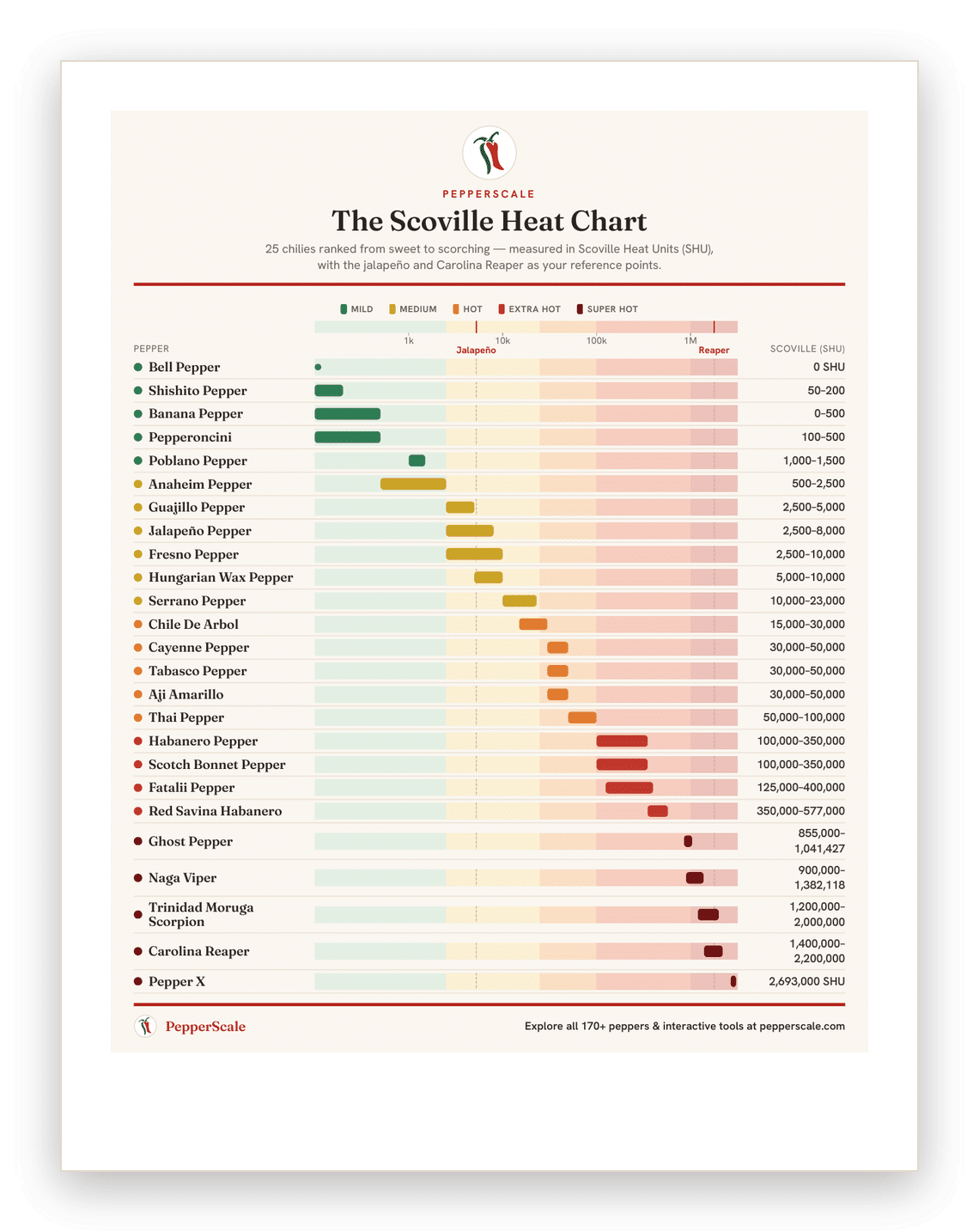
Get the free PepperScale Scoville Heat Chart
A printable, at-a-glance ranking of 25 chilies from sweet to scorching — with the jalapeño and Carolina Reaper as your reference points. Join the newsletter and we’ll send it straight to your inbox.
No spam — just Wicked Wednesday recipes and occasional extra dashes of chili pepper inspiration. Unsubscribe anytime.
Related Reading
- What’s A Good Chili Crisp Substitute?: For the night the jar runs out and dinner is already underway.
- Seven Tasty Crushed Red Pepper Uses: The same treatment for the jar of flakes that’s been in your cupboard even longer.
- The Hot Pepper List: 170-plus chilies sorted by heat, flavor, and origin, if you want to know what’s actually in the jar.