Want tapas straight from the garden? Padróns are one of the quicker peppers to grow. The plants stay about 2 feet tall, and the first small green pods are ready to pick roughly 60 to 65 days after transplanting. And after that, the plants keep flowering and setting fruit over a long season.
Curious about the heat roulette or how to cook them? Our Padrón pepper profile has all of that. This guide covers the growing.

Last update on 2026-11-19. We earn a commission if you make a purchase, at no additional cost to you.

- Heat
- 500–2,500 SHU
- Start seeds indoors
- 8–12 weeks before your last spring frost
- Germination
- 7–25 daysIn soil around 70–85°F.
- Harden off
- 7–14 days before transplanting
- Transplant
- After last frost, once nights stay at 50°F or warmer
- First harvest
- 60–65 days after transplanting, for green fruitPadróns are usually picked small and green.
- Plant height
- 24 inches
- Containers
- Does well in a container
Where these figures come from
- Start seeds indoors: Territorial Seed, Padrón; Botanical Interests, Padron
- Germination: Botanical Interests, Padron; Territorial Seed, Padrón; Sandia Seed, Padrón; University of Minnesota Extension, Growing peppers; Nebraska Extension G1879, Garden Peppers; NMSU Chile Pepper Institute, Special Seed Starting Instructions; Utah State University Extension, Peppers in the Garden
- Harden off: UC ANR, Growing Peppers; Penn State Extension (Chester Co. Master Gardeners), Growing Peppers; Nebraska Extension G1879, Garden Peppers
- Transplant: University of Minnesota Extension, Growing peppers; UGA Extension C1005, Home Garden Peppers; NMSU Chile Pepper Institute, Growing Tips
- First harvest: Territorial Seed, Padrón; Botanical Interests, Padron; Sandia Seed, Padrón
- Plant height: Sandia Seed, Padrón; Botanical Interests, Padron
- Containers: Botanical Interests, Padron; Sandia Seed, Padrón
When to plant Padrón peppers where you live
Padrón plants can’t take frost, and cold ground holds them back, so there’s no prize for planting early. Wait until your last frost is behind you, the nights hold at 50°F or higher (55°F leaves more margin) and the soil just below the surface reaches roughly 60°F. Both night temperatures are marked in the planner.
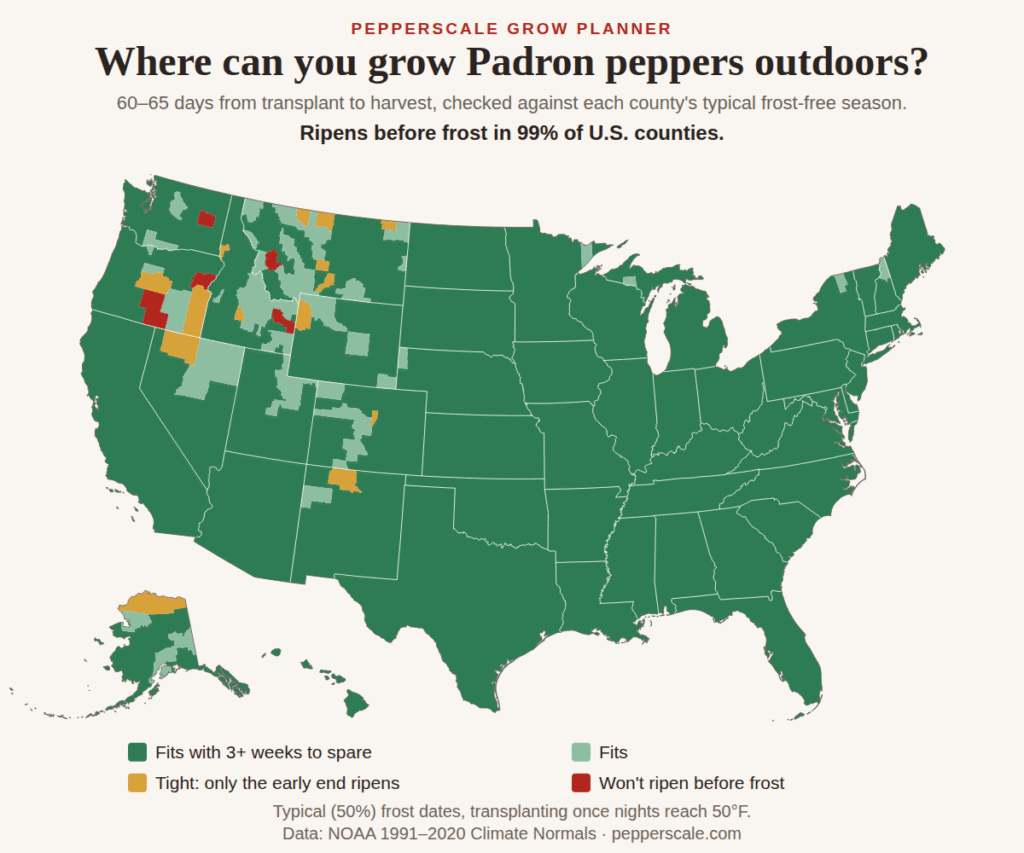
Give it your zip code, and the planner lays out a season from local NOAA frost records: sowing, hardening off, planting out and your likely first pick. It also checks whether 60 to 65 days fits between your frosts, and for Padróns it almost always does: they ripen before frost in 99% of U.S. counties.
Starting Padrón pepper seeds indoors
Start the seeds indoors 8 to 12 weeks before you plan to transplant. Sow them about a quarter inch deep and keep the mix warm, ideally on a heat mat near 85°F. But be patient: sprouts can show up in a week or take more than three, even with good warmth. Is your packet a few years old? Check how long pepper seeds last first.
Give the seedlings strong light from close overhead so they grow stocky rather than leggy. Once they’re sturdy and the weather has warmed, ease them outdoors over a week or two: a couple of hours in light shade at first, then longer stretches in more sun.
Planting Padrón peppers outside
Pick a spot in full sun, since Padróns, like most peppers, want plenty of direct light to keep the fruit coming.
The plants reach about 2 feet tall, so space them roughly 2 feet apart to give each one room and air. Laying out a larger bed? See our pepper spacing chart.
Well-drained ground suits them best, so dig compost into heavy clay before planting. A pH between 6.0 and 7.0 works well for peppers, and a soil test will show where you are. And if you need to adjust it, our guide to soil pH for peppers explains how.
Once they’re planted, a layer of straw or shredded leaves keeps moisture in and weeds out. Leave a little space around each stem.
Growing Padrón peppers in containers
Padróns are a good fit for pots. Pick a container that holds at least 3 gallons and drains freely, with one plant in each. A pot full of fruiting plant can dry out daily in summer heat. For potting mixes and sizes, see our container pepper guide.
A pot also gives you a way to beat the first frost. Move the plant inside before a cold night, and our guide to growing hot peppers indoors can help you keep it going.
Watering and feeding Padrón peppers
Plan on about an inch of water a week, rain included, given as a deep soak rather than frequent sprinkles. Keep it steady, too, since swings between dry and soggy soil are linked to blossom-end rot. Some sources say drought-stressed Padrón plants make hotter peppers. But steady watering is still the better bet for the plant. The planner also lists your average monthly rainfall. For more on watering, see our posts on watering pepper plants and what overwatering looks like.
Keep fertilizer light, since too much nitrogen builds leaves at the expense of peppers. Unless a soil test calls for phosphorus, choose a feed that’s low in it, and see our pepper fertilizer guide for when to apply it.
When to pick Padrón peppers
This is where Padróns differ from most peppers you grow. They’re picked young and green, at about 1½ to 2 inches long, and the first ones are ready about 60 to 65 days after transplanting. Heat builds as the pods grow and ripen toward red, so if you want a milder batch, pick them small.
The plants keep flowering and setting fruit over a long season, so check them every few days. Snip the pods off with scissors or pruners, leaving a bit of stem for a handle, because pulling can break the branches.
When frost is coming, pick every pod of usable size. Small green ones go straight into the pan, and for larger ones you’d like to see color on, here are some tips for ripening peppers off the vine. Potted plants can come indoors.
Common Padrón pepper plant problems
- Flowers dropping in midsummer: pepper flowers often fail to set fruit once days get above about 90°F. Check your planner results to see when that heat typically arrives.
- Leaves with a mottled, mosaic pattern: likely a virus. Tobacco mosaic spreads on hands and tools, so wash up after any contact with tobacco. Washington State University’s garden guide has photos.
- Dark, sunken tips on the pods: that’s blossom-end rot, which follows uneven watering. See calcium and blossom-end rot.
- Pale, papery spots on the sunny side of the pods: sunscald.
- Leaves curling or going yellow: read up on curling pepper leaves and yellowing pepper plants.
- Tiny bugs on the undersides of leaves: often aphids; if you see fine webbing, check for spider mites.
- Plants that won’t size up: start with why pepper plants grow slowly.
- Frost before the season ends: learn what frost does to pepper plants.
Seeing something else? Our pepper disease and problem guide covers more.
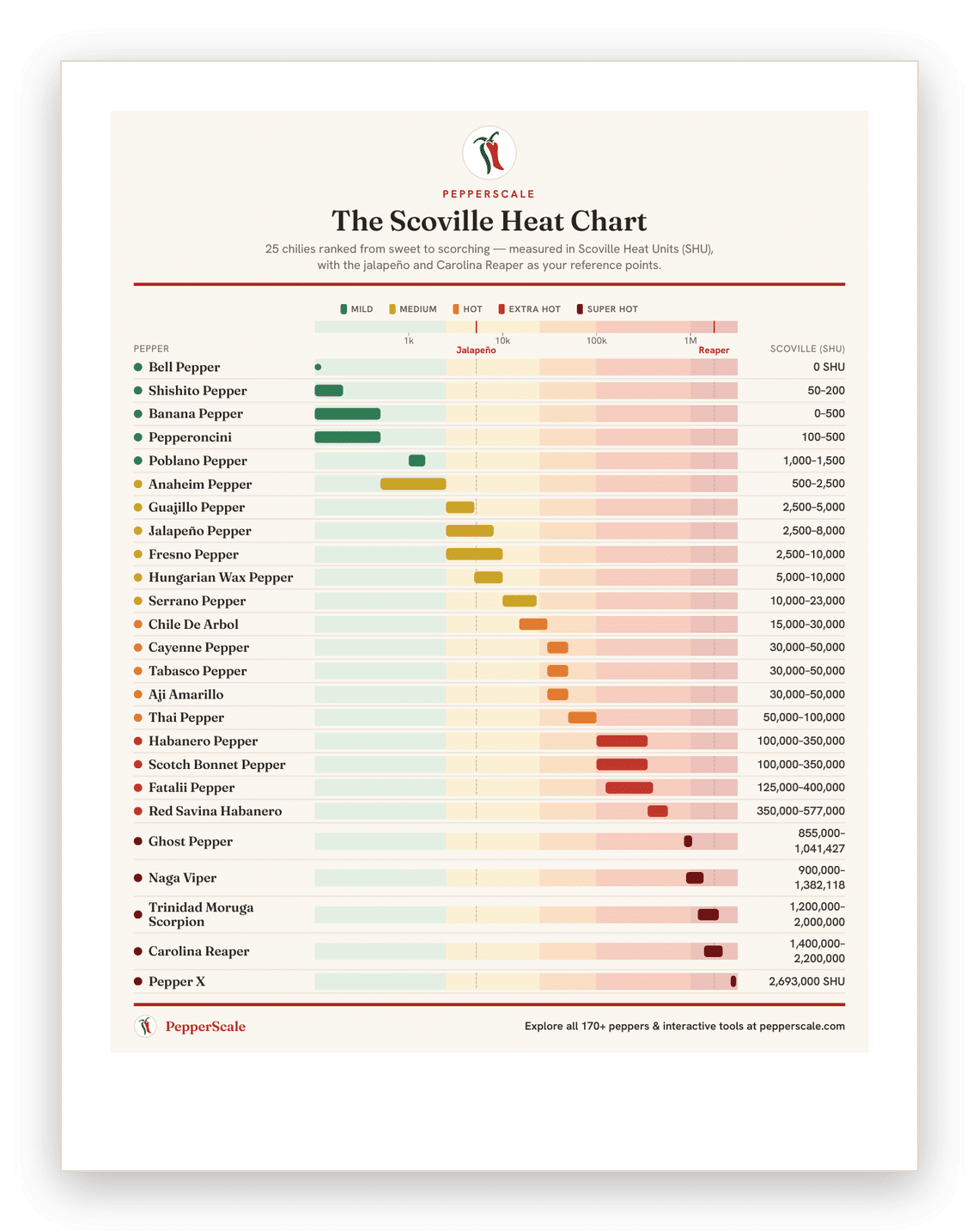
Get the free PepperScale Scoville Heat Chart
A printable, at-a-glance ranking of 25 chilies from sweet to scorching — with the jalapeño and Carolina Reaper as your reference points. Join the newsletter and we’ll send it straight to your inbox.
No spam — just Wicked Wednesday recipes and occasional extra dashes of chili pepper inspiration. Unsubscribe anytime.
Related reading
- Blistered Shishito Peppers: The same hot-pan method turns a Padrón harvest into tapas.
- The Jalapeño Planting Guide: A hotter pepper for the next bed over, on a similar schedule.
- Pepper Companion Plants: Good and bad neighbors for your Padróns.