Can’t find fresh biquinhos at the store? Growing your own is the surest way to get them. The plants stay compact, at around 2 feet tall, and the first ripe pods are ready roughly 72 to 90 days after transplanting. From there, a healthy plant keeps them coming for the rest of the season, right up until the first frost.
Curious how mild they are or how to use them? Our biquinho pepper profile covers the heat, the flavor and the kitchen, while this guide sticks to the growing.

Last update on 2026-11-23. We earn a commission if you make a purchase, at no additional cost to you.

- Heat
- 500–1,000 SHU
- Start seeds indoors
- 8–10 weeks before your last spring frost
- Germination
- 7–25 daysIn soil around 70–85°F.
- Harden off
- 7–14 days before transplanting
- Transplant
- After last frost, once nights stay at 50°F or warmer
- First harvest
- 72–90 days after transplanting
- Plant height
- 12–24 inches
- Containers
- Does well in a container
Where these figures come from
- Start seeds indoors: Botanical Interests, Red and Yellow Blend Biquinho
- Germination: Botanical Interests, Red and Yellow Blend Biquinho; Sandia Seed, Biquinho Yellow; University of Minnesota Extension, Growing peppers; Nebraska Extension G1879, Garden Peppers; NMSU Chile Pepper Institute, Special Seed Starting Instructions; Utah State University Extension, Peppers in the Garden
- Harden off: UC ANR, Growing Peppers; Penn State Extension (Chester Co. Master Gardeners), Growing Peppers; Nebraska Extension G1879, Garden Peppers
- Transplant: University of Minnesota Extension, Growing peppers; UGA Extension C1005, Home Garden Peppers; NMSU Chile Pepper Institute, Growing Tips
- First harvest: Botanical Interests, Red and Yellow Blend Biquinho; Sandia Seed, Biquinho Yellow
- Plant height: Botanical Interests, Red and Yellow Blend Biquinho; Sandia Seed, Biquinho Yellow
- Containers: Botanical Interests, Red and Yellow Blend Biquinho
When to plant biquinho peppers where you live
Biquinhos like it warm, so give them a head start indoors and don’t rush them out into the garden too soon. Clemson Extension suggests planting out two to four weeks after your last frost, once days reach at least 70°F and nights hold at 55°F or higher. The soil just below the surface should be near 60°F, too.
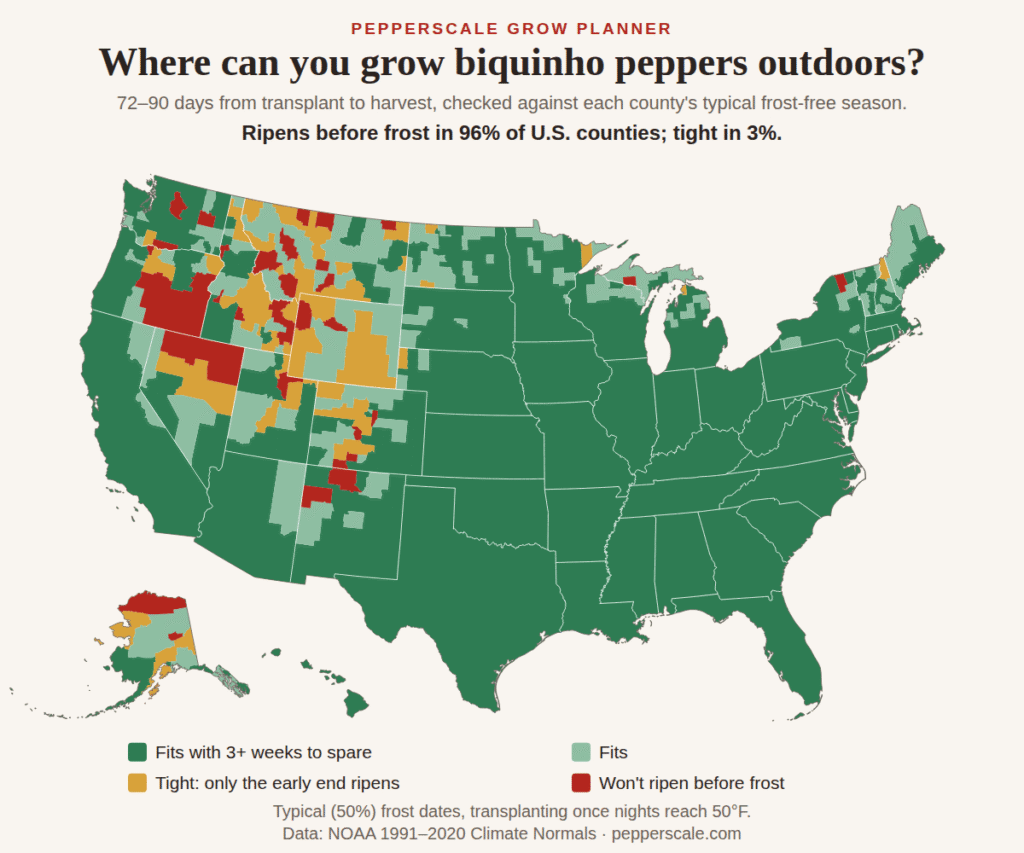
Enter your zip code, and the planner builds a season from local NOAA frost records: sowing, hardening off, planting out and a likely first harvest. It also checks whether 72 to 90 days fits between your frosts. For biquinhos, it usually does: they ripen before frost in 96% of U.S. counties, and the timing is tight in another 3%.
Starting biquinho pepper seeds indoors
You’ll want to sow the seeds indoors 8 to 10 weeks before you plan to transplant. Plant them about a quarter inch deep and keep the mix warm, ideally on a heat mat. Germination takes anywhere from one week to more than three, and Clemson notes that the young plants are slow growers, so don’t worry if they lag behind your other peppers. Got an older packet? Check how long pepper seeds last before you sow.
And keep a strong light just above the seedlings, so they’ll grow sturdy instead of stretching toward a window. When the weather warms, harden them off over a week or two: start with a couple of hours outside in light shade, then build up to longer stretches in full sun.
Planting biquinho peppers outside
Choose your sunniest spot, since Clemson recommends full sun for biquinhos. The plants grow about 18 to 24 inches tall and just as wide, so space them about 24 inches apart. Planning a bigger bed with several kinds of peppers? Our pepper spacing chart can help.
They’ll do best in loose, well-drained soil, so work compost into heavy ground before you plant. Peppers like a pH between 6.0 and 7.0. A soil test will tell you where you stand, and our guide to soil pH for peppers covers how to adjust it.
And after planting, mulch with straw or shredded leaves to hold in moisture and keep the weeds down. Just don’t pile it right up against the stems.
Growing biquinho peppers in containers
Biquinhos make good container plants, which suits a pepper this compact. Clemson suggests a pot at least 14 inches across. Give it drainage holes and one plant per pot. But pots dry out faster than garden beds, so you’ll be watering more often. Our container pepper guide covers potting mixes and pot sizes.
A pot also lets you stretch the season. Bring it indoors ahead of the first frost, and see our guide to growing hot peppers indoors for keeping it going.
Watering and feeding biquinho peppers
Clemson advises keeping the soil consistently moist but letting the top inch dry out between waterings. In the garden, that usually works out to about an inch of water a week, rain included, given as one or two deep soaks rather than a quick sprinkle every day. Steady watering matters, since swings between dry and soggy soil are tied to blossom-end rot. Our posts on watering pepper plants and overwatering have more.
Go easy on fertilizer, though, because too much nitrogen gives you a big, leafy plant that’s light on peppers. Unless a soil test says you need phosphorus, pick a feed that’s low in it, and see our pepper fertilizer guide for timing.
When to pick biquinho peppers
Pick biquinhos once they’ve fully turned red, yellow or white, depending on the variety. The first ones come in roughly 72 to 90 days after transplanting. Seed sellers disagree on the exact number, so it’s better to go by the color of the pods than by the date on the calendar.
The pods are small, and the plants keep setting more through the season, so it pays to check them every few days. And snip each pepper off with scissors or pruners rather than pulling, since that can snap the branches. Most biquinhos end up pickled, so a good harvest is a good excuse to fill a few jars.
When frost threatens, pick everything that’s sized up. For pods that are still green, here are some tips for ripening peppers off the vine, and potted plants can simply come inside.
Common biquinho pepper plant problems
- Flowers dropping in midsummer: pepper blossoms often fail to set fruit once days climb past about 90°F. Your planner results show when that heat usually arrives.
- Leaves with a mottled, mosaic pattern: likely a virus. Tobacco mosaic spreads on hands and tools, so wash up after handling tobacco. Washington State University’s garden guide has photos.
- Dark, sunken spots at the tips of the pods: that’s blossom-end rot, which follows uneven watering. See calcium and blossom-end rot.
- Pale, papery patches on the sunny side of the pods: sunscald.
- Leaves curling or turning yellow: read up on curling pepper leaves and yellowing pepper plants.
- Tiny insects under the leaves: often aphids; with fine webbing, look for spider mites.
- Seedlings or plants that stall: biquinhos start slow, but if they never pick up, see why pepper plants grow slowly.
- Frost before the harvest is in: learn what frost does to pepper plants.
Seeing something else? Our pepper disease and problem guide covers more.
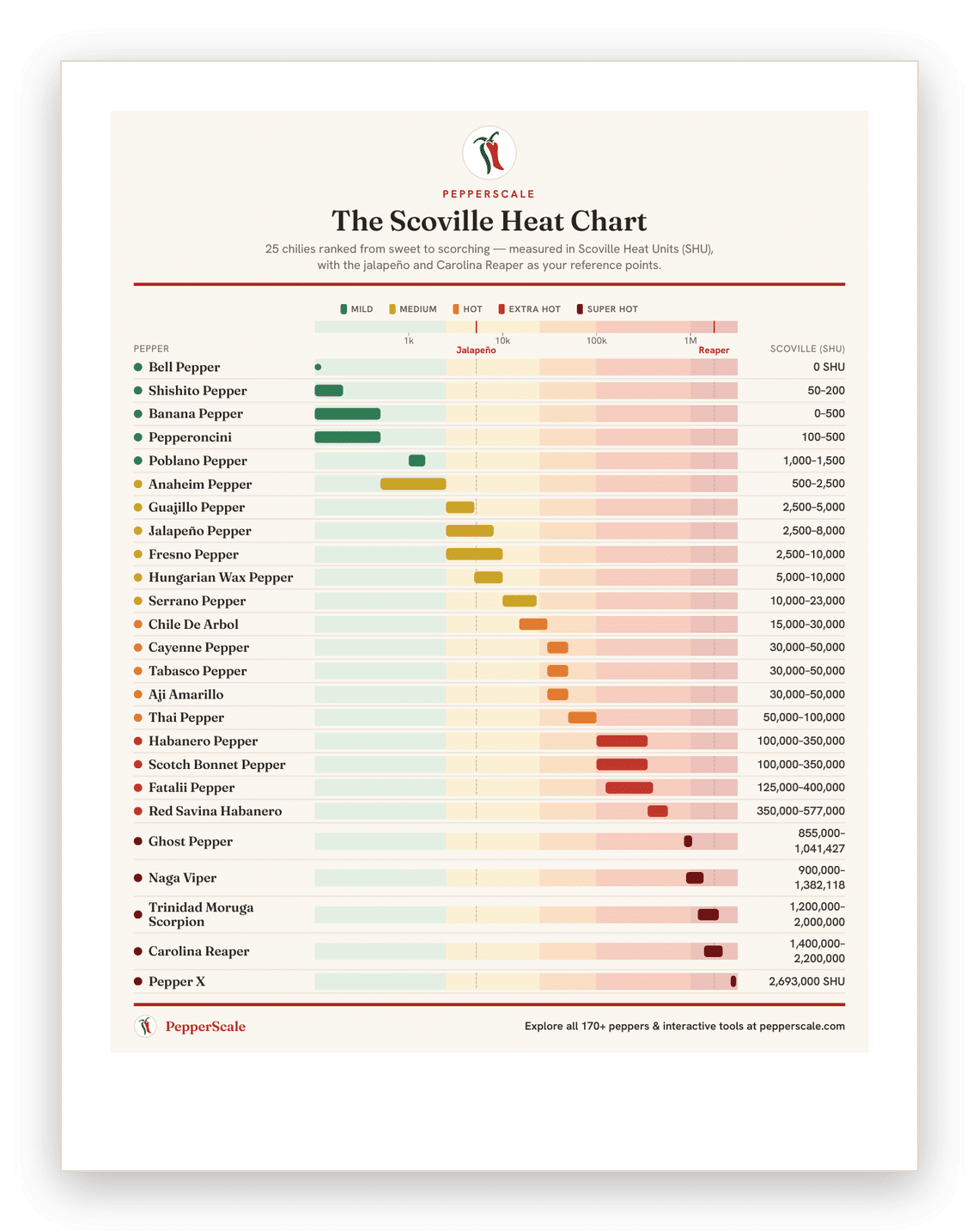
Get the free PepperScale Scoville Heat Chart
A printable, at-a-glance ranking of 25 chilies from sweet to scorching — with the jalapeño and Carolina Reaper as your reference points. Join the newsletter and we’ll send it straight to your inbox.
No spam — just Wicked Wednesday recipes and occasional extra dashes of chili pepper inspiration. Unsubscribe anytime.
Related reading
- The Habanero Planting Guide: The biquinho’s fiery chinense cousin, on a slightly longer road to harvest.
- The Jalapeño Planting Guide: A classic for the next pot over, on a quicker schedule.
- Pepper Companion Plants: Which neighbors help your biquinhos, and which to keep away.