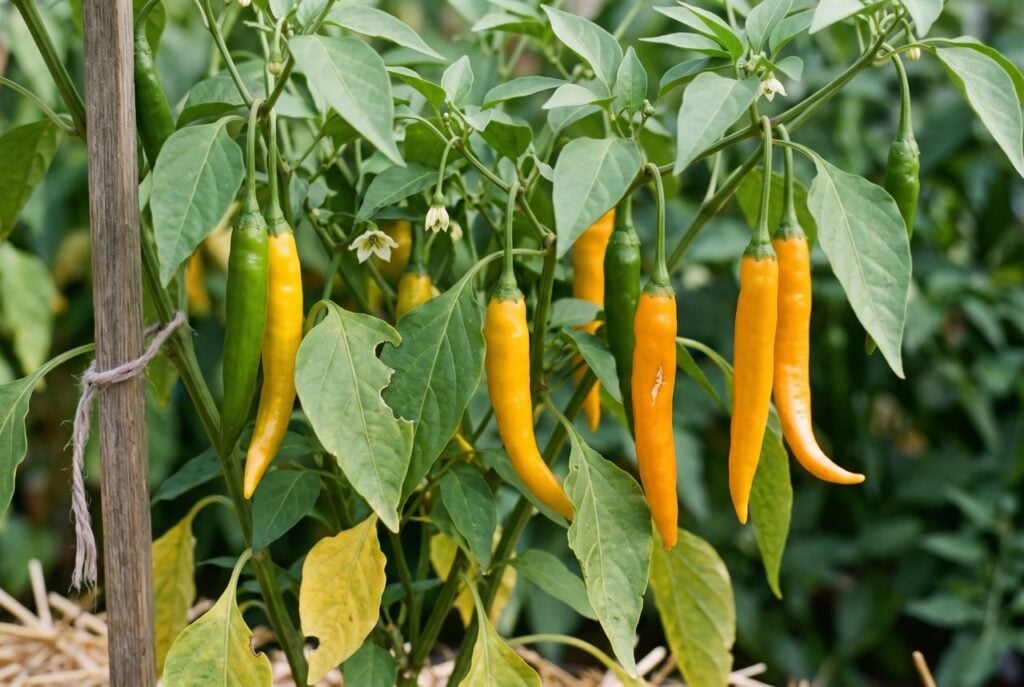
Fresh aji amarillos are hard to come by outside Peru, so if you want them for cooking, growing your own is the surest bet. Be ready for a big plant, though, since they can reach 3 to 5 feet tall, with the first ripe pods arriving about 85 days after transplanting. Give them warmth early, room to spread and a long enough summer, and one plant will keep you in yellow-orange pods.
Want the heat, flavor and cooking details? You’ll find them in our aji amarillo profile. This guide covers growing them, from seed to harvest.

Last update on 2026-11-29. We earn a commission if you make a purchase, at no additional cost to you.
- Heat
- 30,000–50,000 SHU
- Start seeds indoors
- 6–10 weeks before your last spring frostGeneral figure for peppers, not specific to this one.
- Germination
- 7–21 daysIn soil around 70–85°F.
- Harden off
- 7–14 days before transplanting
- Transplant
- After last frost, once nights stay at 50°F or warmer
- First harvest
- 85 days after transplanting
- Plant height
- 36–60 inches
- Containers
- Can be grown in a large container
Where these figures come from
- Start seeds indoors: NMSU Chile Pepper Institute, Growing Tips; Clemson HGIC, Pepper; University of Maryland Extension, Growing Peppers in the Home Garden
- Germination: Sandia Seed Company, Aji Amarillo; University of Minnesota Extension, Growing peppers; Nebraska Extension G1879, Garden Peppers; NMSU Chile Pepper Institute, Special Seed Starting Instructions; Utah State University Extension, Peppers in the Garden
- Harden off: UC ANR, Growing Peppers; Penn State Extension (Chester Co. Master Gardeners), Growing Peppers; Nebraska Extension G1879, Garden Peppers
- Transplant: University of Minnesota Extension, Growing peppers; UGA Extension C1005, Home Garden Peppers; NMSU Chile Pepper Institute, Growing Tips
- First harvest: Sandia Seed Company, Aji Amarillo
- Plant height: Sandia Seed Company, Aji Amarillo; Pepper Joe's, Aji Amarillo
- Containers: Sandia Seed Company, Aji Amarillo
When to plant aji amarillos where you live
Aji amarillos want real warmth before they go outside. Hold off until your last frost has passed, nights stay above 50°F (55°F gives more margin), and the soil a few inches down has warmed to about 60°F.
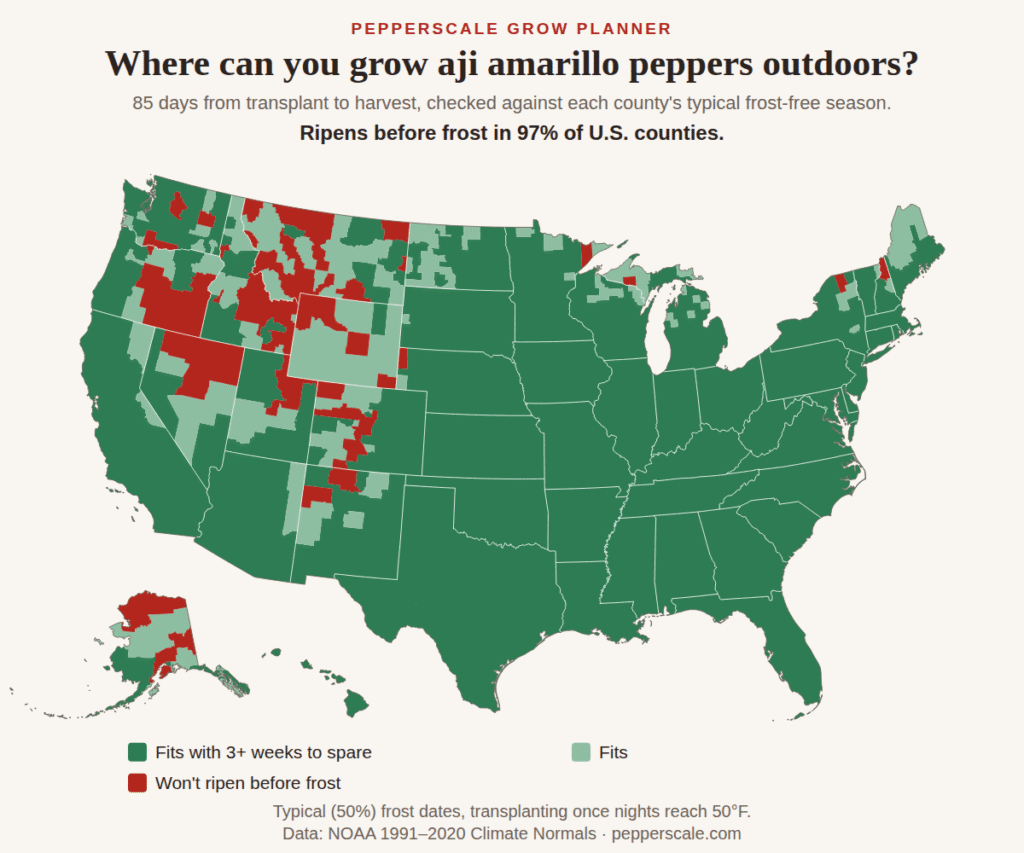
Type your zip code into the planner below. It grabs frost dates from the closest NOAA weather station, then lays out when to start seeds, harden off, transplant and expect a harvest. It also checks whether 85 days fits in your season. For most gardeners it does: the map shows aji amarillos ripening before frost in 97% of U.S. counties. The short-season spots are mostly in the high, cold West and parts of Alaska.
Starting aji amarillo seeds indoors
Start seeds indoors 6 to 10 weeks before your average last frost. Sow them a quarter inch deep in moist seed-starting mix, and keep the mix warm. Sandia Seed recommends bottom heat of about 85°F and says to expect sprouts in 7 to 21 days. Using older seed? Check whether it’s still good with our guide to how long pepper seeds last.
As soon as seedlings pop up, give them a grow light set close above them, so they grow sturdy instead of stretching. Before planting out, harden them off over 7 to 14 days, starting with an hour or two of shade outdoors and working up to full sun.
Planting aji amarillos outside
Choose your sunniest spot, then space the plants out. Sandia suggests 30 inches between them, which makes sense for a pepper that can top out at 5 feet. Planning a mixed pepper bed? Check our pepper spacing chart.
Plants this tall can get top-heavy once they’re loaded with pods, so set a sturdy stake or cage at planting time, before the roots spread. They’ll do best in well-drained soil rich in compost, with a pH somewhere between 6.0 and 7.0, and our soil pH guide for peppers explains how to test and adjust it.
Once the soil is warm, lay down a mulch of straw or shredded leaves to slow evaporation and block weeds. But leave a small gap around each stem.
Growing aji amarillos in containers
Short on garden space? Sandia says a 5-gallon container works, and that’s a reasonable minimum for a plant this size. Go bigger if you can, and make sure the pot drains. Then plan on watering more often than you would in the ground. Our container growing guide for peppers has more on pot sizes and potting mix.
A pot has another advantage: if frost threatens before the pods ripen, you can carry the plant inside. And our guide to growing peppers indoors explains how to keep it producing under lights.
Watering and feeding aji amarillos
Soak the soil thoroughly, and wait until the top inch feels dry before watering again. Plants in the ground often need about an inch a week, counting rain, while containers in summer heat may need water every day. Try to keep moisture even, since uneven watering is linked to blossom-end rot. Our guides to watering peppers and overwatering go deeper.
Don’t be surprised if your plants spend a long time just growing leaves, because that’s normal for this pepper. Sandia says aji amarillos grow for about two and a half months before they start to flower, and it warns against heavy nitrogen, which favors leaves over pods. Our guide to fertilizing peppers covers what to feed and when.
When to pick aji amarillos
The first pods should be ready about 85 days after transplanting. They start green, turn yellow, and finish a deep yellow-orange, and Sandia says to harvest once they reach that yellowish-orange stage. Expect long, slim pods of 4 to 6 inches.
Cut them off with pruners or scissors rather than pulling, so you don’t snap the branches. And wear gloves, since these carry cayenne-level heat.
If frost is coming, harvest what’s on the plant or bring potted plants inside. Green pods sometimes finish coloring indoors, and our tips on getting peppers to ripen after picking can help.
Common aji amarillo plant problems
- Lots of leaves but no flowers yet: normal for the first couple of months, as above. If the plant still isn’t flowering by midsummer, ease off the nitrogen.
- Blossoms falling off: often happens once daytime highs climb past about 90°F. The planner shows when those hot spells usually arrive where you live.
- Leaves with a mottled, mosaic pattern: likely a virus. If you smoke, wash your hands before handling plants, since tobacco mosaic can travel that way. WSU Extension’s HortSense has photos.
- Sunken, dark spots at the blossom end: blossom-end rot, most often linked to inconsistent watering.
- Pale, papery patches on pods facing the sun: sunscald.
- Curling or yellowing leaves: see why pepper leaves curl and why pepper leaves turn yellow.
- Clusters of small insects on new growth: likely aphids. If there’s webbing too, look for spider mites.
- Growth that stalls: check our list of reasons for slow-growing pepper plants.
- Frost in the forecast: here’s what frost does to pepper plants.
Something else going on? Our guide to pepper plant problems covers more.
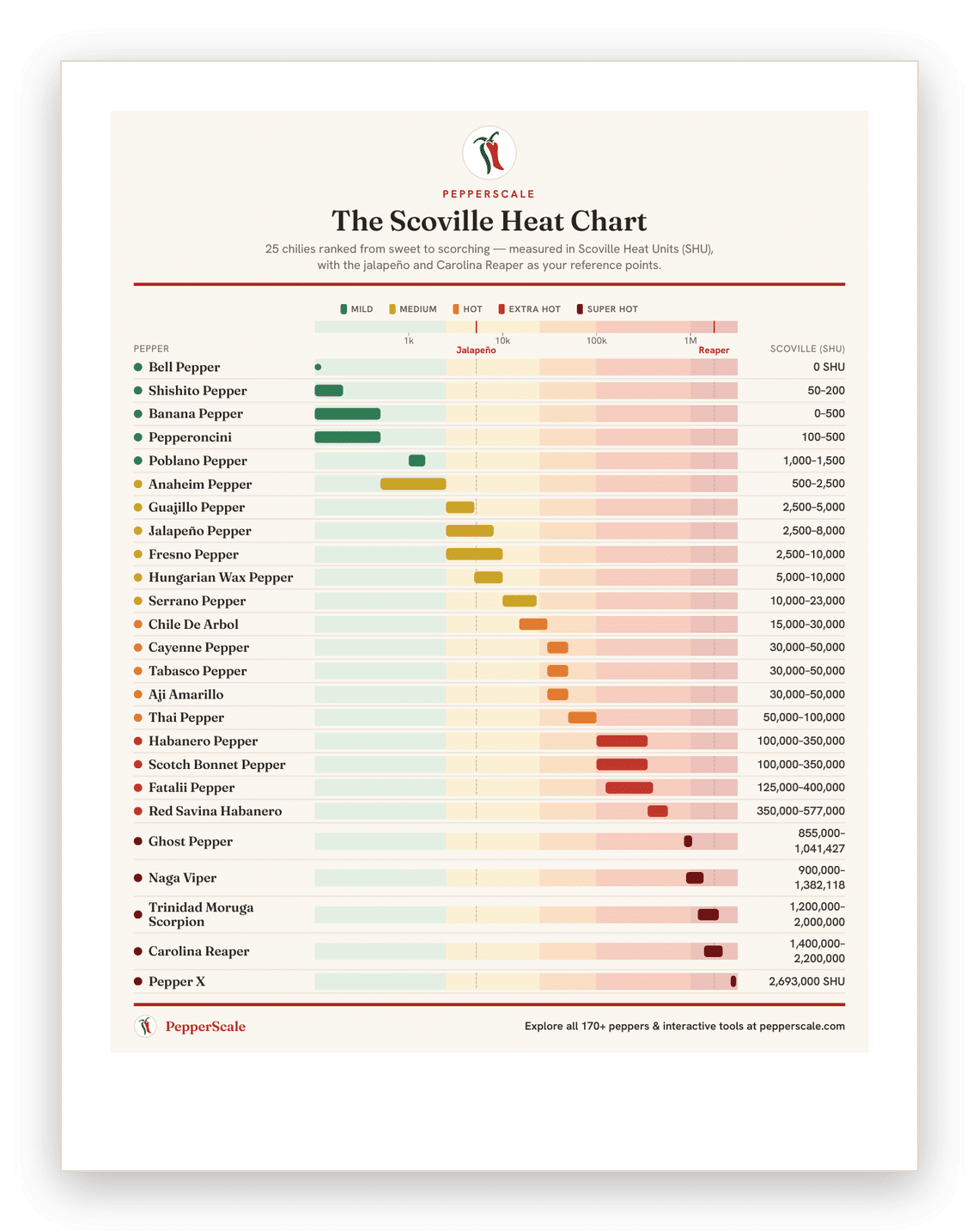
Get the free PepperScale Scoville Heat Chart
A printable, at-a-glance ranking of 25 chilies from sweet to scorching — with the jalapeño and Carolina Reaper as your reference points. Join the newsletter and we’ll send it straight to your inbox.
No spam — just Wicked Wednesday recipes and occasional extra dashes of chili pepper inspiration. Unsubscribe anytime.
Related reading
- The Peruvian White Habanero Planting Guide: Another Peruvian pepper, with far more heat and compact plants.
- The Cayenne Pepper Planting Guide: The same heat level, on a smaller, quicker plant.
- Pepper Companion Plants: What to grow alongside your peppers, and what to keep away.