White peppers are chilies that turn cream, ivory or white at some point on the plant. A couple stay that way when they’re ripe, like the Peruvian white habanero and Aji White Fantasy. Most pass through white on their way to red, though, so you’ll often see white pods hanging next to orange and red ones. They aren’t just pretty, either. A white chili lets you add heat to a cream sauce without flecks of red or green. Here are the ones we’ve profiled, from sweet paprika peppers to a white habanero, with how hot each one gets and when it’s white.

White peppers at a glance
Here’s every pepper below in one place, sorted from mildest to hottest. The third column compares each one with a jalapeño, and the last tells you whether it’s white when it’s young or once it’s ripe.
| Pepper | Heat (SHU) | Compared with a jalapeño | When it’s white |
|---|---|---|---|
| Feher Ozon | 0 to 1,000 | Much milder | Young; ripens to red |
| Medusa | 1 to 1,000 | Much milder | Young; ripens through yellow and orange to red |
| Mariachi | 500 to 600 | Much milder | Midway; creamy yellow-white before pink and red |
| Fire and Ice | 1,000 to 5,000 | About half as hot | Young; ripens through yellow and orange to red |
| Sangria | 1,000 to 5,000 | About half as hot | Young; then yellow, orange, red and purple |
| Aji White Fantasy | 5,000 to 10,000 | About 1½ times hotter | Ripe; off-white to creamy beige |
| Fish pepper | 5,000 to 30,000 | About 3 times hotter | Young; then cream, green and red |
| Aji omnicolor | 30,000 to 50,000 | About 8 times hotter | Young; pale yellow, almost white |
| Prairie fire | 70,000 to 80,000 | About 14 times hotter | One of six colors on the plant |
| Peruvian white habanero | 100,000 to 350,000 | About 43 times hotter | Ripe; light yellow to creamy white |
Why cook with white peppers?
Color’s the reason cooks use them. A white or cream chili disappears into a white sauce, so you get the heat without changing how the dish looks. That’s the fish pepper’s claim to fame: cooks used its young, creamy white pods in cream-based seafood dishes for exactly that. Try a white chili in a spicy béchamel, an Alfredo or a creamy chowder, and nobody will see it coming.
Are white peppers the same as spice rack white pepper?
No, and it’s an easy mix-up. The white pepper in your spice rack is a peppercorn, from the same vine as black pepper, with the dark outer layer removed. It’s not related to chili peppers at all. Funnily enough, it gets used for the same reason as the chilies here: cooks add it to béchamel, mashed potatoes and cream soups so there aren’t any dark specks.
Mild white peppers
These have little or no heat, so you can use them like sweet peppers.
Feher Ozon peppers

The Feher Ozon is a Hungarian paprika pepper. Its pods start creamy white and ripen to a bright red, curving to a point at up to 5 inches long, and the plant stays compact, around 18 inches tall. It’s sweet and a little tangy, with a fruity note, so you can use it anywhere you’d use a bell pepper, raw or roasted. It’s traditionally dried and ground into paprika, too.
Medusa peppers

The Medusa pepper grows dozens of thin, twisting pods, about 2 inches long, that stand up from the plant like a head of snakes. They start ivory white and ripen through yellow and orange to red, so one plant shows every stage at once. It doesn’t grow much past a foot tall, so it’s a great pick for a pot, and it’s sweet enough to eat fresh in salads or grilled on a sandwich.
Mariachi peppers

The Mariachi pepper ripens in a pattern all its own: green, then a creamy yellow-white, then a rosy, yellowish pink and finally bright red. Its conical pods grow up to 4 inches long and hang from a very productive plant. It’s barely hot, and its sweetness is more delicate than fruity, a little like melon, so it’s the one to pick when you want flavor without heat.
Medium-heat white peppers
These run from about half a jalapeño’s heat up to a mild cayenne’s, so you’ll want to taste one before you add a handful.
Fire and Ice peppers
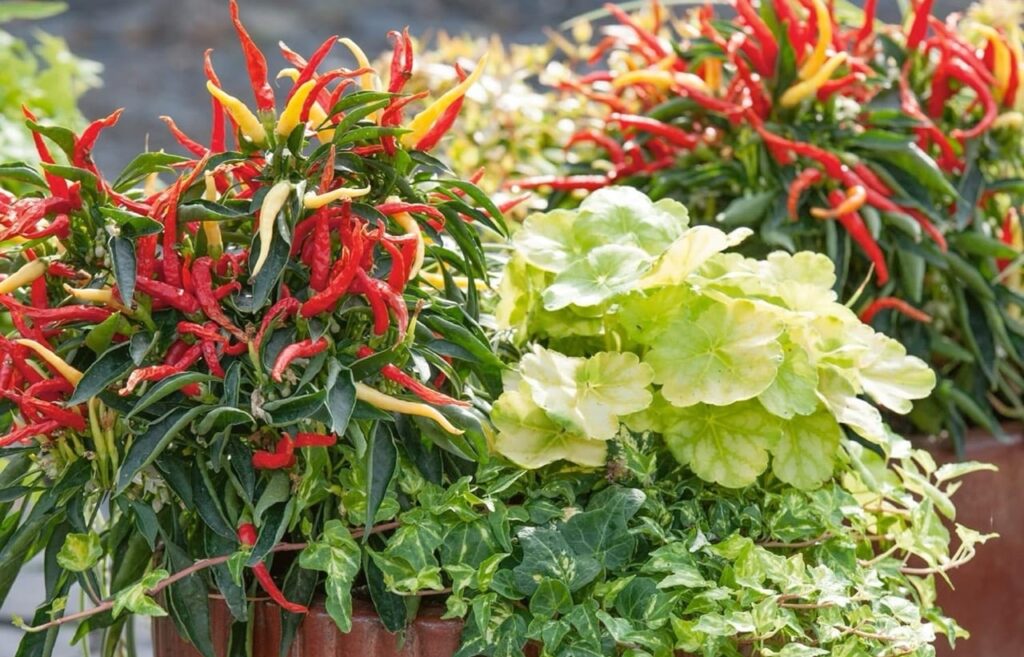
The Fire and Ice pepper is named for its colors. Its thin pods, 3 to 4 inches long, start creamy white. That’s the ice. They ripen through yellow and orange to red, the fire, and you’ll often see them all on one plant. It’s crisp and slightly sweet, good in salads, on sandwiches and in a sauté.
Sangria peppers

The Sangria pepper starts cornsilk white and yellow, then turns orange, red and purple, with every color on the plant at once. Its slim, 2- to 3-inch pods grow straight up in clusters, so the plant makes a great focal point in a bed or on a balcony. The flavor’s plain and a little bitter, though, so you’ll mostly use it to add color to a salsa.
Aji White Fantasy

The Aji Fantasy comes in a few colors, but the white one, Aji White Fantasy, is the one you’ll see most. It’s a baccatum that comes from Finland, with lantern-shaped pods about 2 inches long that ripen from off-white to a creamy beige or light yellow. It’s got a bright, citrusy sweetness with lemon and lime notes. Its heat’s right around a jalapeño’s, so it’s great in salsas, ceviche and hot sauces, and it’ll blend into a cream sauce as well as a fish pepper does.
Fish peppers

The fish pepper is an heirloom with one of the most interesting color runs around. Its slightly curved, 2- to 3-inch pods start white, then turn cream, green and finally red, and the leaves are streaked green and white. Cooks used the young white pods in creamy seafood dishes because they blend right in, and they taste milder at that stage. The flavor’s bright and peppery, much like a serrano’s. Its heat runs from jalapeño level up to a mild cayenne, so it’ll work in any recipe that calls for a serrano.
Hot white peppers
These two match or pass a cayenne, so a little goes a long way.
Aji omnicolor

The aji omnicolor ripens from a pale yellow that’s almost white through yellow and orange to red, and one plant can carry dozens of pods in all those colors. They’re slim and pendant-shaped, 2 to 3 inches long. It shares a cayenne pepper‘s heat, and unlike many other ornamentals, it’s got real flavor, sweet and fruity. You’ll like it in fruit salsas, hot sauces and pickles.
Prairie fire peppers

The prairie fire pepper grows tiny pods, about an inch long, in green, purple, cream, yellow, orange and red, all on one sprawling plant. Cream is only one stop on the way, but it’s part of what makes the plant look like a string of holiday lights. Don’t let the size fool you: it’s about as hot as a Thai pepper, with a quick, fruity tang, and it’ll make the most colorful salsa you’ve ever had.
Extra-hot white peppers
This is where white peppers stop being mild.
Peruvian white habaneros
The Peruvian white habanero, also sold as the white habanero, is the hottest white pepper we cover. Its pods are small and thin, up to 2 inches long and only about ¾ inch wide, and they ripen from green to shades between light yellow and creamy white. It shares the common orange habanero‘s heat, 100,000 to 350,000 SHU, and much of its flavor, citrusy and a little smoky. It’s handsome enough to grow as an ornamental, but a little goes a long way in the kitchen, so wear gloves when you cut it.
A few other hot peppers come in white versions, too. There’s a rare white ghost pepper. It’s about as hot as the red one, with a slightly less fruity flavor. Red and white fatalii peppers are grown alongside the usual yellow, too, though they aren’t the heirloom variety. Neither has its own profile yet, so they’re not in the table.
Which white pepper should you grow?
It depends on whether you’re growing for the kitchen or the garden.
- For cream sauces: young fish peppers or Aji White Fantasy.
- For little or no heat: Feher Ozon, Medusa or Mariachi.
- For a pot on the patio: Medusa or Feher Ozon.
- For flavor with real heat: aji omnicolor.
- For the most heat: the Peruvian white habanero.
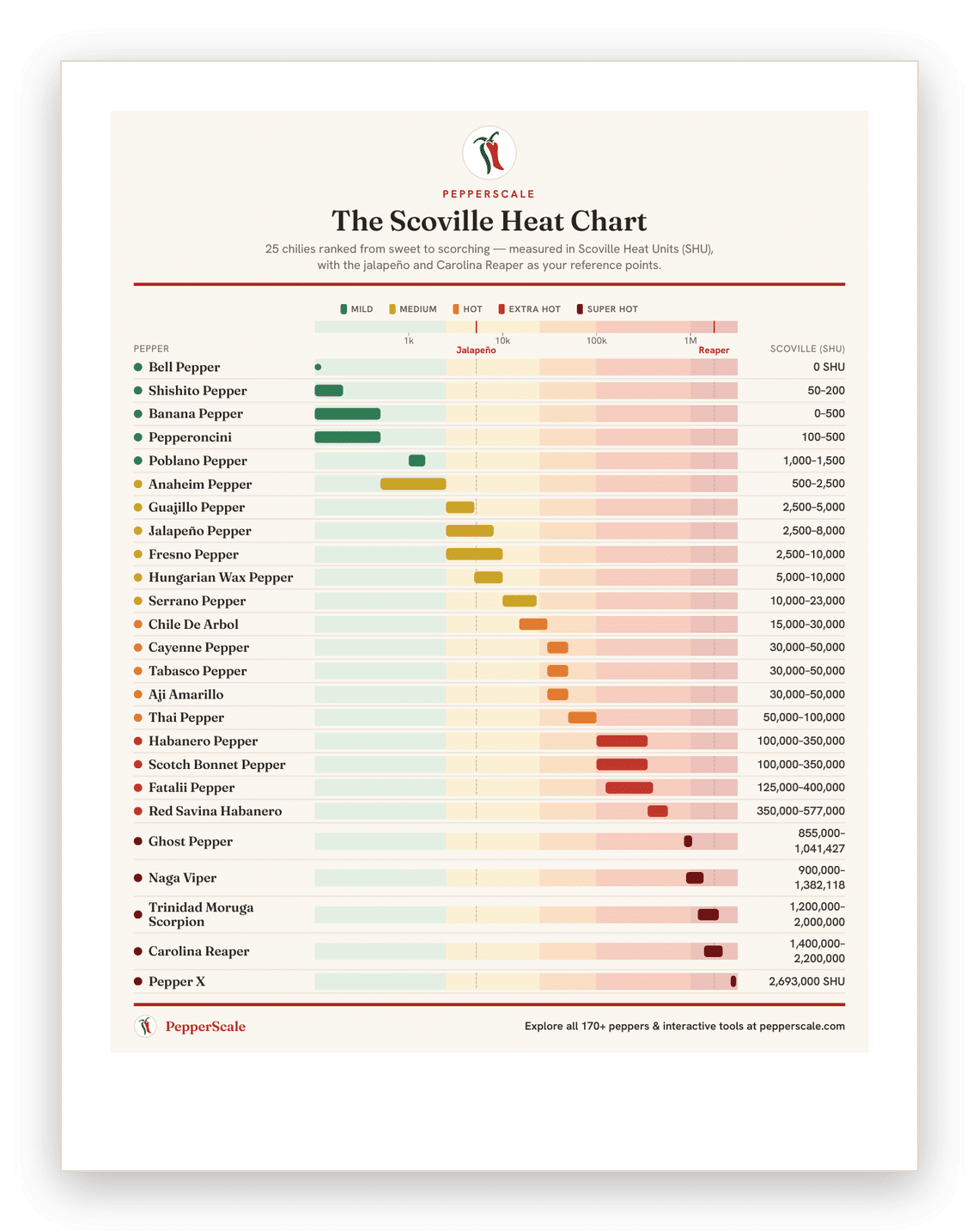
Get the free PepperScale Scoville Heat Chart
A printable, at-a-glance ranking of 25 chilies from sweet to scorching — with the jalapeño and Carolina Reaper as your reference points. Join the newsletter and we’ll send it straight to your inbox.
No spam — just Wicked Wednesday recipes and occasional extra dashes of chili pepper inspiration. Unsubscribe anytime.
Related reading
- Colorful Peppers Guide: Rainbows Of The Scoville Scale: Peppers that ripen through a rainbow of colors, ornamental and culinary.
- Yellow Peppers Guide: Brighten Up Your Garden And Plate: Sunny chilies and sweet peppers, from mild to very hot.
- Purple Peppers Guide: Royal Shades For Plate And Garden: Purple chilies and sweet peppers, from mild to hot.