Chamoy is four things at once: fruit, salt, sour and a light touch of chili. Take away any one of them and it stops tasting like chamoy. That’s what makes it awkward to replace, and it’s why the first thing most people reach for, a bottle of hot sauce, misses so badly. Hot sauce hands you the chili and the acid, which is the easy half, and none of the fruit or the cured, salty depth underneath.
Chamoy does belong to a family, though, and the family is older and wider than the bottle. Salted, dried, soured fruit shows up as li hing mui in southern China, as umeboshi in Japan, as saladitos in Mexico, and as tamarind candy across most of Latin America. Shop that family instead of the hot sauce aisle and you’ll get much closer.
Fair warning: nothing below is a straight drop-in. Every option needs something added, usually chili powder, sugar, or lime. All of them are still faster than a second trip to the store.


Last update on 2026-10-15. We earn a commission if you make a purchase, at no additional cost to you.
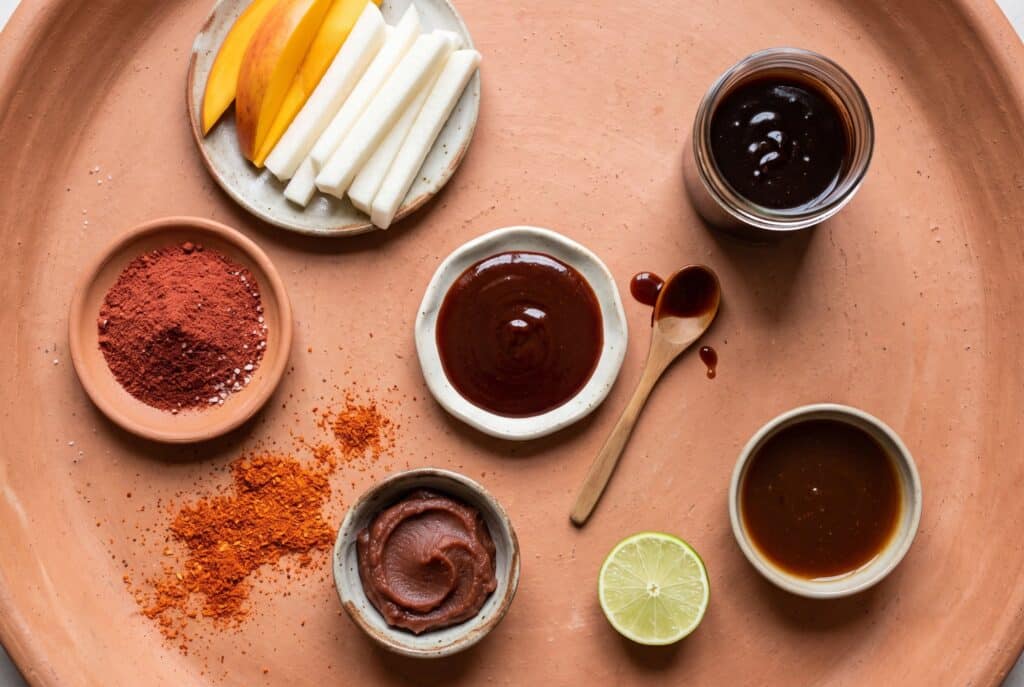
The best swaps: condiments built on salted, soured fruit
Tamarind paste or concentrate
Tamarind is already one of the fruits chamoy itself gets built on, so this starts closer than anything else. Buy the jarred concentrate in the Latin or Indian aisle and read the label first. Some are nothing but tamarind, which is what you want. Others, Laxmi among them, list sugar second, which isn’t a problem so much as less room to season it yourself.
Straight tamarind is sour and not much else, so you’re building the other three notes: sugar, salt, chili powder, and enough water to loosen it to a pour. That’s more steps than opening a bottle and fewer than it sounds, and it’s the only option here where you set the balance yourself.
The candy aisle is worth a detour too, for calibration rather than for sauce. Pulparindo, the De la Rosa bar, is about a quarter tamarind pulp with sugar, salt and guajillo chili, and it lands very close to the flavor you’re chasing. One thing to know before you shop: skip Pelón Pelo Rico if tamarind is the point. The US label lists no tamarind at all, only sugar, corn syrup, chili powder and flavoring.
Li hing mui powder
This one is close to chamoy’s actual ancestor. Li hing mui is salted dried Prunus mume, the fruit usually called a plum but botanically nearer an apricot, the same one Japan cures as umeboshi. The powder is that dried pickled plum ground fine with salt, sugar and licorice, and it tastes sweet, sour and salty in roughly the order chamoy does. What it doesn’t have is chili.
Two ways to use it. Dry, it’s a rim seasoning and a fruit dusting, and it does that job at least as well as chamoy sauce does. Wet, whisk it with a little warm water and a pinch of chili powder until it pours.
It’s easier to find than it sounds: Amazon, Whole Foods, most Asian groceries, and anywhere with a Hawaiian snack section, where it sits with the crack seed. Read the bag before you buy, though. Red dye is close to standard, and aspartame turns up in a lot of them, including some of the ones sold as classic.
Umeboshi paste
Same fruit, different country. Umeboshi paste is ume salted and often cured with shiso, and it’s aggressively sour and salty, more of both than chamoy by a wide margin. What it gives you that hot sauce can’t is the cured, savory depth sitting under all that sourness. Most of it is unsweetened, but check the jar, because some brands do add sugar. S&B lists it right after the plum and the salt, which puts that one a step closer to chamoy rather than further away.
Treat it as a base rather than a substitute. Thin it with water, sweeten it with honey, sugar or apricot jam, then add chili powder and lime. Start with about a third as much as the chamoy called for, because the salt gets away from you fast.
It’s at its best on a rim, in a marinade, or anywhere a small amount is doing a lot of work. It’s the wrong choice for pouring over a whole cup of fruit.
Chinese plum sauce
The supermarket fallback, and a better one than it gets credit for. Lee Kum Kee’s plum sauce is a quarter salted plums by weight, with sugar, rice vinegar, ginger and chili peppers. Koon Chun’s is built the same way and adds garlic. Read that list next to a chamoy label and the overlap is obvious: salted fruit, sugar, acid, a little chili.
The gaps are still real. It’s much sweeter, much less salty, and the ginger is a flavor chamoy never has. Cut it with lime juice, add salt, add chili powder, and accept that sweet is going to be the first thing you taste. American duck sauce is the same idea sweetened further, so if that’s what your store carries, lean harder on the lime. This ranks last of the four, but it’s the one you can buy at nine on a Sunday night.
One to skip: hot sauce
The instinct is to grab the red bottle already in the door of your fridge, and it’s the wrong bottle. Valentina is chili, vinegar, salt and spices. Tapatío and Cholula’s original are the same idea with garlic worked in. Sriracha is a chili purée with sugar and garlic, which at least gets you the sweetness, and then the garlic takes it somewhere chamoy doesn’t go. What none of them has is fruit. They cover heat and sourness, which is the easy half, and on cut mango they taste like exactly what they are, which is hot sauce on cut mango.
Worth knowing before you shop: Cholula does make a chamoy, and it’s a good bottle. It’s a completely different product from the original hot sauce sitting next to it on the shelf.
Thai sweet chili sauce is a nearer miss. It has the sugar and the mild heat, but garlic runs all the way through it and there’s no salt-cured sourness underneath, so it lands sweet and savory instead of sharp. If it’s the only thing in the house, cut it with lime and salt. It still won’t fool anyone.
Building a stand-in from what you already have
Chamoy starts as dried fruit cooked soft and blended, so anything already in that state is a shortcut. Apricot is the traditional fruit, and apricot preserves are the fastest version of it.
The five-minute one: three tablespoons of apricot preserves, one tablespoon of lime juice, half a teaspoon of chili powder, a good pinch of salt, and enough water to thin it to a drizzle. Whisk, taste, adjust. That’s fruit, sour, chili and salt in the right proportions and the right order.
If you keep Tajín or a homemade chili-lime seasoning in the cupboard, it handles chili, salt and acid in one spoon. A teaspoon of either stirred into three tablespoons of apricot jam and thinned with water is about as fast as this gets. Still add the fresh lime if you’re using Tajín. Its sourness comes almost entirely from citric acid, with dehydrated lime juice down under half a percent of the jar.
Other fruit bases that work the same way: dried apricots simmered soft, mango jam, plum jam. Stone fruit is the right neighborhood. Berry jams pull the flavor somewhere else.
And if you have forty minutes, the real thing beats every option on this page. Our homemade chamoy simmers dried apricots and hibiscus with chilies, then blends, strains and finishes with lime.
Match the substitute to the dish
- Mango, jicama, cucumber, any fruit cup. The apricot build or a seasoned tamarind concentrate. Both pour, and both carry enough sugar to stand up to raw fruit. Finish the way you would anyway, with chili powder over the top.
- Michelada and cocktail rims. Umeboshi paste thinned just slightly, or li hing mui powder used dry in place of the whole rim mixture.
- Chamoyadas, raspados and paletas. The apricot build, thinned more than usual so it doesn’t seize up against the ice.
- Chips and snacks. The tamarind build, kept thick, or li hing mui powder shaken in dry.
- Grilled chicken, shrimp or pork. Apricot preserves with lime, chili powder and salt, brushed on in the last few minutes. Plum sauce also earns its place here, where the sweetness is an asset instead of a problem.
- Gummies and candy. Li hing mui powder, which is already the standard candy dusting in Hawaii.
How much should you use?
None of these swap in at a flat one-to-one, and even the closest ones need tasting. Start low. Chamoy is a finishing sauce, so an under-seasoned plate takes two seconds to fix and an over-salted one doesn’t.
- Tamarind concentrate. Half as much to start, since it’s concentrated and far more sour. Sugar, salt and chili go in from there until it stops tasting like straight tamarind.
- Li hing mui powder. Roughly a tablespoon of powder with two tablespoons of warm water for every three tablespoons of chamoy, with chili powder added a pinch at a time.
- Umeboshi paste. A third as much to start. It’s far saltier than chamoy and easy to overshoot.
- Plum sauce. One for one, then lime and salt until sweetness stops being the first thing you taste.
- The apricot build. One for one. You already made it to taste.
The last word
Chamoy’s whole trick is being sweet, sour, salty and mildly spicy at the same time, and the substitutes that work are the ones already doing three of those four. Tamarind concentrate gets you there with the most control and the most work. Li hing mui powder is the closest thing to where chamoy came from, and the best of the group on a rim. Umeboshi paste is the strongest and needs the most help. Plum sauce is the one that’s always in stock.
And if none of them are in the house, apricot jam with lime, chili powder and salt will get you most of the way there in the time it takes to find a whisk.
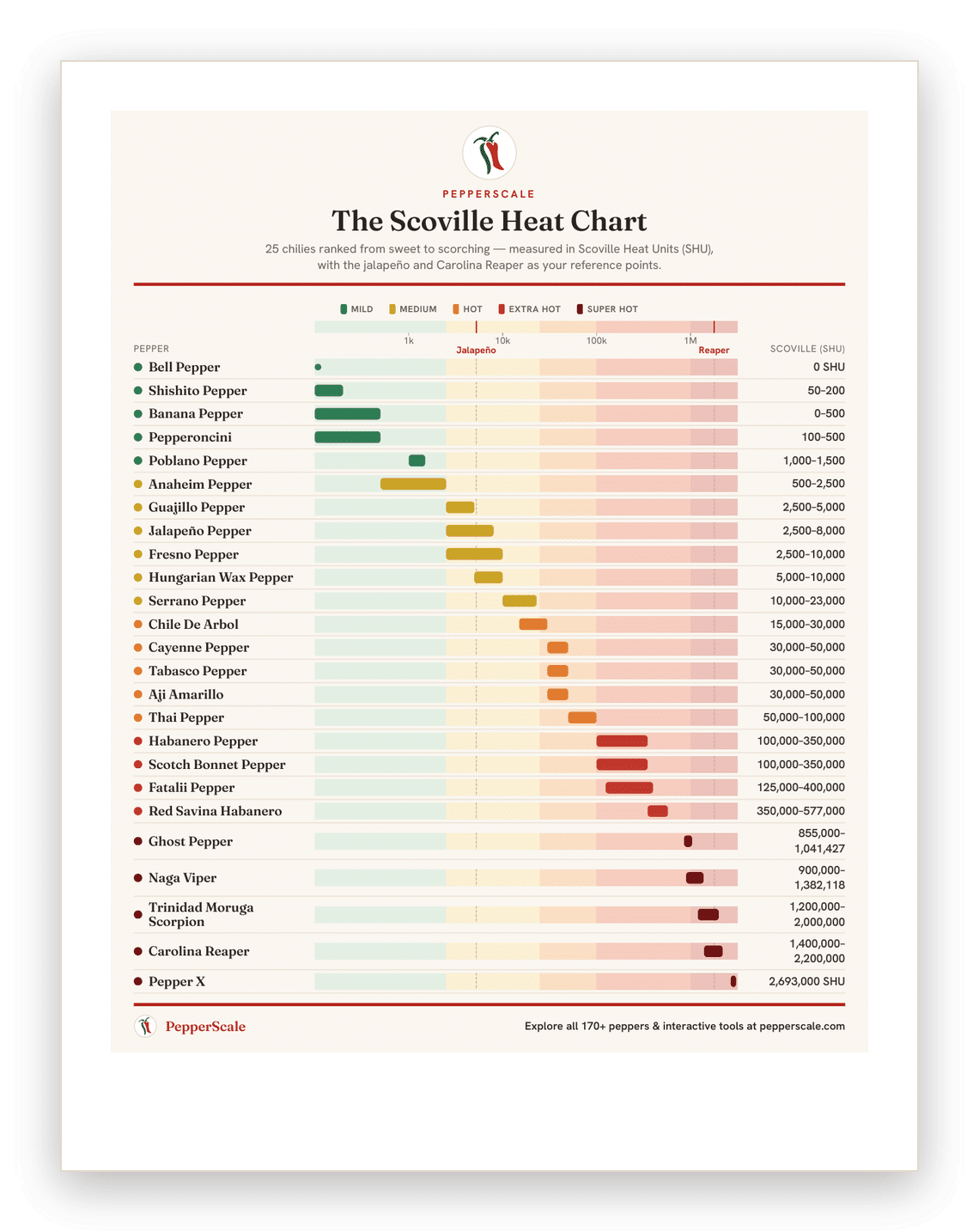
Get the free PepperScale Scoville Heat Chart
A printable, at-a-glance ranking of 25 chilies from sweet to scorching — with the jalapeño and Carolina Reaper as your reference points. Join the newsletter and we’ll send it straight to your inbox.
No spam — just Wicked Wednesday recipes and occasional extra dashes of chili pepper inspiration. Unsubscribe anytime.
Related Reading
- What’s A Good Sweet Chili Sauce Substitute?: The other sweet-and-spicy bottle people run out of mid-recipe, and what to pour instead.
- What’s A Good Chili Powder Substitute?: Half the swaps above call for chili powder. Here’s what to do if you’re out of that too.
- The Hot Pepper List: Browse chilies by heat level and flavor to find your next favorite.