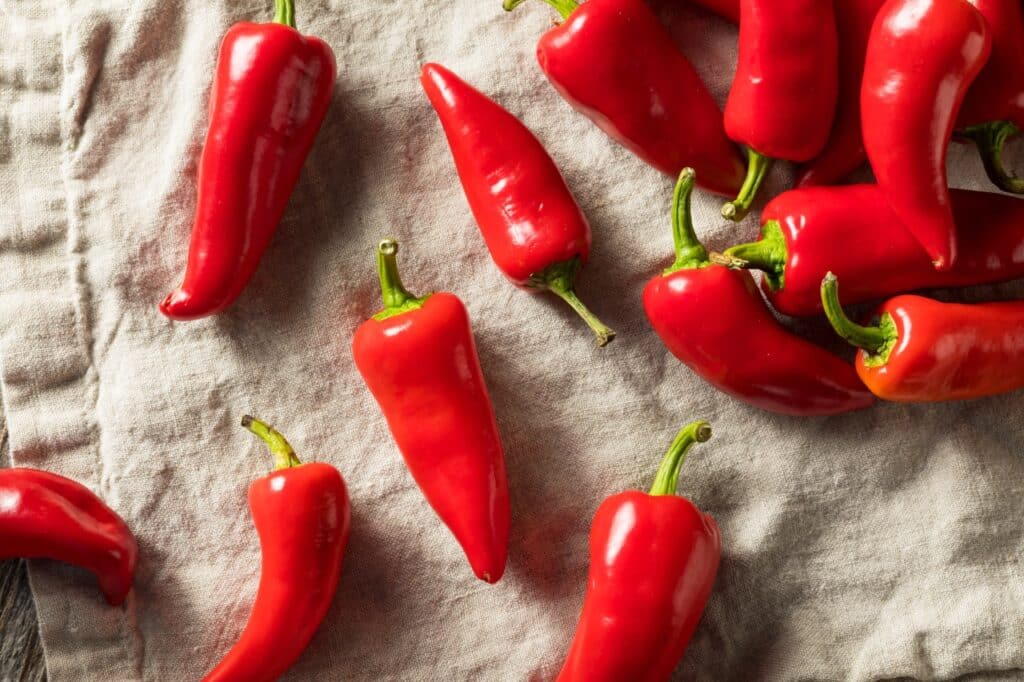
If you like the jalapeño but want a pepper with a little more color and fruit, the Fresno is a great one to grow. The plants stay compact, around 2 to 2½ feet tall, and the pods stand upright on the branches, turning from green through orange to a glossy red. Count on roughly 75 days from transplant to your first ripe ones.
It’s also a forgiving pepper for a first garden. Seed suppliers describe it as productive, and Park Seed lists it as tolerant of heat and drought. Here’s how to get from a packet of seed to a bowl of red Fresnos.

Last update on 2026-11-12. We earn a commission if you make a purchase, at no additional cost to you.
- Heat
- 2,500–10,000 SHU
- Start seeds indoors
- 8 weeks before your last spring frost
- Germination
- 7–21 daysIn soil around 70–85°F.
- Harden off
- 7–14 days before transplanting
- Transplant
- After last frost, once nights stay at 50°F or warmer
- First harvest
- 75 days after transplanting
- Plant height
- 24–30 inches
- Containers
- Can be grown in a large container
Where these figures come from
- Start seeds indoors: Sandia Seed Company, Fresno
- Germination: Sandia Seed Company, Fresno; University of Minnesota Extension, Growing peppers; Nebraska Extension G1879, Garden Peppers; NMSU Chile Pepper Institute, Special Seed Starting Instructions; Utah State University Extension, Peppers in the Garden
- Harden off: UC ANR, Growing Peppers; Penn State Extension (Chester Co. Master Gardeners), Growing Peppers; Nebraska Extension G1879, Garden Peppers
- Transplant: University of Minnesota Extension, Growing peppers; UGA Extension C1005, Home Garden Peppers; NMSU Chile Pepper Institute, Growing Tips
- First harvest: Park Seed, Fresno
- Plant height: Park Seed, Fresno; NMSU Chile Pepper Institute seed store, Fresno
- Containers: Sandia Seed Company, Fresno
When to plant Fresno peppers where you live
No Fresno survives a frost, and chilly ground stalls them, so there’s no prize for planting early. Hold off until the last frost date is behind you and the nights have turned mild, ideally 55°F or more, with soil around 60°F just below the surface. You’ll see that 55°F night date in the planner, alongside the earlier 50°F marker many growers use.
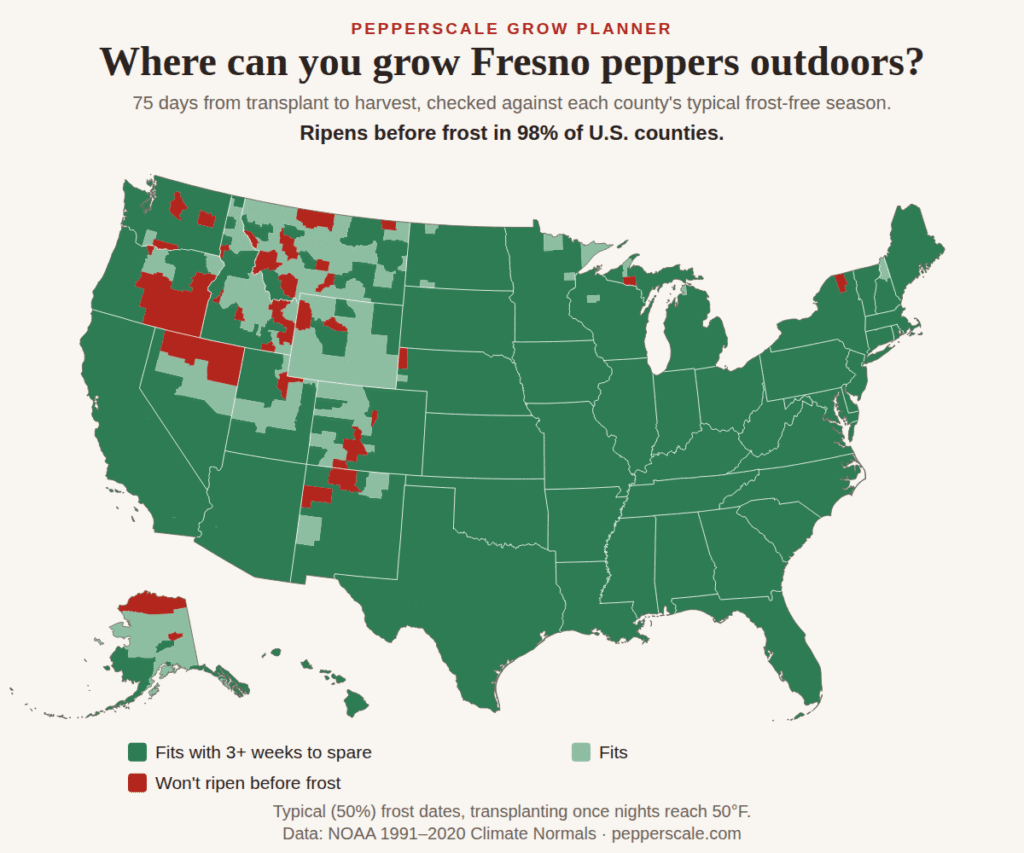
Give it your zip code and it lays out the calendar from nearby NOAA frost data: sowing, hardening off, transplanting and an estimated first pick. It also checks your frost-free season against the Fresno’s 75 days. That test is rarely close. On our county map, the Fresno ripens before fall frost in 98% of the country.
Starting Fresno seeds indoors
Sow about 8 weeks ahead of your last frost, a quarter inch deep in a sterile seed-starting mix. Sandia Seed Company recommends bottom heat around 85°F, and with it, seedlings show up anywhere from a week to three weeks later. Keep the mix moist, never soggy. Seed that’s a few seasons old can be slower and spottier, and our post on pepper seed viability explains what changes as it ages.
Once they’re up, set a grow light just a few inches over the seedlings, and repot each one when its roots start circling. Sandia’s cue for transplanting is 6 true leaves. Ahead of that, toughen the plants up outdoors for a week or so: a short, shaded stint on day one, and a little more sun and time each day after.
Planting Fresno peppers outside
Fresnos want full sun. Park Seed lists them as heat tolerant, so a hot, bright bed suits them better than a shady corner.
Sandia spaces plants 30 inches apart. They grow 24 to 30 inches tall, so a short stake or a small cage is usually all they need, mostly to hold up a branch loaded with pods. Planning a bigger bed? Our pepper spacing guide has layouts.
Fresnos like loose, quick-draining ground that’s neutral or a touch acidic, around pH 6 to 7. Not sure what yours is? Test it, and our soil pH guide covers raising or lowering it.
After planting, spread straw, shredded leaves or compost around the plants to hold in moisture and block weeds, leaving a small gap at each stem. In a cold spring, you can also warm the ground ahead of time by covering it with black plastic.
Growing Fresno peppers in containers
No room for a bed? A Fresno will happily live in a pot. Sandia suggests a 5-gallon container, and it needs drainage holes. In the heat of summer, a pot can dry out fast, so you may be watering every day. For pot sizes and mixes, see growing peppers in containers.
A container plant can also outlast the season. Where winters never freeze, a pepper plant can live for years. So carry a potted Fresno in before the cold comes and put it back out after your last frost. Our indoor pepper growing guide covers the winter months.
Watering and feeding Fresno peppers
Rain plus watering should come to about one inch a week for Fresnos. When you do water, soak the bed deeply instead of sprinkling it often. Consistency matters as much as the amount, because blossom-end rot shows up more with uneven watering. But you don’t have to guess at the rain, since the planner lists the monthly average near you. More in our pepper watering guide, plus these signs of an overwatered pepper.
Go easy on fertilizer, especially nitrogen, which pushes leaves at the expense of pods. Have the soil tested ahead of feeding, and skip the phosphorus unless the results show a shortage. Timing and amounts are in our fertilizer guide, and growing hotter peppers covers what can change their heat.
When to pick Fresno peppers
When should you pick? That’s up to your taste. Park Seed’s advice is to pick green for the mildest flavor, orange for a middle ground and deep red for the most heat, and Sandia says to wait until they’re glossy red and full-sized. Expect the first ones about 75 days after transplanting (Sandia puts it at 70). Ready pods run 2 to 3 inches.
And when you harvest, snip each pepper off with clippers, because tugging can tear the branch. Uncut pods are fine to handle, but wear gloves once you start cutting them, and keep our chili burn remedies in mind.
Frost on the way, and green pods still hanging? If so, clear the plants of every pod and ripen them (somewhat) off the vine. A potted plant can simply come indoors instead.
Common Fresno pepper plant problems
- Blossoms dropping and few pods in a heat wave: peppers tend to stop setting fruit once days climb past about 90°F. Check the planner to see when your hottest stretch usually hits.
- Mottled, puckered or distorted leaves: a sign of mosaic virus. Park Seed lists Fresno as resistant, which isn’t the same as immune. Our post on common pepper plant diseases covers what to look for.
- Sticky leaves and tiny bugs on the undersides: probably aphids. Fine webbing and speckled leaves point to spider mites instead.
- A dark, leathery spot on the bottom of the pod: blossom-end rot. Here’s how calcium ties in.
- Whitish, papery patches on pods facing the sun: sunscald, most likely.
- Leaves cupping or fading to yellow: start with our posts on curling leaves and yellow leaves.
- Plants that just sit there: these are the usual reasons pepper plants grow slowly.
- A cold snap coming: here’s how frost affects pepper plants.
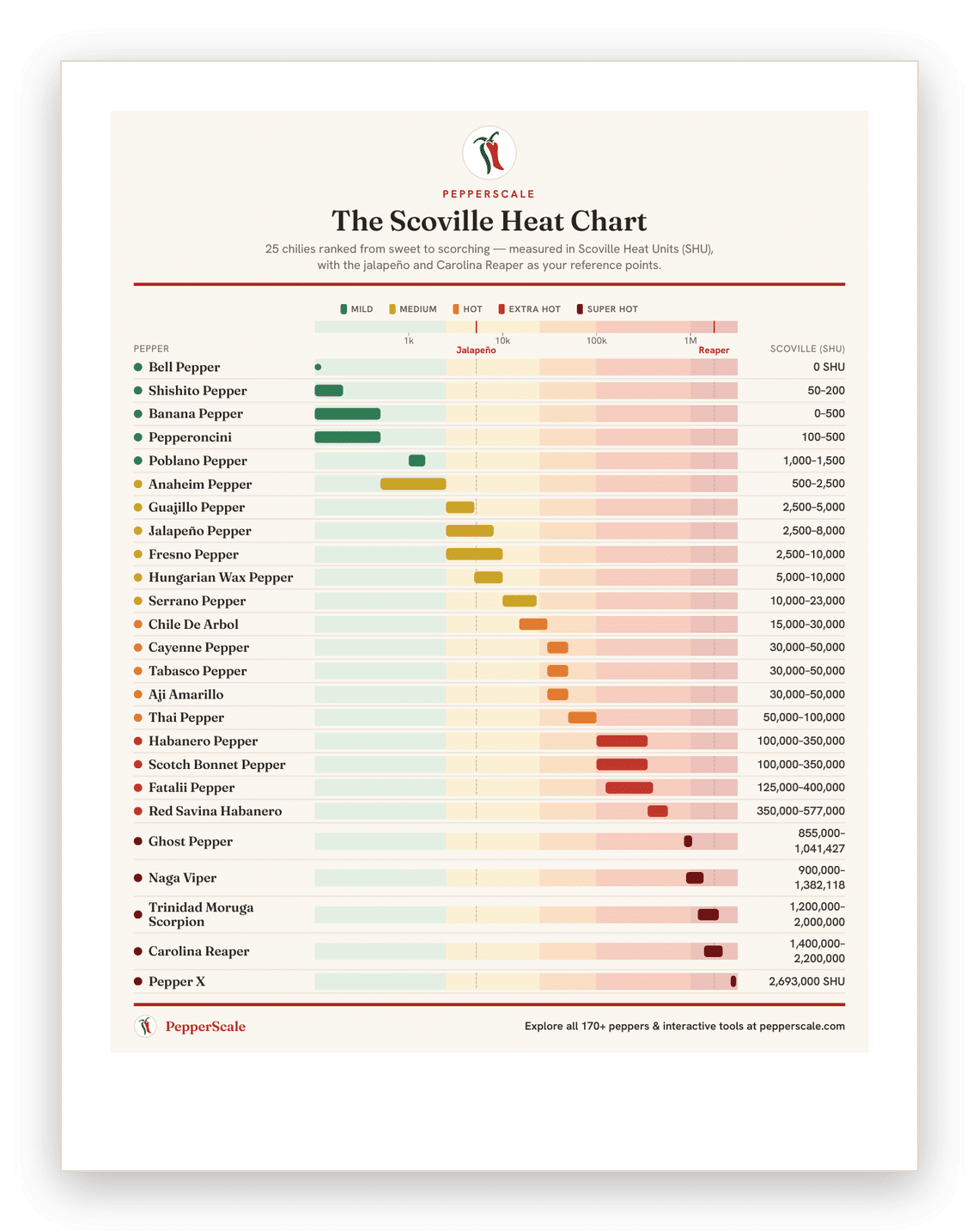
Get the free PepperScale Scoville Heat Chart
A printable, at-a-glance ranking of 25 chilies from sweet to scorching — with the jalapeño and Carolina Reaper as your reference points. Join the newsletter and we’ll send it straight to your inbox.
No spam — just Wicked Wednesday recipes and occasional extra dashes of chili pepper inspiration. Unsubscribe anytime.
Related reading
- The Jalapeño Planting Guide: Grow the Fresno’s look-alike next to it and compare the two.
- The Serrano Pepper Planting Guide: The next step up in heat, and another easy plant for a sunny bed.
- Fresno Vs. Jalapeño: How the two differ in heat, flavor and those thinner Fresno walls.