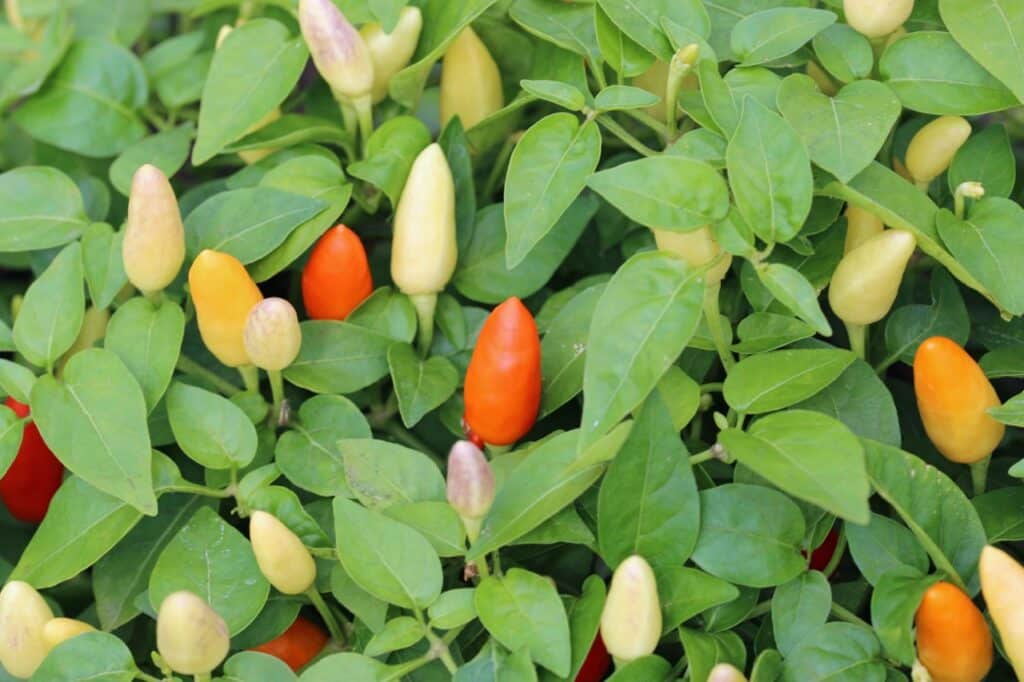
Few hot peppers fit into a small space as neatly as the Prairie Fire. The plants grow only about 8 inches tall, the first pods are ready roughly 90 days after transplanting, and one plant can carry cream, yellow, orange and red pods all at once. That makes it as much a patio plant as it is a kitchen one.
For the heat level and kitchen ideas, head to our Prairie Fire pepper profile. Here, we stick to the garden.

Last update on 2026-11-24. We earn a commission if you make a purchase, at no additional cost to you.
- Heat
- 70,000–80,000 SHU
- Start seeds indoors
- 6–10 weeks before your last spring frostGeneral figure for peppers, not specific to this one.
- Germination
- 14–28 daysIn soil around 70–85°F. General figure for peppers, not specific to this one.
- Harden off
- 7–14 days before transplanting
- Transplant
- After last frost, once nights stay at 50°F or warmer
- First harvest
- 90 days after transplanting
- Plant height
- 8 inches
- Containers
- Does well in a container
Where these figures come from
- Start seeds indoors: NMSU Chile Pepper Institute, Growing Tips; Clemson HGIC, Pepper; University of Maryland Extension, Growing Peppers in the Home Garden
- Germination: NMSU Chile Pepper Institute, Special Seed Starting Instructions; University of Minnesota Extension, Growing peppers; Nebraska Extension G1879, Garden Peppers; Utah State University Extension, Peppers in the Garden
- Harden off: UC ANR, Growing Peppers; Penn State Extension (Chester Co. Master Gardeners), Growing Peppers; Nebraska Extension G1879, Garden Peppers
- Transplant: University of Minnesota Extension, Growing peppers; UGA Extension C1005, Home Garden Peppers; NMSU Chile Pepper Institute, Growing Tips
- First harvest: Thresh Seed Co., Prairie Fire
- Plant height: Thresh Seed Co., Prairie Fire
- Containers: Thresh Seed Co., Prairie Fire
When to plant Prairie Fire peppers where you live
Prairie Fires are as frost-tender as any pepper, so the seeds start indoors and the plants wait for real warmth before heading out. Hold off on transplanting until after your last frost date, when nighttime lows are staying above 50°F (55°F is safer) and the ground a few inches down is close to 60°F.
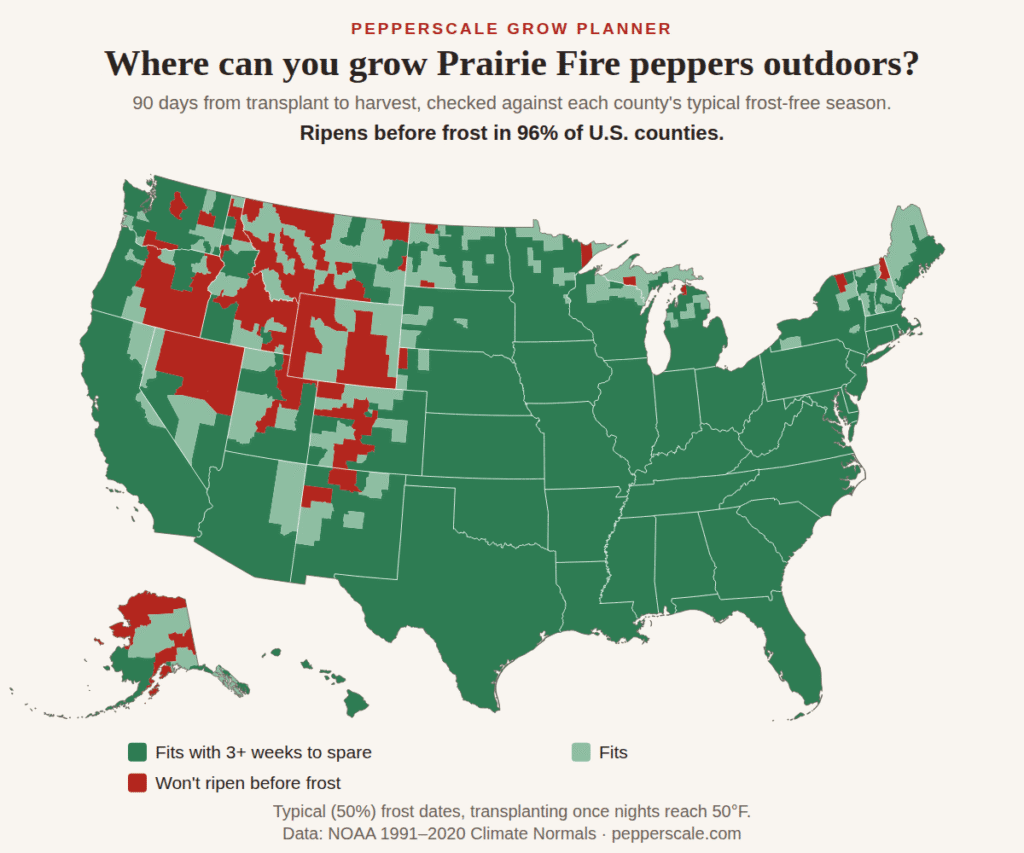
The planner below does the date math for you. Give it a zip code, and it pulls frost dates from the nearest NOAA weather station, then works out when to sow, harden off, transplant and expect your first pods. It also checks whether 90 days fits between your spring and fall frosts. For this pepper, it nearly always does, and the map shows it maturing in time in 96% of U.S. counties.
Starting Prairie Fire pepper seeds indoors
Seeds go in 6 to 10 weeks ahead of your last frost date, a quarter inch deep in a seed-starting mix. Warmth makes the biggest difference at this stage, so aim for a soil temperature of 70 to 85°F; a heat mat helps. But even then, it’ll take two to four weeks before you see seedlings. Seeds from an old packet? Here’s how long pepper seeds stay viable.
Once they’re up, give the seedlings bright light close overhead so they stay short and sturdy. About a week or two before they go outside, ease them into outdoor conditions, with a little time in the shade at first, working up to full days in the sun.
Planting Prairie Fire peppers outside
They’ll want full sun, which the Royal Horticultural Society and seed sellers all recommend. Prairie Fires grow wider than they are tall, spreading to about a foot across, so plan on roughly a foot between plants. They make a neat edging along the front of a bed. For other peppers in the same bed, check our pepper spacing chart.
Loose, well-drained soil suits them best, and a few inches of compost helps on heavy ground. Aim for slightly acidic to neutral soil, at pH 6.0 to 7.0. Not sure where yours stands? Start with a soil test, then use our soil pH guide for peppers to adjust it.
A light mulch of straw or shredded leaves holds moisture and keeps weeds down around such short plants. But leave an inch or so of bare soil around each stem.
Growing Prairie Fire peppers in containers
This is where the Prairie Fire really earns its keep. The plants are small enough for patio pots and even hanging baskets, and the RHS suggests a sunny windowsill as well. Drainage holes are a must. And plan on more frequent watering than in the ground, since containers dry out quickly. Our container growing guide covers pot sizes and potting mix.
Potted plants also give you a head start on winter. Move them in before the first frost, and our indoor pepper guide explains how to give them enough light.
Watering and feeding Prairie Fire peppers
Water deeply, then let the top inch of soil dry before the next round, which in garden beds usually works out to around an inch a week, counting rain. Pots can need water every day when it’s hot. Try to keep it steady, because big swings between bone-dry and soggy are linked to blossom-end rot. For more, see our posts on watering peppers and the signs of overwatering.
Feed lightly. A heavy hand with nitrogen pushes leaves at the expense of pods, and on a plant this small, the pods are what you’re after. Our fertilizer guide covers what to use and when.
When to pick Prairie Fire peppers
You can expect the first pods about 90 days after transplanting. Since each one changes color as it ripens, moving from cream through yellow and orange to red, a plant shows every stage at once. The pods are edible at any color, so you can pick whenever you like.
If the plant’s there for show, though, take only a few at a time and leave the rest to color up. Cut the pods off with scissors instead of tugging, which can snap a branch. And wear gloves if you’re picking a lot, because these are hot.
As frost approaches, harvest the pods that are left or bring potted plants indoors. For pods picked early, here’s how to ripen peppers off the vine.
Common Prairie Fire pepper plant problems
- Blossoms falling off in hot weather: peppers often drop flowers when daytime highs top about 90°F. Your planner results show when that stretch usually starts where you live.
- Mottled, mosaic-patterned leaves: often a virus. One of them, tobacco mosaic, can ride in on hands that have touched tobacco, so wash up before you work with the plants. Washington State University has photos to compare.
- Sunken, dark ends on the pods: blossom-end rot, usually tied to uneven watering.
- Bleached, thin spots on the side facing the sun: sunscald.
- Curled or yellowing leaves: our posts on leaf curl and yellowing leaves can help you narrow down the cause.
- Clusters of small bugs on new growth: likely aphids. Fine webbing points to spider mites.
- Plants that won’t grow: read why pepper plants grow slowly.
- An early cold snap: here’s how frost affects pepper plants.
Something else going on? Check our full list of pepper plant diseases and problems.
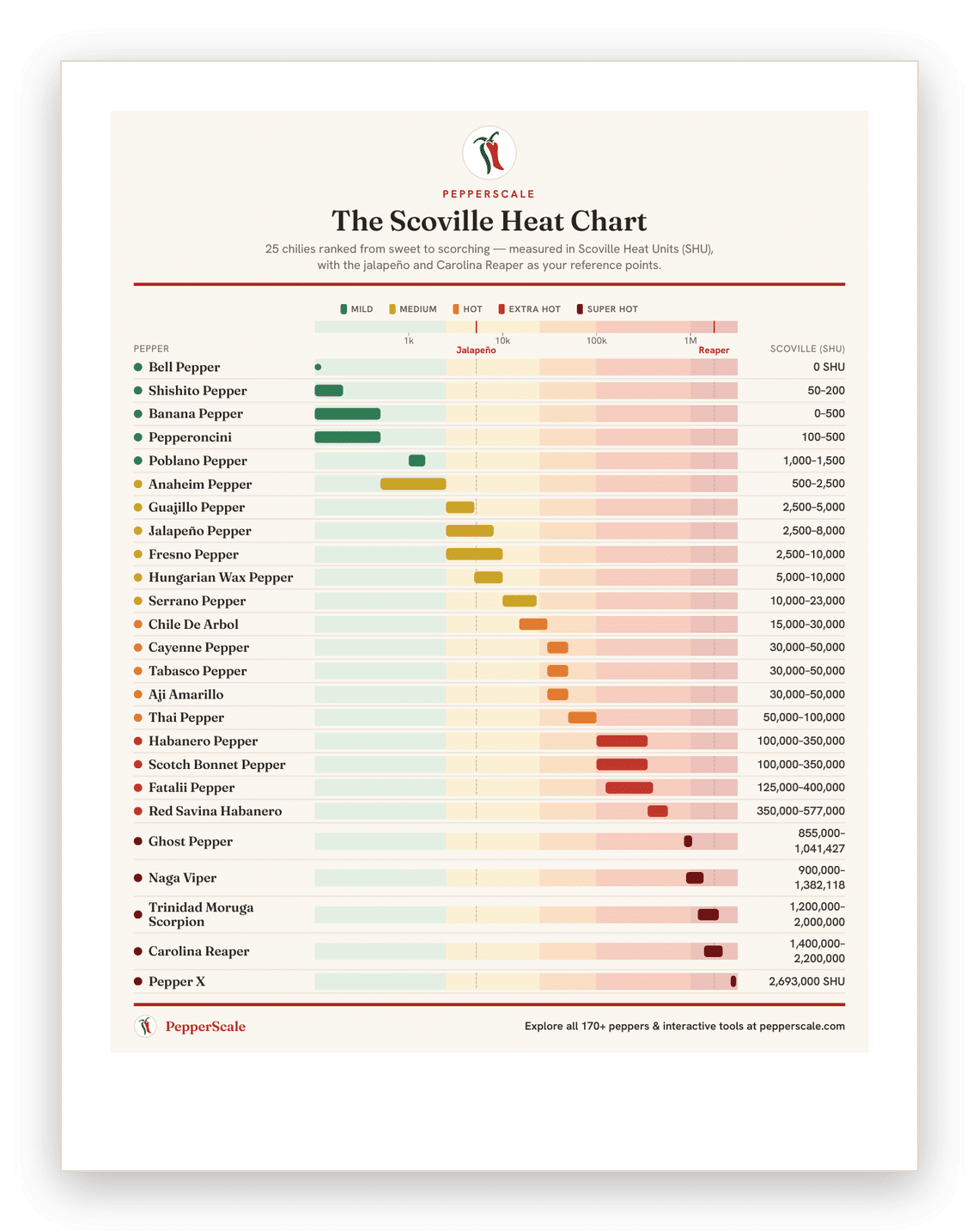
Get the free PepperScale Scoville Heat Chart
A printable, at-a-glance ranking of 25 chilies from sweet to scorching — with the jalapeño and Carolina Reaper as your reference points. Join the newsletter and we’ll send it straight to your inbox.
No spam — just Wicked Wednesday recipes and occasional extra dashes of chili pepper inspiration. Unsubscribe anytime.
Related reading
- The Chinese 5-Color Pepper Planting Guide: Another rainbow ornamental, taller and a little quicker to ripen.
- The Cayenne Pepper Planting Guide: A kitchen classic with about half the heat.
- Pepper Companion Plants: What to plant next to your Prairie Fires, and what to keep away.