The Chinese 5-color fits into most gardens without much fuss. Its first pods are ready 70 to 90 days after the plants go out. And because they color up from purple through cream, yellow and orange to red, one plant keeps changing all summer long. Where you live sets the calendar, and the planner below fills in your dates.
Want the heat and flavor rundown? It’s in our Chinese 5-color pepper profile. This one is about growing it.

Last update on 2026-11-08. We earn a commission if you make a purchase, at no additional cost to you.

- Heat
- 30,000–50,000 SHU
- Start seeds indoors
- 6–10 weeks before your last spring frostGeneral figure for peppers, not specific to this one.
- Germination
- 14–28 daysIn soil around 70–85°F. General figure for peppers, not specific to this one.
- Harden off
- 7–14 days before transplanting
- Transplant
- After last frost, once nights stay at 50°F or warmer
- First harvest
- 70–90 days after transplanting, for green fruitThis is to the first, unripe pods, which are purple on this pepper. Fully ripe red fruit takes about a month more.
- Plant height
- 18–48 inchesSeed sellers disagree on size: some list 18 to 24 inches, others about 4 feet.
- Containers
- Does well in a container
Where these figures come from
- Start seeds indoors: NMSU Chile Pepper Institute, Growing Tips; Clemson HGIC, Pepper; University of Maryland Extension, Growing Peppers in the Home Garden
- Germination: NMSU Chile Pepper Institute, Special Seed Starting Instructions; University of Minnesota Extension, Growing peppers; Nebraska Extension G1879, Garden Peppers; Utah State University Extension, Peppers in the Garden
- Harden off: UC ANR, Growing Peppers; Penn State Extension (Chester Co. Master Gardeners), Growing Peppers; Nebraska Extension G1879, Garden Peppers
- Transplant: University of Minnesota Extension, Growing peppers; UGA Extension C1005, Home Garden Peppers; NMSU Chile Pepper Institute, Growing Tips
- First harvest: Southern Exposure Seed Exchange, Chinese Five-Color Heirloom Hot Pepper; Southern Exposure Seed Exchange, Pepper Growing Guide
- Plant height: Gurney's, Chinese Five-Color Hot Pepper; Southern Exposure Seed Exchange, Chinese Five-Color Heirloom Hot Pepper
- Containers: Baker Creek Heirloom Seeds, Hot Pepper Seeds, Chinese 5 Color; Gurney's, Chinese Five-Color Hot Pepper
When to plant Chinese 5-color peppers where you live
Pepper plants can’t take frost, and they sulk in cold ground, so when do they go out? Once the last frost is behind you, the nights don’t dip below 50°F, and a soil thermometer reads close to 60°F.
Enter a zip code and the planner pulls NOAA frost records from near you to set dates for sowing, hardening off, transplanting and the first harvest. It also tells you if the summer runs long enough, and for this pepper it nearly always does. Across the country, 96% of counties get ripe pods before the fall frost, while 3% cut it close.
Starting Chinese 5-color pepper seeds indoors
Start seeds inside about two months ahead of your last frost, anywhere from 6 to 10 weeks out. Pepper seed comes up best in warm soil, around 80 to 85°F, so set the tray on a heat mat. Even with the heat, you may wait anywhere from two weeks to a month for sprouts. Chile seed can be slow, and old seed slower yet, so it’s worth checking how long pepper seeds keep if your packet has some age on it.
When the seedlings are up, hang a bright light a few inches over them, and a week or two ahead of planting day, toughen them up for the outdoors: an hour or two outside at first, a bit longer every day after that.
Planting Chinese 5-color peppers outside
Choose the spot in your yard that gets the most sun, 8 to 10 hours of it if you can.
How big will it get? Seed sellers don’t agree. Some put the plants at 18 to 24 inches and others at about 4 feet. Most suggest 12 to 18 inches between plants, so start there and give them more room if yours run tall. Our guide to spacing pepper plants has more.
The soil should drain freely, and peppers do best when it’s slightly acidic to neutral, in the 6.0 to 7.0 pH range. Only a test can tell where yours stands. If it’s off, our guide to soil pH for peppers shows how to correct it.
After planting, a layer of straw, compost or wood chips holds moisture in and smothers weeds, as long as you pull it back an inch or so from each stem. In a cool spring, black plastic laid over the bed a few days before planting will warm it up.
Growing Chinese 5-color peppers in containers
This is a natural pot plant, and it’s often sold for exactly that. Choose a pot with drainage holes, set it in your sunniest spot, and check the soil every day in summer, since pots dry out fast. Our guide to peppers in containers covers pot size and potting mix.
A pot also lets you move the show to a patio or front step, and bring it in before frost. Peppers are perennials where winters don’t freeze, so a potted plant can keep going indoors. There’s more on the move in our indoor pepper guide.
Watering and feeding Chinese 5-color peppers
Between rain and the hose, plants need roughly an inch a week. Soak the bed when you water, since light sprinkles keep the roots shallow, and keep the schedule even, because big swings between wet and dry are linked to blossom-end rot. Your area’s average monthly rainfall is in the planner, too. For more, see how to water pepper plants and the signs of overwatering.
Go easy on nitrogen, or you’ll get a lot of leaf and not much fruit. Test the soil before you fertilize, and skip added phosphorus unless the test shows a need. Our pepper fertilizer guide covers when to feed and what to use.
When to pick Chinese 5-color peppers
The pods start purple and move through cream, yellow and orange to red. Count on 70 to 90 days from transplant for the first purple ones, and roughly another month before the reds show up. You can pick them at any color, and the red ones are usually the hottest. Picking often also keeps the plant flowering and setting more pods.
Use pruners or scissors to cut each pod free. Yanking on them can snap the branch they’re growing on. And wear gloves, since these run 30,000 to 50,000 SHU, the same heat as cayenne and plenty to burn your skin or eyes. Wash up well before rubbing an eye, and know how to handle chili burn before you need to.
When frost is on the way, pick everything that’s left. Pods that have started to color have the best chance of finishing indoors. There’s a how-to for finishing peppers off the plant if you need it. Growing in a pot? You can bring the plant itself in, pods and all.
Common Chinese 5-color pepper plant problems
- Plenty of flowers, few new pods: fruit set drops off in stretches of 90°F days. Check the planner to see which weeks are likely to bring it.
- A dark, leathery patch at the blossom end of a pod: this is blossom-end rot. See calcium and blossom-end rot in peppers.
- Pale, papery patches on the sunny side: read up on sunscald on peppers.
- Curled or yellow leaves: start with why pepper leaves curl and why pepper plants turn yellow.
- Small bugs under the leaves: these are often aphids or spider mites.
- Plants that won’t grow: see what slows pepper plants down.
- An early cold snap: find out whether frost will kill pepper plants.
Something not on this list? Our guide to pepper plant diseases and problems goes through the others.
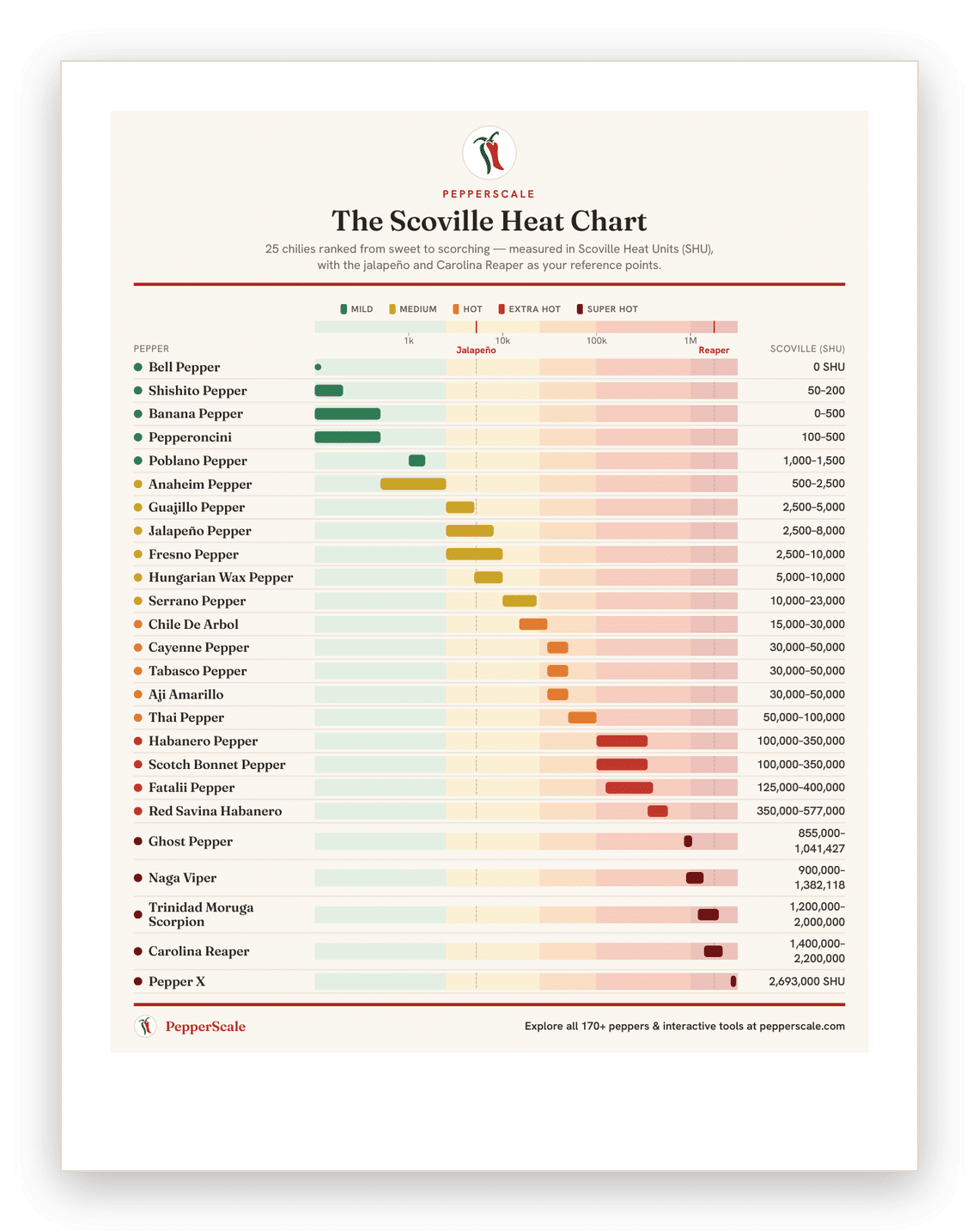
Get the free PepperScale Scoville Heat Chart
A printable, at-a-glance ranking of 25 chilies from sweet to scorching — with the jalapeño and Carolina Reaper as your reference points. Join the newsletter and we’ll send it straight to your inbox.
No spam — just Wicked Wednesday recipes and occasional extra dashes of chili pepper inspiration. Unsubscribe anytime.
Related reading
- The Bulgarian Carrot Pepper Planting Guide: Another quick, compact pepper that ripens in nearly every U.S. county.
- Pepper Companion Plants: Herbs, flowers and vegetables that make good bedmates for a pepper row, plus a few to plant elsewhere.
- Preserving Chili Peppers: Drying, pickling and freezing, for when one plant gives you more pods than you can use.