Peppers come in all sorts of colors, but the two most prevalent are, of course, red and green. Whether you’re talking about sweet bell peppers or one of the hotter chilies, these colors tend to dominate. So are there more differences between these chilies than their outward hue? In fact, there are, but perhaps for different reasons than you may think.
Here’s the short answer. A green pepper and a red pepper are usually the same pepper picked at different times: green is unripe, red is ripe. That one difference changes the flavor, the sugar, the vitamins, the heat in a chili and the price at the store.
🌶️ Quick comparison
| Green pepper | Red pepper | |
|---|---|---|
| Ripeness | Unripe, picked full size but early | Fully ripe |
| Flavor | Grassy, a little bitter | Sweet and fruity |
| Texture | Firm and crisp | A little softer |
| Heat (chilies) | Lower in the variety’s range | Usually higher in the range |
| Sugar (bell, per 100 g) | 2.4 g | 4.2 g |
| Vitamin C (bell, 1 cup chopped) | About 120 mg | About 190 mg |
| Price | Lower | Higher |
| Best for | Cooked dishes that need some bite | Eating raw, roasting, sauces and dips |
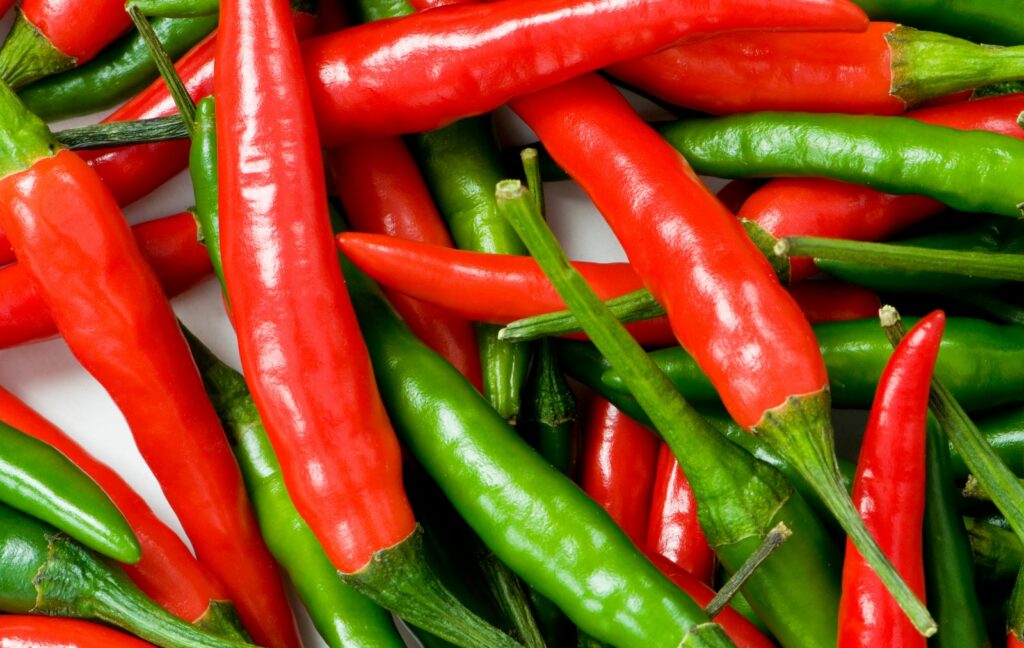
Are red peppers and green peppers the same pepper?
They typically are. The main difference, which creates the color difference, is the life of the pepper on the vine. Peppers typically mature from green to red, with a wide variety of beautiful colors occurring naturally in-between these two extremes. A bell pepper is usually full size and green about 30 days after the flower, and Utah State University Extension says it takes another 10 to 20 days to color up completely.
We say typically because hybrids have been developed that buck this trend, like Stokes Seeds’ Staysgreen bell pepper, which stays green through the picking season. Some varieties ripen to yellow, orange or brown instead of red, too. But still, if you see a red pepper, it’s safe to say it’s the fully ripened version of the variety you are considering.
–> Learn More: Why Are Bell Peppers Different Colors?
One more wrinkle: in a recipe, “red pepper” sometimes means the spice, as in crushed red pepper or cayenne. This post is about the fresh pepper.
Which is hotter, the red pepper or the green pepper?
Here, of course, we’re only talking about chilies. Sweet peppers have zero capsaicin (the compound that creates a chili’s heat), so they have no spiciness, no matter the color.
But for chilies like jalapeños or serranos, a red pod is usually hotter than a green one of the same variety. Heat builds as the pod develops. In a 1998 study of habanero and de árbol chilies, capsaicinoids peaked 45 to 50 days after the fruit set, then declined. A 2019 study comparing green and red pods of several varieties found more capsaicinoids at the red stage.
So when you look at a chili’s Scoville heat range on the pepper scale, the red version will tend to live in the upper portions of that range, while the unripened green variety will tend to live at the lower end. It won’t jump out of its range, though. A red jalapeño is still a jalapeño, and one left on the plant long past ripe may even lose a little heat.
How does each taste?
They do differ. That extra time on the vine tends to sweeten peppers, whether you’re looking at a bell, a jalapeño or a ghost pepper. Green peppers taste more bitter and bright in comparison. Green peppers are often also crisper than red peppers, which can make a big difference in certain meals.
How much sweeter? USDA’s data puts green bells at 2.4 grams of sugar in every 100, and red bells at 4.2. That grassy smell has a source too: 2-isobutyl-3-methoxypyrazine, the compound behind the classic green bell pepper aroma, is at its highest in unripe fruit, according to a 2023 study in Phytochemistry.
Are red peppers healthier than green peppers?
For bell peppers, red comes out ahead on most of the label. Here’s how 100 grams of each compare in USDA FoodData Central:
| Per 100 g, raw | Green bell | Red bell |
|---|---|---|
| Calories | 20 | 26 |
| Sugars | 2.4 g | 4.2 g |
| Fiber | 1.7 g | 2.1 g |
| Vitamin C | 80.4 mg | 127.7 mg |
| Vitamin A (RAE) | 18 µg | 157 µg |
| Folate | 10 µg | 46 µg |
| Vitamin E | 0.37 mg | 1.58 mg |
| Potassium | 175 mg | 211 mg |
| Lutein + zeaxanthin | 341 µg | 51 µg |
Does green win anything? One row: lutein and zeaxanthin, at almost seven times the red’s level. Green bells are no slouch on vitamin C either: one cup clears the 90 mg Daily Value.
Chilies don’t follow the bell pattern on vitamin C. In USDA’s data, raw green hot chilies carry 242.5 mg of it per 100 grams, while red ones carry 144. The full list is in how much vitamin C peppers have. Either way, both colors are worth eating, so buy the one you’ll use.
Why are red peppers more expensive?
Red peppers take more care and money to grow, since they stay on the plant longer. USDA’s Economic Research Service puts it plainly: colored peppers cost more to produce because they’re ripened green peppers, and the extra time on the plant means bigger losses for the grower from weather and pests. And Texas A&M AgriLife notes that picking peppers full size but still green gives bigger yields.
That’s why red peppers are usually more expensive at grocery stores than green peppers, to help recoup the cost of growing them to full maturity. In that USDA report, red bells averaged $2.45 a pound at retail, 70% more than green.
Can a green pepper turn red after you pick it?
Sometimes. Peppers make very little ethylene, the ripening gas, and USDA’s storage handbook doesn’t recommend ethylene for coloring them. It says the best way to color peppers is to hold partially colored fruit at 68 to 77°F. So a pepper that’s already blushing will usually finish on the counter, while a fully green one may not get far. Our guide on how to ripen peppers off the vine has the methods.
Which is more useful in the kitchen?
Which color for which dish? Green peppers hold their shape and their bite, so they suit cooked dishes: stir-fries, fajitas, stuffed peppers, and the onion, celery and green pepper trinity behind gumbo and jambalaya. Our candied jalapeño BBQ sauce cooks half a cup of green bell pepper right into the sauce.
Red peppers are the ones to eat raw, in salads and on a crudités plate, and the ones to roast. Roasted red bells are the base of our spicy romesco sauce and the Syrian dip muhammara:

Want both? Our Mexican bean salad and sweet and spicy chili each use one of each color. With chilies, green jalapeños bring a fresh, sharp heat to salsa, and red jalapeños or Fresnos go into hot sauces like our homemade sriracha.
Can you use one in place of the other?
Can you swap them? In cooked dishes, yes, and nobody will mind. Just expect red to push the dish sweeter and green to keep it more savory. Raw, the difference shows more, so a green pepper in a sweet salad will taste sharper than you planned. With chilies, a red pod of the same variety brings a similar heat with a sweeter edge, and our red jalapeño substitute guide covers the rest.
Overall: green for bite, red for sweetness
So whether you’re considering the green or red bell, jalapeño, or something more extreme, consider these differences carefully. If you want a sweeter flavor and more of most vitamins, go red pepper. If you prefer your peppers to be at their optimal crispness with a bitter, grassier flavor, then go green pepper. And if you’re talking about two chilies from the same vine, that red one will likely give you a bigger kick too.
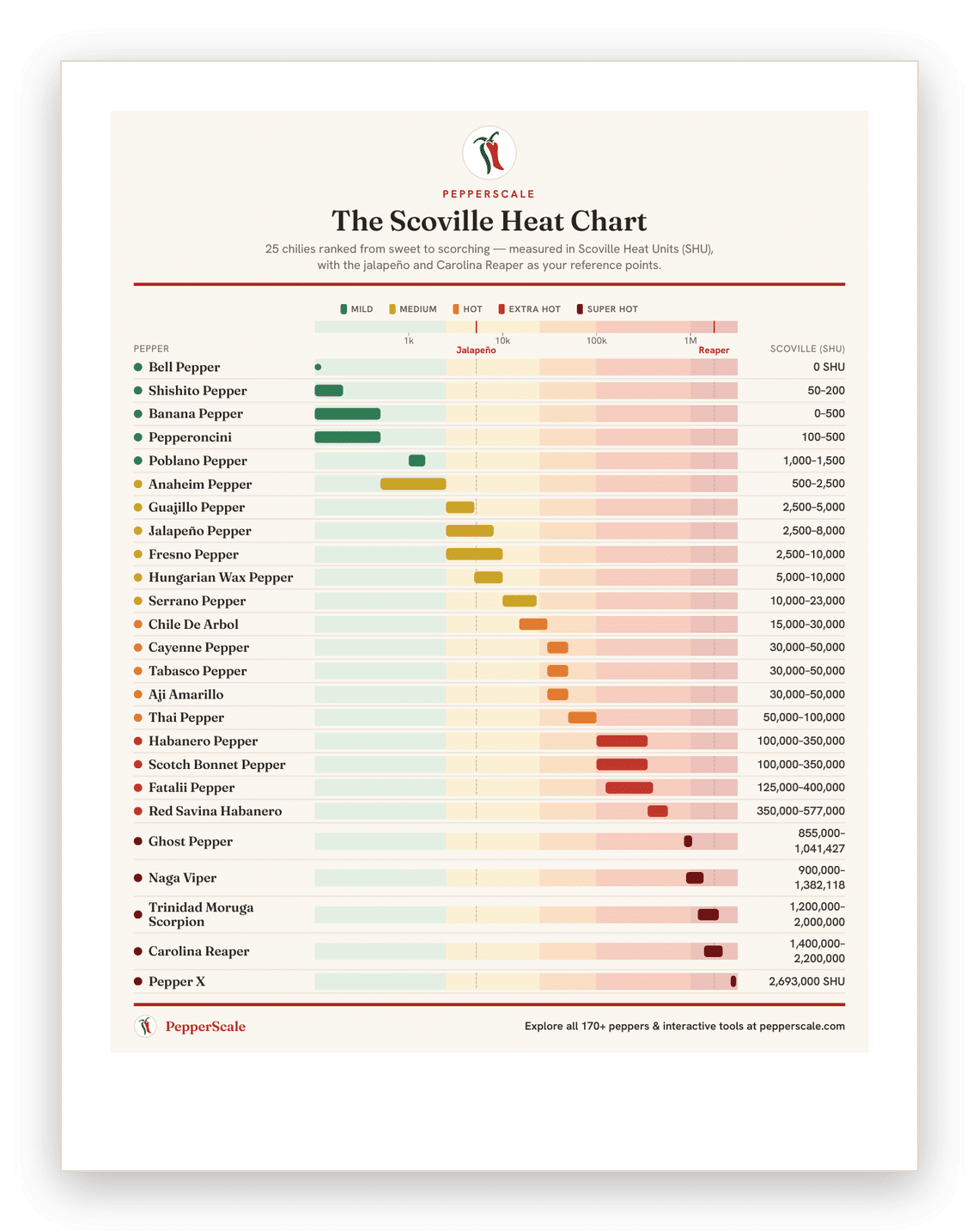
Get the free PepperScale Scoville Heat Chart
A printable, at-a-glance ranking of 25 chilies from sweet to scorching — with the jalapeño and Carolina Reaper as your reference points. Join the newsletter and we’ll send it straight to your inbox.
No spam — just Wicked Wednesday recipes and occasional extra dashes of chili pepper inspiration. Unsubscribe anytime.
Related Reading
- When Do Peppers Change Color? How long does it take, and are there other factors beyond time?
- Colorful Peppers Guide: Meet some of the most rainbow-like chilies on the Scoville scale.
- Where Do Chili Peppers Come From? We dive into chili pepper history.
Nice and informative article. Will be consuming more of these for their nutritional benefits.