Pepperoncini, also known as Tuscan peppers or golden Greek peppers, are a mild chili from Italy and Greece. They’re slender, wrinkled and usually picked young, at 2 to 3 inches long and still pale yellow-green, though left on the plant they grow a little longer and ripen to red.
Pepperoncini are known for their mild heat and tangy, lightly sweet flavor, and at 100 to 500 Scoville heat units (SHU), they’re among the mildest chilies you can buy. Most of them end up pickled, and you’ll find them in salads, on sandwiches and pizzas, and on just about any antipasto platter.


Last update on 2026-11-20. We earn a commission if you make a purchase, at no additional cost to you.

- Species
- C. annuum
- Origin
- Italy
- Uses
- Culinary
- Closest swap
- Banana
How hot is a pepperoncini, really?
They barely nudge the pepper scale, right down there with the pimento pepper in terms of heat. In fact, at 100 to 500 Scoville heat units, the pepperoncini is much closer to a bell pepper than to a jalapeño (2,500 to 8,000 SHU). Even the mildest jalapeño is 5 times hotter than the hottest pepperoncini, and at the medians (300 vs. 5,250 SHU), the gap is about 17 times.
For the full matchup, see pepperoncini vs. jalapeño. For a sense of scale, put it against the true scorchers, like the cayenne (30,000 to 50,000 SHU), the habanero (100,000 to 350,000 SHU) or the ghost pepper (855,000 to 1,041,427 SHU), and it’s a mere drop in the bucket. This is about as family-friendly as a chili gets.
Its closest heat match is its look-alike cousin, the banana pepper. The banana pepper runs 0 to 500 SHU, so the pepperoncini has a slightly higher floor and shares the same ceiling. Can you tell the difference in a bite? Rarely, so your best clue is in the look, which we cover below.
What a pepperoncini actually tastes like
Fresh pepperoncini have a sweet, peppery taste with a light tang and a hint of bitterness. Our flavor map files them under Green & Grassy, next to bells and jalapeños. Tang and freshness come out front, sweetness follows close behind, and there’s a slight bitterness, but usually nothing smoky or earthy.
Where do most people meet them? In a jar, where the brine becomes the driving force of the flavor: tangy and salty, with the pepper’s own sweetness and a very eatable tickle of heat underneath. And the pepper you buy in the jar matters, too. The Greek variety, the one most common in the U.S., is sweeter and less bitter than the Italian one.
How to pair pepperoncini
What goes with a pepper this tangy? Start with partners that share its tang. Red wine vinegar, lemon and tomatoes echo the pepper’s bright acidity, and olives and oregano bring in the briny, herbal side of a Greek salad. Garlic belongs here, too, and so does a good olive oil to carry everything.
For contrast, look to salt and fat: feta’s salty creaminess softens the bite, provolone melts into it, and cured meats like salami and pepperoni give it richness to cut through. A little honey rounds off the brine if you’re making a dressing or glaze.
Then there are the pairings where everything clicks: the Italian sub, the antipasto board and the pizza, where the pepper’s tang plays against cheese, cured meat and bread all at once. Want more ideas? Look up the pepperoncini in our flavor pairing tool.

Cooking with pepperoncini
With so little heat, you can handle and cook pepperoncini much like you would a bell pepper, and uncut pods are fine to handle bare-handed. Once you start cutting a batch, though, kitchen gloves are still a good idea: the burn won’t be as severe as a habanero’s, but it’s the same compound. Keep our chili burn remedies in mind, and our advice on chili in your eyes holds for pepperoncini, too.
Pickled is where they shine, so slice them onto sandwiches and pizza, toss them into Greek and Italian salads, or set them out with olives, cheese and cured meats. Ever tried them in the slow cooker? A full jar, brine included, is what gives our pepperoncini beef its tang.
More pepperoncini cooking tips:
- Leave the pith in. The white membrane holds most of a chili’s heat, more than the seeds. Pepperoncini have so little to begin with that keeping it in place helps the pepper bring the warmth it has.
- Use the juice. The brine a pepperoncini comes packed in is an ingredient in its own right, from dressings and marinades to the slow cooker. Our post on pepperoncini juice uses has plenty of ideas.
Greek, Italian or banana pepper? How to tell them apart
Pepperoncini are slender and tapered, and they’re usually picked at 2 to 3 inches long, though a pod left on the plant can reach about 4 inches. Their thin skin tends to be wrinkled, and they start light green, turn pale yellow-green and finally ripen to red. Most are picked well before that, at the yellow-green stage.
There are two main types, and the Greek one, shorter, sweeter and less bitter, is what fills most U.S. jars. Italian pepperoncini grow a bit longer and carry more bitterness. In Italy, this pepper goes by friggitello, while peperoncini there usually means hot chilies, so the name points to a different pepper altogether.
The bigger mix-up is with the banana pepper. The two are close in heat and both are pickled, but a banana pepper’s skin is smooth where a pepperoncini’s is wrinkled, and a full-size banana pepper runs much longer. But slice both into rings, and even a sharp eye struggles to say which is which. For a side-by-side, see pepperoncini vs. banana pepper.
Growing pepperoncini
Want a steady supply? Growing your own keeps the pickle jar full. Expect tall plants, around 2½ to 4 feet, and a first harvest 65 to 75 days after transplanting. Our pepperoncini planting guide covers the full how-to, and the Pepper Grow Planner works out your dates from your zip code.
The best pepperoncini substitute
The banana pepper is the best overall pepperoncini substitute. The two share very comparable heat and looks, and you’ll often find pickled banana peppers right beside pickled pepperoncini at the store. For more options, see our pepperoncini substitutes post, which covers quite a few in depth.
Our favorite pepperoncini recipes
These two use pepperoncini as a real ingredient, not just a garnish:


The bottom line
The pepperoncini is a mild, tangy pickling pepper with a little bitterness and a lot of uses. Keep a jar in the fridge for sandwiches, salads and pizza, and save the brine. If you’re choosing between Greek and Italian, Greek is the sweeter of the two.
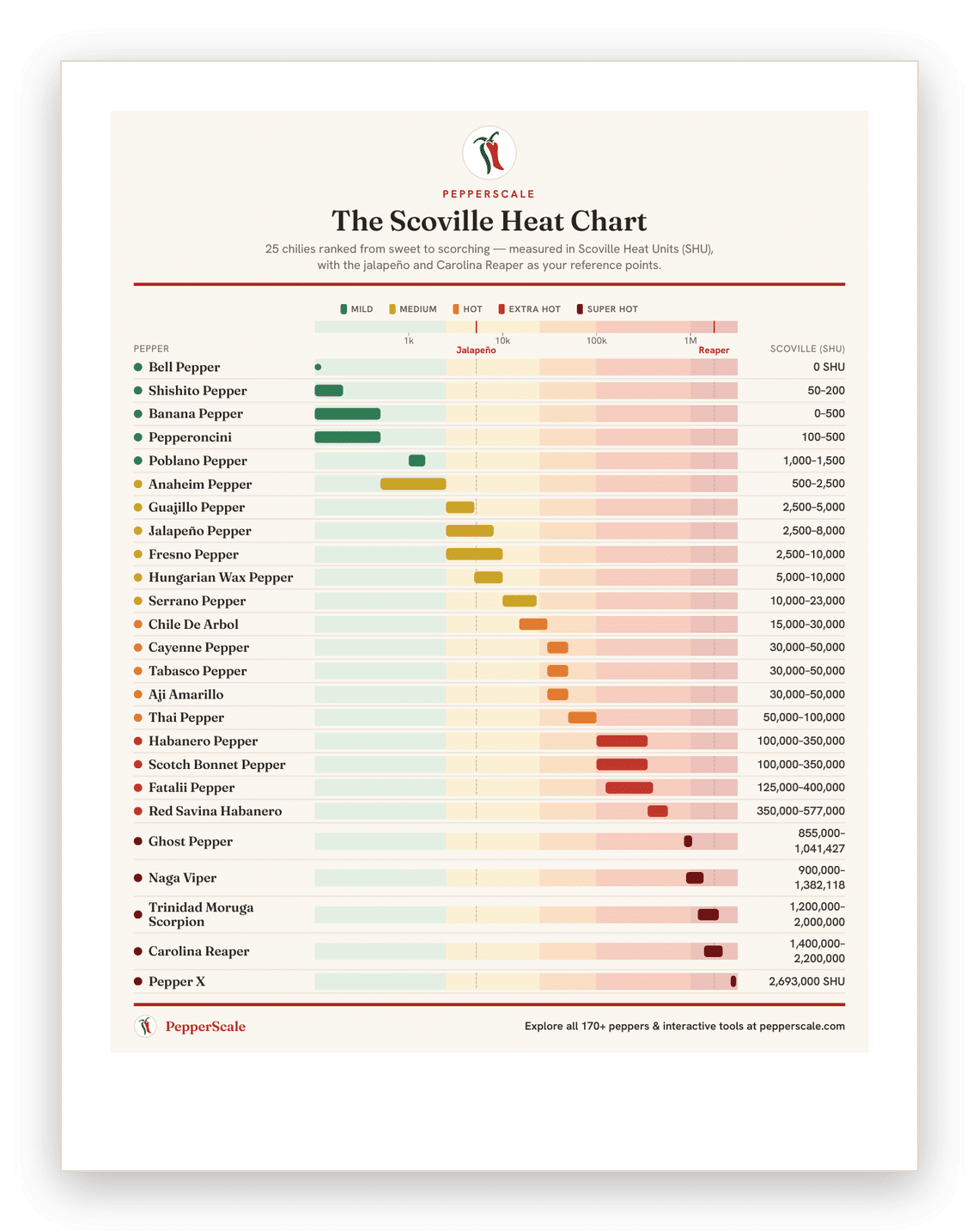
Get the free PepperScale Scoville Heat Chart
A printable, at-a-glance ranking of 25 chilies from sweet to scorching — with the jalapeño and Carolina Reaper as your reference points. Join the newsletter and we’ll send it straight to your inbox.
No spam — just Wicked Wednesday recipes and occasional extra dashes of chili pepper inspiration. Unsubscribe anytime.
Related reading
- The Hot Pepper List: Find the pepperoncini among 170-plus chilies, sorted from no heat at all to superhot.
- Pepperoncini Nutrition: What a serving of pepperoncini brings to the table, sodium included.
- Yellow Peppers: Other yellow peppers worth knowing, from mild sweet types to blazing yellow superhots.
I recently bought Delallo “mild” pepperoncini peppers and they were as hot as a jalapeño! They came in hot, medium and mild and I chose mild because I didn’t want anything with too much heat. No added spicy ingredients on the label. How can this be if your article claims that they are as mild as a green bell pepper?