The Trinidad Moruga Scorpion tests a grower’s patience long before it tests anyone’s heat tolerance. The seed is slow to wake up, the young plants want steady warmth, and the pods need a long summer to turn red. Get it started early, keep it warm, and you’ll be picking one of the hottest peppers on the planet from your own garden.
How hot does it get, and what does it taste like? Our Trinidad Moruga Scorpion profile has the heat, the flavor and the pepper’s story. This guide stays in the garden.

Last update on 2026-11-11. We earn a commission if you make a purchase, at no additional cost to you.
- Heat
- 1,200,000–2,000,000 SHU
- Start seeds indoors
- 8 weeks before your last spring frost
- Germination
- 14–36 daysIn soil around 70–85°F. Germination is slow and can take a month or more.
- Harden off
- 7–14 days before transplanting
- Transplant
- After last frost, once nights stay at 50°F or warmer
- Plant height
- 36–40 inches
Where these figures come from
- Start seeds indoors: Sandia Seed Company, Trinidad Moruga Scorpion
- Germination: Sandia Seed Company, Trinidad Moruga Scorpion; NMSU Chile Pepper Institute seed store, Trinidad Moruga Scorpion; University of Minnesota Extension, Growing peppers; Nebraska Extension G1879, Garden Peppers; NMSU Chile Pepper Institute, Special Seed Starting Instructions; Utah State University Extension, Peppers in the Garden
- Harden off: UC ANR, Growing Peppers; Penn State Extension (Chester Co. Master Gardeners), Growing Peppers; Nebraska Extension G1879, Garden Peppers
- Transplant: University of Minnesota Extension, Growing peppers; UGA Extension C1005, Home Garden Peppers; NMSU Chile Pepper Institute, Growing Tips
- Plant height: Pepper Joe's, Moruga Trinidad Scorpion; Refining Fire Chiles, Moruga Scorpion
When to plant Trinidad Moruga Scorpions where you live
Moruga Scorpion plants won’t survive a frost, and cold soil stops them in their tracks. So hold them back until frost is done for the year, the nights hold above 55°F, and the bed is close to 60°F a few inches down. You’ll find that 55°F date in the planner, next to the more common 50°F one.
Give the planner below your zip code and it works out sowing, hardening-off and transplant dates from NOAA frost records near you. What it can’t give you yet is a harvest date for this pepper. Seed sellers list anywhere from 100 to 120 or more days to maturity, mostly without saying whether they count from sowing or transplanting. So look up your first fall frost and give these plants every week of summer you can.
Starting Trinidad Moruga Scorpion seeds indoors
Give the seeds a head start indoors, at least 8 weeks before transplant day. They need heat to sprout, so run a seedling heat mat and hold the mix at 80 to 85°F, damp but never waterlogged. Some growers soak the seeds in water overnight first. Then wait. Two to five weeks is normal for this pepper. NMSU’s Chile Pepper Institute has even seen seed come up 80 days after planting, so don’t toss a tray that looks empty. If your packet is a few years old, check how long pepper seeds stay good before sowing it.
Once the seedlings appear, hang a grow light a few inches over them so they don’t stretch toward a window. Move them into bigger pots as they fill their cells. When should you start hardening them off? In the last 7 to 14 days before transplant. Put them outside for a short spell at first, adding time each day as they toughen up.
Planting Trinidad Moruga Scorpions outside
Moruga Scorpions want full sun, so plant them where your garden gets light from morning into late afternoon.
The plants usually reach about 3 feet, some a little taller, so space them around 30 inches apart and put a stake or cage in at planting time. There’s more on how much room pepper plants need if you’re working with a tight bed.
Well-drained soil with a pH from 6.0 to 7.0 suits them. A soil test is the way to find your number, and our guide to pepper soil pH explains how to adjust it.
When the plants are in, spread mulch around them, straw, compost or wood chips, but leave a gap at each stem. It keeps the soil evenly moist and the weeds down. In a cool climate, a sheet of black plastic over the bed for a few days before planting gives the soil a head start on warming.
Growing Trinidad Moruga Scorpions in containers
Short season? A big pot can help. Choose one with drainage holes, add a stake, since the plant can top 3 feet, and expect to water every day once it’s full grown and fruiting in summer heat. Our container pepper guide covers pot sizes and soil.
Growing in a pot buys you time, too. Peppers live for years where winters stay frost-free, so a potted Moruga Scorpion can spend the winter indoors and keep ripening. The move is covered in growing hot peppers indoors.
Watering and feeding Trinidad Moruga Scorpions
Plan on an inch or so of water per week, rain included. Water deeply and less often, rather than a little every day, and keep it consistent, since big swings between dry and soggy go hand in hand with blossom-end rot. Your area’s typical rainfall by month is in the planner. Our guide to watering pepper plants has the detail, along with what overwatering looks like.
Hold back on nitrogen. Too much of it builds a big, leafy plant that’s slow to set pods. Test your soil before you feed, and don’t add phosphorus unless the test asks for it. When and what to feed is in our pepper fertilizing guide.
Getting Trinidad Moruga Scorpions to set fruit
Don’t be surprised if your plant flowers for weeks with little to show for it. According to the Chile Pepper Institute, the Moruga Scorpion has a hard time pollinating itself, and it can take up to 160 days to start producing pods.
You can lend a hand. Outdoors, bees and a breeze do some of the work. Indoors or under cover, dab a small, soft paintbrush in each open flower in turn to move the pollen around. And expect a pause in midsummer: very little fruit sets once highs climb to 90°F, and the planner shows when that tends to happen in your area.
When to pick Trinidad Moruga Scorpions
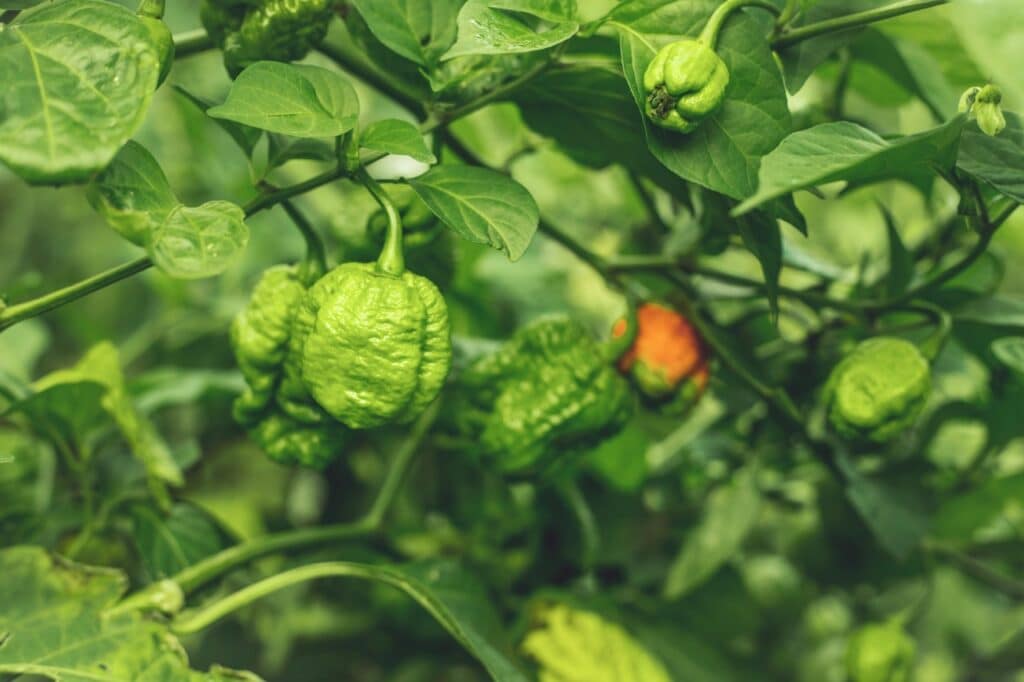
Moruga Scorpions start green and ripen to red. A ripe pod is lumpy and wrinkled, roughly 2 to 2½ inches long, and red is when the flavor and heat are at their fullest. Green pods are usable if you need them, but red is what you’re growing for.
Cut each pod off with pruners, since pepper branches snap easily. Then think about your hands. These pods run 1.2 to 2 million SHU. During NMSU’s heat study, the researchers picking them found capsaicin seeping through their latex gloves, and they used up about four pairs. Wear sturdy gloves, don’t touch your eyes or face until you’ve scrubbed up, and have our chili burn fixes handy before the first harvest.
Frost on the way and pods still green? Strip the plant and try to ripen the pods (somewhat) off the vine. If the plant is in a pot, carry it in instead.
Common Trinidad Moruga Scorpion plant problems
- Rotten, sunken spots on the blossom end: this is blossom-end rot, and our post on calcium deficiency in peppers explains it.
- Bleached, thin-skinned patches where the sun hits: see pepper sunscald.
- Leaves curling up or going yellow: read what makes pepper leaves curl and yellowing pepper plants.
- Specks of insects on the undersides of leaves: look for aphids and spider mites.
- Seedlings or plants that barely grow: check our post on pepper plants growing slowly.
- A cold night coming: find out whether frost kills pepper plants.
Seeing something else? Our rundown of pepper plant diseases and problems has the others.
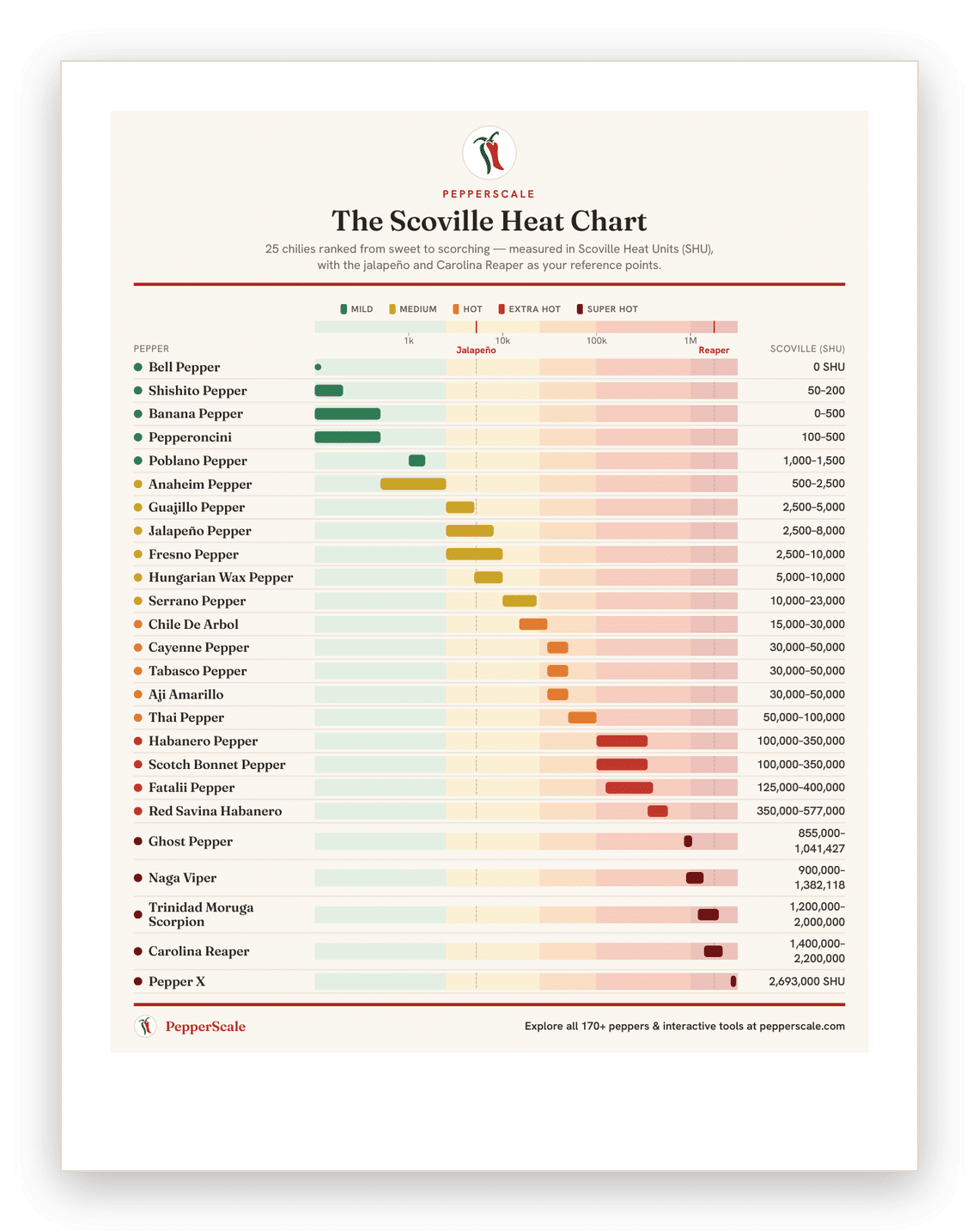
Get the free PepperScale Scoville Heat Chart
A printable, at-a-glance ranking of 25 chilies from sweet to scorching — with the jalapeño and Carolina Reaper as your reference points. Join the newsletter and we’ll send it straight to your inbox.
No spam — just Wicked Wednesday recipes and occasional extra dashes of chili pepper inspiration. Unsubscribe anytime.
Related reading
- The Ghost Pepper Planting Guide: Grow the super-hot the Moruga beat in NMSU’s field trial.
- The Carolina Reaper Planting Guide: Ed Currie’s pepper, which won the Guinness title in 2013, from seed to picking.
- Preserving Chili Peppers: Dry, freeze or pickle the harvest so a plant’s worth of super-hots lasts all year.