Chili peppers only left the Americas after Columbus, but the rest of the world wasted no time. Within a few centuries, cooks from Ethiopia to Japan were grinding them into the spice blends their kitchens are now known for. So what goes into berbere, shichimi togarashi or jerk, and how hot do they get? Below, we break down the most common spicy seasonings from around the world: where each one comes from, what’s in it, how much heat to expect, and our recipe for making it at home.
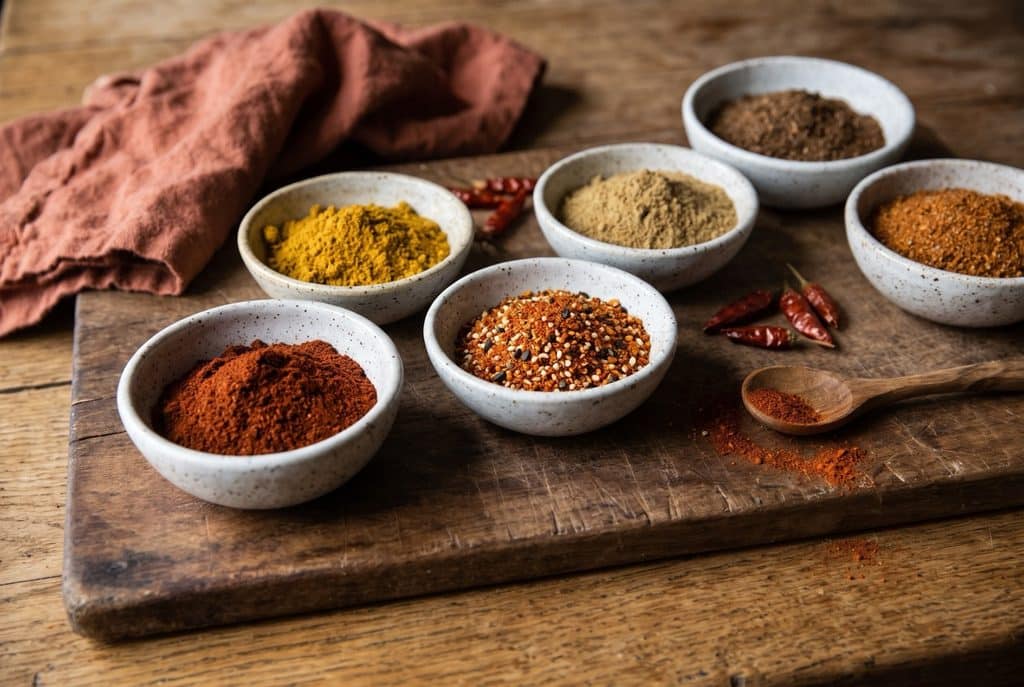
Africa
Berbere

From Ethiopia and Eritrea comes berbere spice, a highly aromatic blend built mostly on dried red chilies. You’ll also taste fenugreek, cardamom, garlic and a long list of other spices, and you can buy it as a powder or as a paste. Expect real heat. Berbere is the backbone of Ethiopian wot stews like doro wot (chicken) and misir wot (lentils), and it gives them their deep red color, too. Our guide to berbere goes deeper on how it’s used.
Ras el hanout

Ras el hanout is a North African blend you’ll find in Moroccan, Algerian and Tunisian cooking, and the name translates to “head of the shop.” There’s no single recipe. A ras el hanout can run to dozens of spices, often with cinnamon, ginger, cardamom, nutmeg, turmeric and paprika in the mix, and it’s a favorite in tagines, soups and stews. How hot is it? That depends on the chili the maker reaches into. Some blends are warm and gentle, while ours uses cayenne for a noticeable kick.
Harissa

Harissa is a paste rather than a dry blend, but no tour of North Africa’s chili heat would be complete without it. Tunisia’s version starts with sun-dried chilies seasoned with garlic, coriander and salt, and many cooks add caraway, cumin and olive oil. In 2022, UNESCO added harissa to its list of the world’s intangible cultural heritage.
Asia
Shichimi togarashi

Shichimi togarashi means “seven-flavor chili pepper,” and red chili leads the mix. The other six vary from maker to maker, but you’ll nearly always find sansho pepper and sesame, usually alongside orange peel, ginger, seaweed and hemp or poppy seeds. Think of it as a finishing spice. Japanese cooks shake it over a bowl right before eating, more often than they cook with it. The story goes that it was first sold in Edo, today’s Tokyo, in 1625.
Thai seasoning

If you love Thai flavors, this one’s for you. Our spicy Thai seasoning isn’t a traditional blend like the others here. We made it to get Thai flavors into a shaker: ground Thai chilies with ginger, garlic, lemongrass and lime peel, plus a little coconut and brown sugar to round it out.
The Indian subcontinent
Tandoori masala

A tandoor is a clay oven, and tandoori masala is the spice blend that goes with it. You probably know it best from tandoori chicken, a Punjabi dish where the chicken is marinated in yogurt and tandoori masala before it’s roasted. Along with chili, you can expect ginger, garlic and warm spices like cinnamon.
Vindaloo masala

Vindaloo comes from Goa, on India’s west coast and a Portuguese colony for centuries. Its name comes from the Portuguese carne de vinha d’alhos, meat marinated in wine and garlic, and Goan cooks made it their own with vinegar and plenty of chilies. Vindaloo has a reputation for heat. The masala is where it comes from. Ours pairs mild, brightly colored Kashmiri chilies with hotter cayenne, plus cumin, black peppercorns, mustard seed and turmeric.
Chaat masala

Chaat masala is the tangy one of the bunch. Dried mango powder, called amchur, makes it sour, and Indian black salt, or kala namak, gives it a funky, almost egg-like aroma, with cumin, coriander, ginger and chili filling it out. If you’ve had chaat, India’s savory street snacks, you’ve tasted it, and it’s just as good sprinkled over fruit, potatoes and salads.
Curry powder

Curry powder is often mistaken for an Indian staple, but it was made for British kitchens. Merchants were selling ready-mixed curry powder in London by the 1780s. Most blends lean on turmeric, coriander, cumin and chili, and the turmeric gives them their familiar yellow color.
The United States
Chili powder

Chili powder sounds Mexican, but the blend is a Texas original. In the 1890s, a New Braunfels café owner named William Gebhardt started selling a chili powder made from ancho peppers so people could make chili year-round, and he trademarked his Eagle Brand chili powder in 1896. Today’s blends are mostly ground chilies with cumin and garlic, and plenty of recipes, ours included, add oregano. Don’t confuse it with a single ground chili, though. Our paprika vs. chili powder guide sorts out the difference. Chili con carne is its claim to fame, but you can use it in taco meat, rubs and beans, too.
Cajun seasoning

A Louisiana staple, Cajun seasoning boils down the flavors of Cajun cuisine into a simple seasoning blend. The ingredients vary from recipe to recipe, but most start with salt, garlic and some form of chili pepper powder, from paprika (mild) to cayenne pepper (medium-hot). So how spicy is it? That’s up to the brand, or to you. Our Cajun seasoning guide covers how it got its fiery reputation.
Old Bay

Old Bay Seasoning is as closely identified with seafood as it is with the state of Maryland. No crab or shrimp boil would be the same without it, since Old Bay provides a distinctive salty and spiced warmth to shellfish. Gustav Brunn created it in Baltimore in 1939, and along with paprika, its long list of ingredients includes celery salt and a gentle heat from red and black pepper. Here’s what’s in Old Bay, spice by spice.
The Caribbean and Latin America
Jerk seasoning

Jamaican cooks use jerk seasoning as a wet paste or a dry rub. The dominant flavors are allspice and fiery scotch bonnet peppers, with scallions and thyme close behind, and you’ll see it most on chicken and pork. Want more traditional heat from our dry version? Add a pinch of habanero or scotch bonnet powder, since both chilies sit in the same heat range.
Adobo seasoning

Adobo seasoning is the everyday shaker blend of Latin American and especially Puerto Rican kitchens, typically garlic, oregano, black pepper, salt and turmeric. Is it spicy? The classic store-bought kind has no chili at all, so you get savory rather than hot. Ours swaps in paprika and smoky chipotle powder for a warm, gentle heat.
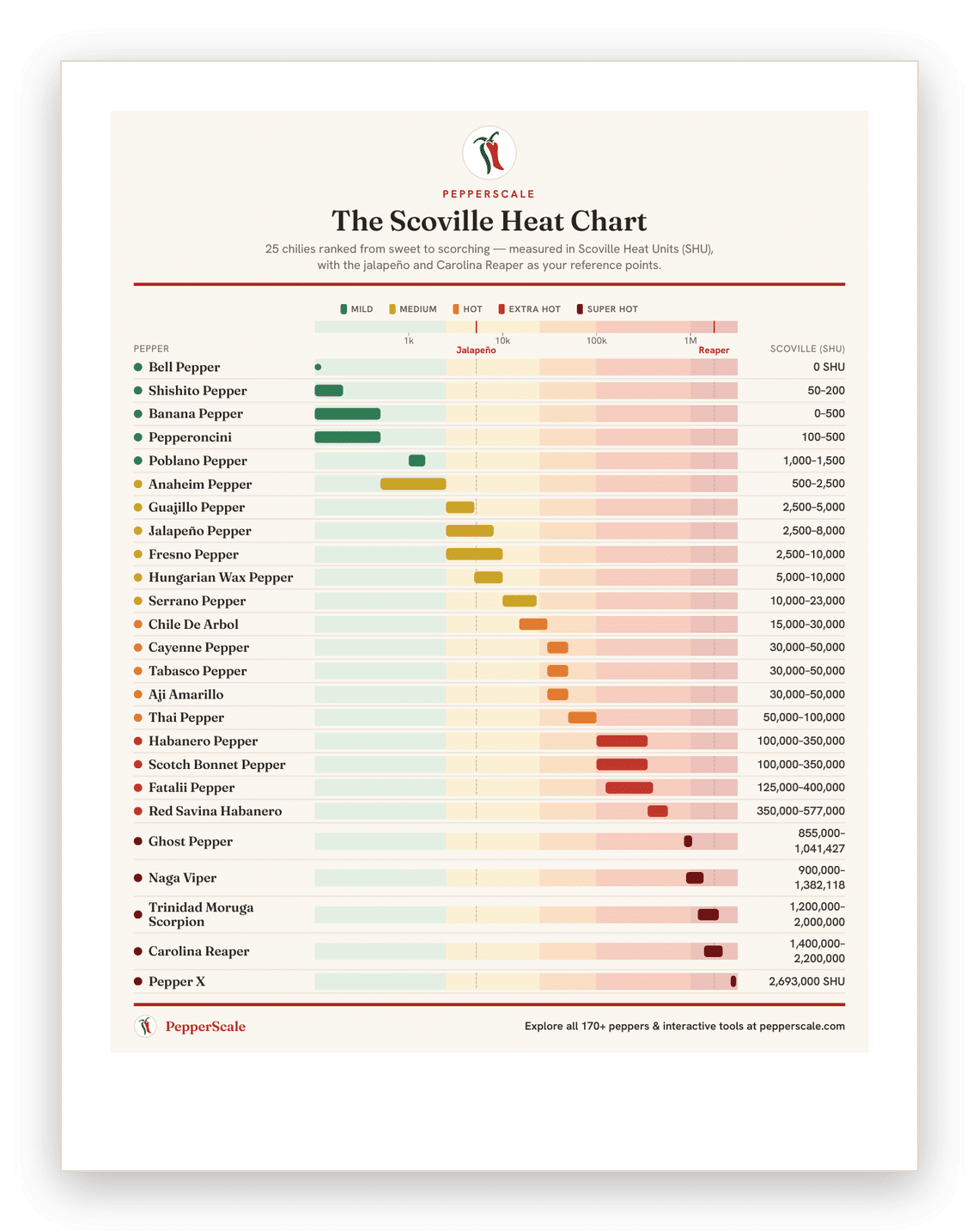
Get the free PepperScale Scoville Heat Chart
A printable, at-a-glance ranking of 25 chilies from sweet to scorching — with the jalapeño and Carolina Reaper as your reference points. Join the newsletter and we’ll send it straight to your inbox.
No spam — just Wicked Wednesday recipes and occasional extra dashes of chili pepper inspiration. Unsubscribe anytime.
Related reading
- What Is Creole Seasoning?: Cajun seasoning’s herbier, milder cousin from New Orleans.
- Spicy Recipes: Every PepperScale recipe in one place, searchable by pepper, heat and dish.
- The Hot Pepper List: The chilies behind these blends, from Kashmiri to scotch bonnet, by heat and flavor.