The world of peppers is big. How big? Take a look at our hot pepper list, which features more than 170 different chilies (and growing). That’s a lot of heat. But most of those chilies you’ll never see in a grocery store. The peppers you will find make a much shorter list: bell peppers, jalapeños, poblanos, serranos and a handful of others in the produce section, plus pickled, dried and ground peppers spread across three or four other aisles. Here’s what you’ll find in each one, how hot it is, and what to do with it.
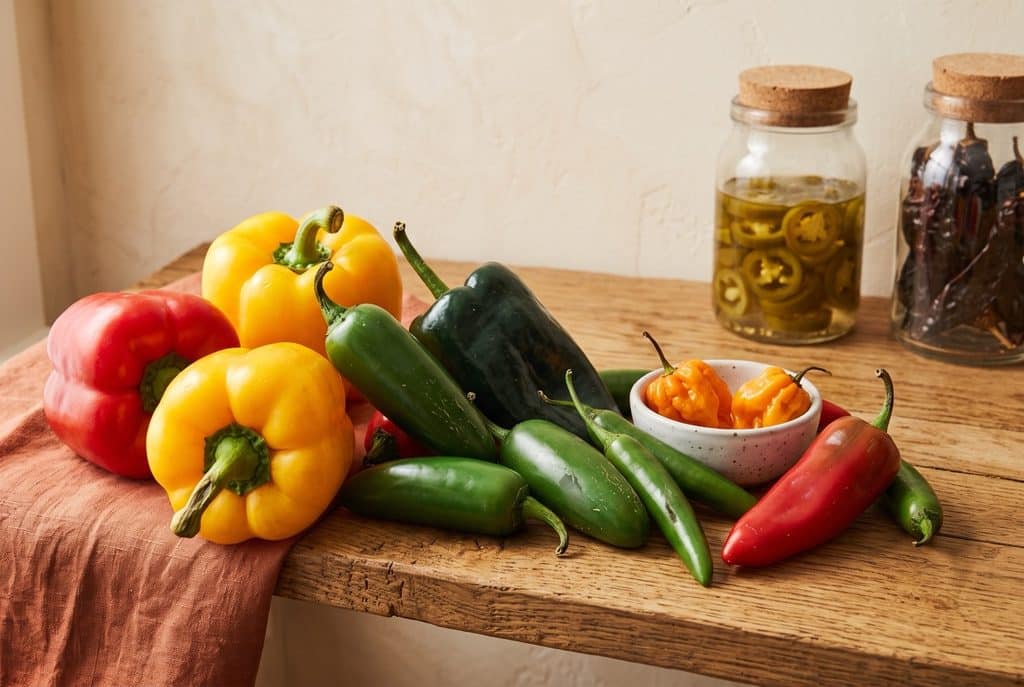
Supermarket peppers at a glance
Everything below is collected in one place, sorted from mildest to hottest. Heat is measured in Scoville heat units (SHU), and since the jalapeño is the pepper most people know, the third column tells you how each one compares.
| Pepper | Heat (SHU) | Compared with a jalapeño | Where you’ll find it |
|---|---|---|---|
| Bell pepper | 0 | No heat at all | Produce; roasted, in jars |
| Shishito | 50 to 200 | Barely any | Produce |
| Banana pepper | 0 to 500 | Barely any | Pickle aisle |
| Pepperoncini | 100 to 500 | Barely any | Pickle aisle |
| Pimento | 100 to 500 | Barely any | Jars, olive bar |
| Paprika | Usually 100 to 500 | Barely any | Spice aisle |
| Peppadew | 1,100 to 1,200 | About ¼ as hot | Jars, olive bar |
| Poblano / ancho | 1,000 to 1,500 | About ¼ as hot | Produce (fresh), Mexican aisle (dried) |
| Anaheim | 500 to 2,500 | About ⅓ as hot | Produce |
| Pasilla | 1,000 to 2,500 | About ⅓ as hot | Mexican aisle (dried) |
| Guajillo | 2,500 to 5,000 | A little milder | Mexican aisle (dried) |
| Hatch chile | 1,000 to 8,000 | Milder to about the same | Produce, in late summer |
| Jalapeño | 2,500 to 8,000 | The benchmark | Produce, pickle aisle, canned |
| Chipotle | 2,500 to 8,000 | About the same | Mexican aisle, spice aisle |
| Fresno | 2,500 to 10,000 | About the same | Produce |
| Serrano | 10,000 to 23,000 | About 3 times hotter | Produce |
| Crushed red pepper | 15,000 to 30,000 | Roughly 3 to 6 times hotter | Spice aisle |
| Chile de árbol | 15,000 to 30,000 | About 4 times hotter | Mexican aisle (dried) |
| Cayenne | 30,000 to 50,000 | About 8 times hotter | Spice aisle |
| Thai chili | 50,000 to 100,000 | About 14 times hotter | Produce, Asian grocers |
| Habanero | 100,000 to 350,000 | About 40 times hotter | Produce |
Fresh peppers in the produce section
Most stores keep the fresh peppers together, with the sweet ones on one side and the hot chilies nearby, sometimes in their own bins. As you look along the display, you’ll notice a lot of them come in more than one color. That’s usually about ripeness: peppers tend to start out green and turn red, yellow or orange as they ripen, getting sweeter along the way.
Bell peppers

Easily the most popular pepper around, bell peppers are sweet peppers, not hot peppers, packing zero Scoville heat units. Green bells are picked before they ripen and taste a little grassy and bitter. Red, yellow and orange bells have had time to ripen, so they’re sweeter and often cost a bit more. You’ll often find bags of mini sweet peppers nearby too, which are great for snacking and stuffing.
Poblano peppers
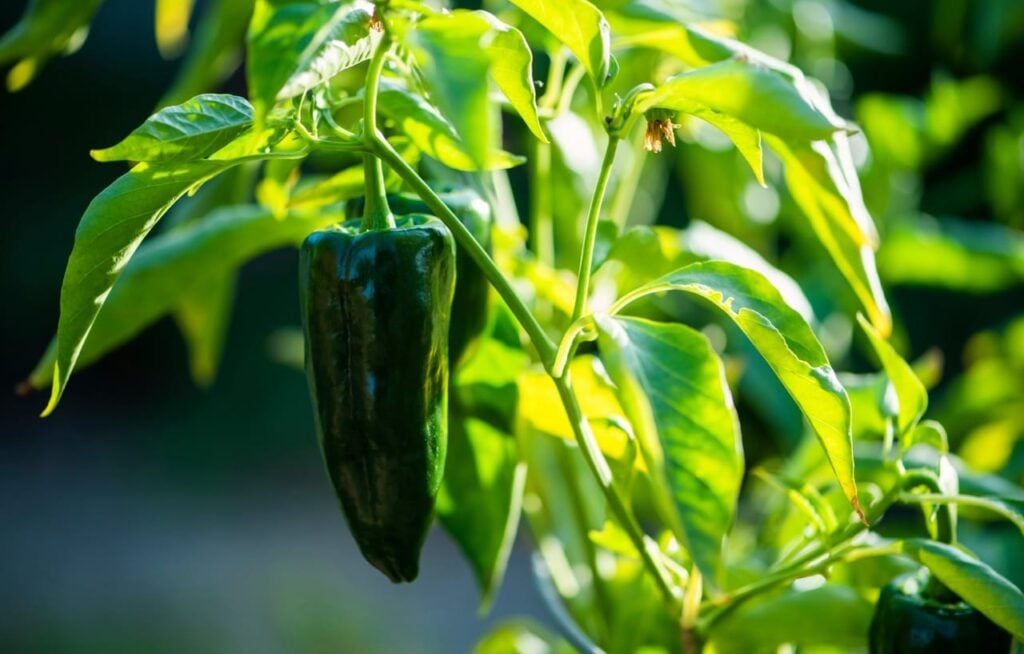
Poblano peppers are the big, dark green, heart-shaped ones. Poblanos are mild and earthy, and their thick walls make them the classic pepper for stuffing and for chiles rellenos. Roast them and they get even better. Dried poblanos are sold as ancho chiles, which you’ll find in the Mexican foods aisle.
Anaheim and Hatch chiles

Anaheim peppers are long, light green and mild, and they’re good roasted, stuffed or chopped into sauces. In late summer, a lot of stores also bring in Hatch chiles, the New Mexico chiles people wait all year for. Hatch chiles vary more in heat than Anaheims, from mild up to about jalapeño-hot, and roasting gives them a buttery, smoky flavor.
Jalapeño peppers

Jalapeños are the most common hot pepper you’ll find in the typical supermarket, and they’re the yardstick for everything else on this page. Supermarkets normally carry green jalapeños, not the ripened red jalapeño. Green jalapeños taste brighter and grassier, while red ones are riper and a little sweeter. But heat varies from pepper to pepper. If you’re cooking for someone who’s sensitive to spice, taste a sliver before you add a whole one to the pot.
Fresno peppers

Fresno peppers look a lot like red jalapeños, and they’re about as hot, with a little more fruitiness. Fresnos are great in salsas and for quick pickles, and they add color anywhere you’d use a jalapeño.
Serrano peppers

Serrano peppers are the skinny, dark green chilies near the jalapeños, and they run about three times hotter. They have the same bright, grassy flavor with more bite, and thin walls, so they chop up small for pico de gallo and salsa.
Shishito peppers

Shishito peppers are small, thin-walled and wrinkly, and they’re usually sold in bags or clamshells. Most are barely hot at all, but about one in ten has a real kick. Blister them in a hot pan, sprinkle them with salt, and eat them whole.
Thai chilies
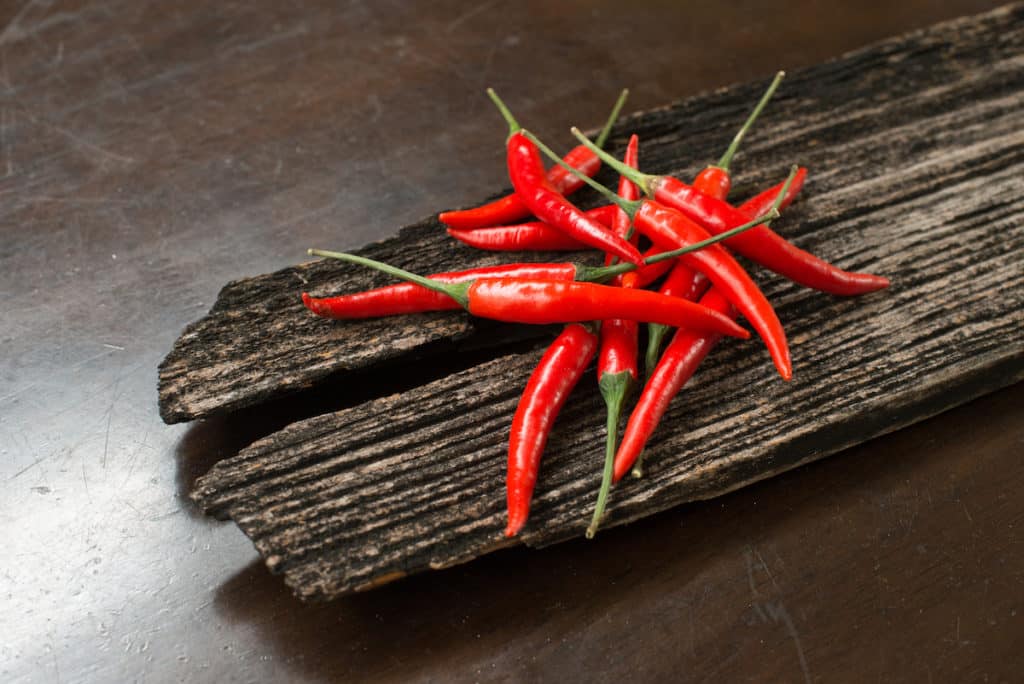
Thai chilies are tiny, red or green, and far hotter than their size suggests, at around 14 times a jalapeño. Look for them in small packs in the produce section, or at an Asian grocery if your supermarket doesn’t carry them. A little goes a long way in stir-fries, curries and dipping sauces.
Habanero peppers
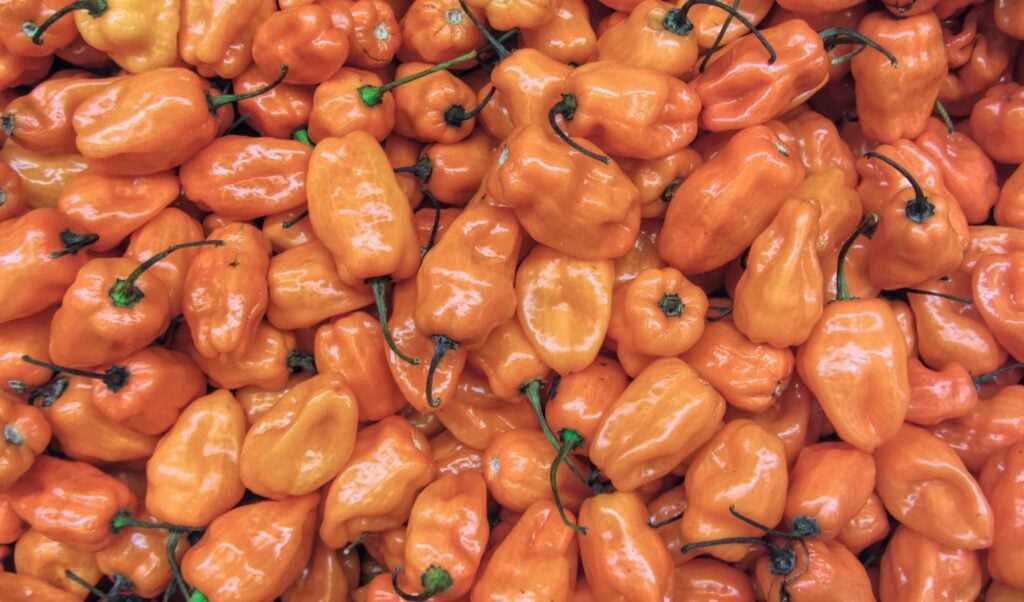
Habaneros are the small, lantern-shaped peppers, usually orange, and they’re usually the hottest fresh pepper in a regular supermarket. Under all that heat there’s a fruity, tropical flavor that’s terrific in salsas and hot sauces. So wear gloves when you cut them. Some stores also carry Scotch bonnets, which look similar and run just as hot.
You might also spot cubanelles, long, pale green sweet peppers that are great for frying, and Hungarian wax peppers, which look like banana peppers but are closer to a jalapeño in heat.
Pickled peppers in the pickle and olive aisle
Can’t find good fresh peppers? Jarred peppers are easy to find year-round, and they’re often shelved with the pickles and olives. Some stores have an olive bar with a few of these in bulk, too.
- Pickled jalapeños: Pickled jalapeños are everywhere, whole or sliced into rings, and they’re great on nachos, sandwiches, pizza and salads. Our list of pickled jalapeño uses has plenty more ideas.
- Banana peppers and pepperoncini: Pickled banana peppers and pepperoncini are the mild, tangy ones, both under 500 SHU. The two are so much alike that they are often mistaken for one another. Banana peppers usually come sliced into rings for sandwiches and pizza, while pepperoncini are more often sold whole, the way you’d see them in a Greek salad.
- Pimentos and roasted red peppers: Pimentos are small, sweet red peppers with barely any heat. You’ll find them diced in little jars, stuffed into green olives and mixed into pimento cheese. You’ll usually find jarred roasted red peppers right next to them, and those are usually just roasted red bell peppers, soft and sweet and ready to use.
- Peppadew and cherry peppers: Peppadew peppers are small, round and sweet-tangy with a gentle heat, and you’ll sometimes find them at the olive bar stuffed with cheese. Pickled cherry peppers are similar in shape and come in sweet and hot versions. So check the label before you bite.
Dried peppers in the Mexican foods aisle
This is where the smoky, earthy flavors are. Look for dried chilies in cellophane bags, cans of chipotles and canned diced green chiles.
- Chipotles in adobo: Chipotle peppers are dried, smoked jalapeños, so they’re about as hot as a jalapeño, with a deep smokiness. The most common way to buy them is canned chipotle in adobo sauce, a tangy, tomato-based sauce, and a spoonful goes a long way in chili, marinades and barbecue sauce. Some stores also carry whole dried chipotles.
- Dried chilies: Never cooked with dried chilies? The bags are worth getting to know, and these are the ones you’ll see most:
- Ancho: dried poblano, sweet and raisiny, with mild heat.
- Guajillo: bright red and tangy, a little milder than a jalapeño.
- Pasilla: long, dark and earthy, with mild heat.
- California or New Mexico chiles: mild, sweet and earthy, great for red chile sauce.
- Chile de árbol: small, skinny and red, and about four times hotter than a jalapeño.
Canned diced green chiles are usually shelved here too. These are mild and usually already roasted, handy for dips, enchiladas and casseroles.
Ground peppers in the spice aisle
The spice aisle is where most people meet chili heat first, and there’s more variety here than you might think. Which jar should you grab? It depends on whether you want heat, smoke or color.
- Cayenne pepper: 30,000 to 50,000 SHU, with a fairly neutral peppery flavor, so it adds heat without changing much else.
- Crushed red pepper: the pizza-shop flakes, usually a mix of several chilies, at around 15,000 to 30,000 SHU.
- Paprika: sweet, smoked or hot, and plain paprika is usually very mild.
- Chili powder: in most US stores this is a blend of ground chilies with cumin, oregano and garlic, not pure chili. Our homemade chili powder shows what goes in.
- Chipotle powder: ground smoked jalapeño, great in rubs. Here are our favorite chipotle powder uses.
How to pick good fresh peppers
When you’re picking out fresh peppers, the signs of a good one are the same whichever kind you’re buying:
- Firm and glossy. Skip any with soft spots, wrinkles or dark, sunken patches.
- Heavy for its size. That usually means thick, juicy walls.
- A fresh green stem. A dry or moldy stem end means it’s been on the shelf a while.
Want to know more about a pepper you’ve found? Most of the chilies above have their own profile on PepperScale, covering their heat, their flavor, and the best ways to use them.
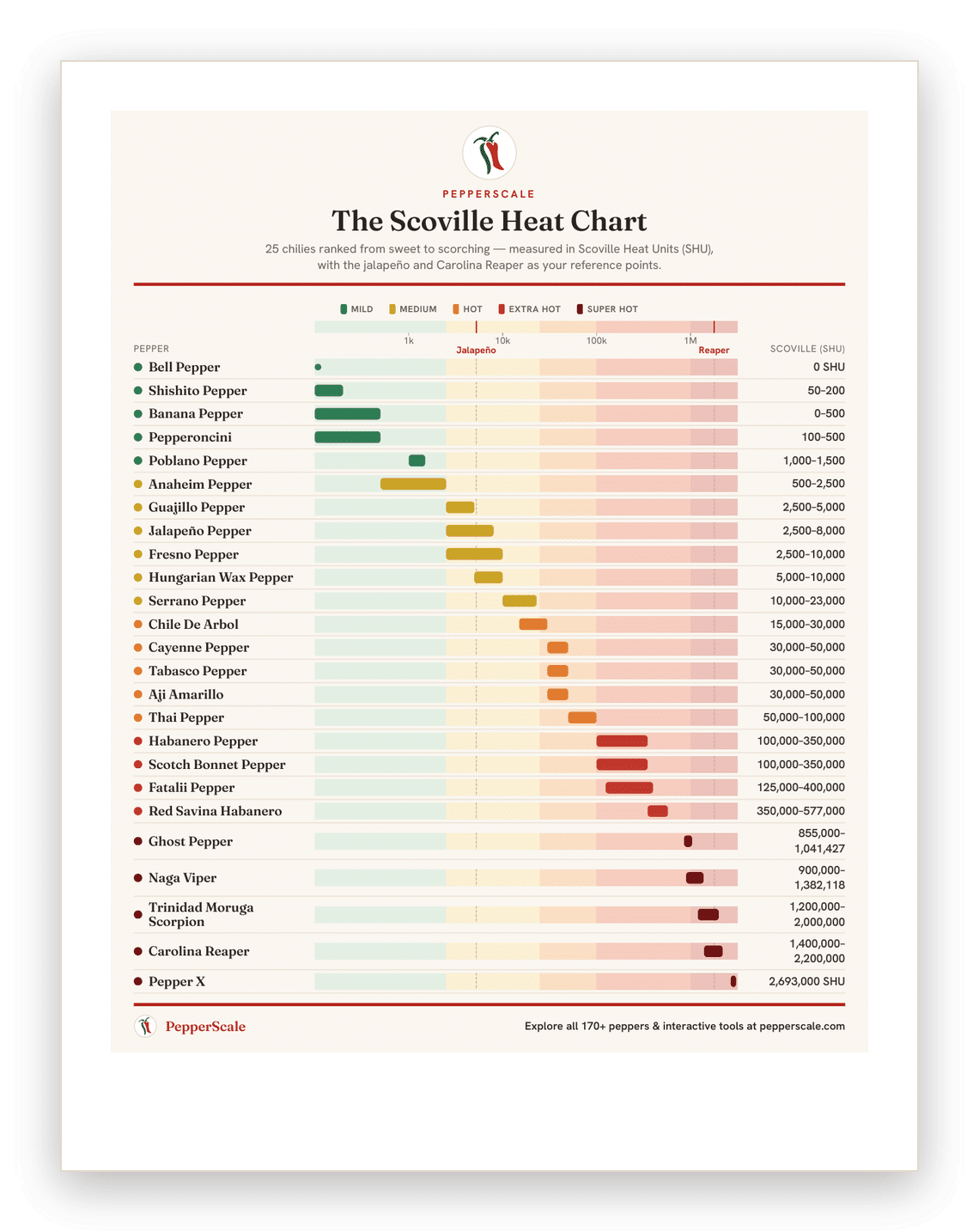
Get the free PepperScale Scoville Heat Chart
A printable, at-a-glance ranking of 25 chilies from sweet to scorching — with the jalapeño and Carolina Reaper as your reference points. Join the newsletter and we’ll send it straight to your inbox.
No spam — just Wicked Wednesday recipes and occasional extra dashes of chili pepper inspiration. Unsubscribe anytime.
Related reading
- Preserving Chili Peppers: Bought too many? How to freeze, dry, pickle or ferment the extras.
- How to Make Salsa Less Spicy: What to do when a jalapeño turns out hotter than you expected.
- Are Dried Peppers Hotter Than Fresh?: Why the chilies in the Mexican aisle can surprise you.